The short version
- Emergency responders faced attacks with fireworks and bricks in Glasgow, Edinburgh, and North Shields, resulting in minor injuries for an officer and a paramedic.
- Police Scotland deployed its largest number of officers since 2025 under Operation Amberlight, reporting fewer specialist public order deployments but noting the violence was unacceptable.
- Misinformation regarding a planned housing development contributed to disorder in North Shields, where six individuals were arrested for violent disorder.
Disorder marked Bonfire Night celebrations across parts of Scotland and north-east England on Thursday, characterized by targeted attacks against emergency services personnel. While authorities reported an overall reduction in serious incidents requiring specialist public order support compared to the previous year, the violence that did occur involved significant aggression toward police officers, firefighters, and ambulance workers. The incidents resulted in multiple arrests and injuries, prompting strong condemnation from senior law enforcement officials who described the behavior as terrifying and unacceptable.
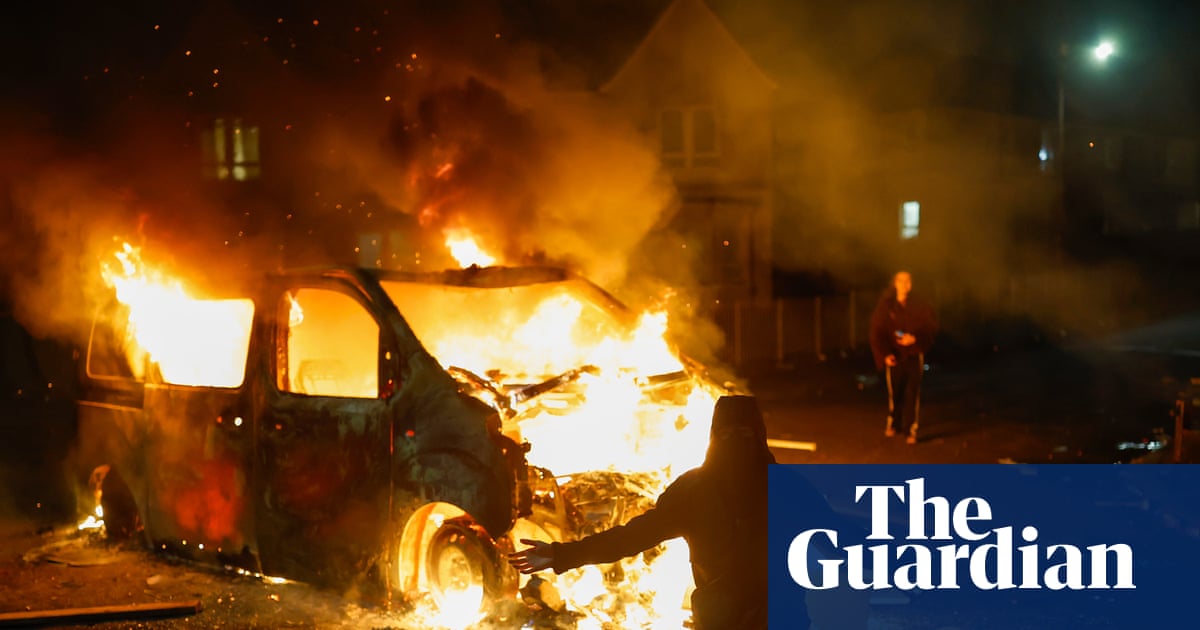
In Glasgow, the situation escalated on Greenside Street in the Provanmill area. A police officer and an ambulance worker sustained minor injuries after being attacked with fireworks while responding to a report of an injured man. Following this assault, a police van was set ablaze and gutted in the same location. Authorities arrested a sixteen-year-old boy in connection with the incident. The violence in Glasgow was not isolated to this single street; fire crews also faced attacks in the Knightswood and Castlemilk areas, while fireworks were thrown at members of the public in Clydebank.
Edinburgh experienced its own share of disruption, though emergency services managed to contain much of it. The Scottish Fire and Rescue Service attempted to extinguish bin fires set by young people in south-west Edinburgh but was forced to withdraw from the scene. Police Scotland issued twenty-one dispersal orders in Edinburgh and thirteen in Glasgow as part of their strategy to manage crowds. Despite these localized outbreaks, officials noted that public order officers were deployed at only one location for a relatively short period, suggesting that the broader scale of disorder was less severe than in previous years.
Police Scotland Chief Superintendent David Robertson highlighted the operational changes implemented for this year’s events. Under Operation Amberlight, the force aimed to prevent a recurrence of the widespread violence seen in Edinburgh and Glasgow during the previous year. This effort involved deploying the largest number of officers since Donald Trump’s visit to Aberdeenshire in 2025, with assistance drawn from forces in England and Wales, including Avon and Somerset, Hampshire, Hertfordshire, and south Wales. Robertson stated that while there was a reduction in serious calls requiring specialist support, the attacks on emergency workers remained a critical concern.
The violence extended beyond Scotland to north-east England, specifically in North Shields near Newcastle upon Tyne. Six individuals were arrested by Northumbria Police on suspicion of violent disorder after officers and firefighters were injured. The attackers threw fireworks and bricks at emergency vehicles and personnel. The gathering had formed outside a supermarket based on incorrect information circulating that the building was intended to be a house of multiple occupancy, or HMO. This misinformation appears to have fueled the anger and subsequent violence among the group.
Northumbria Police Chief Superintendent Daniel Whyte expressed dismay at the scenes witnessed in North Shields, describing them as shocking and completely unacceptable. He indicated that more arrests were anticipated and warned those involved to expect police action. Kim McGuinness, the mayor of north-east England, criticized the pre-arranged nature of the violence on social media, attributing it to a minority of individuals acting on dangerous misinformation. She emphasized the need to tackle the spread of such false narratives, which led people to believe they were confronting a housing development rather than a retail store.
Statistical data from Police Scotland provides context for the night’s events. Between Halloween and November 5, the force received 1,024 calls related to fireworks, an increase from the 833 calls recorded during the same period in 2025. However, police maintained that the number of incidents requiring a specialist public order response had decreased across the country. The Scottish Fire and Rescue Service handled more than 800 calls relating to fireworks and bonfires between 5:30 pm and 11:30 pm on Thursday night, indicating a high volume of minor incidents alongside the more serious violent outbreaks.
Political figures also weighed in on the events. Màiri McAllan, Scotland’s education secretary, acknowledged that emergency services were well-prepared and that the vast majority of displays proceeded without issues. Nevertheless, she stated unequivocally that any disorder related to fireworks was totally unacceptable. The combination of increased policing resources, localized bans on fireworks, and dispersal orders appears to have mitigated some of the widespread chaos seen in previous years, but it did not eliminate targeted violence against those tasked with maintaining public safety.
The aftermath of these incidents underscores the ongoing challenges faced by emergency services during high-risk periods. While the deployment of additional officers and strategic planning helped reduce the scale of large-scale disorder, the persistence of violent attacks on responders remains a significant issue. Authorities have vowed to identify and prosecute those involved in the violence, signaling a continued focus on accountability for individuals who target public servants. The role of misinformation in inciting violence, as seen in North Shields, also highlights the need for better communication strategies to prevent similar misunderstandings from fueling future unrest.
As investigations continue, the contrast between the reduced number of specialist deployments and the severity of individual attacks presents a complex picture of public order management. The success of Operation Amberlight in preventing widespread chaos is evident, yet the failure to stop targeted assaults on police and medical personnel reveals vulnerabilities in current strategies. Law enforcement agencies will likely review these incidents to refine their approaches for future events, balancing crowd control with the protection of individual officers and emergency workers from direct physical harm.
Sources behind this briefing
Go to the original reporting
- The Guardian World↗Police chief condemns ‘terrifying’ Bonfire Night violence across Scotland


