The short version
- A boat carrying over seventy passengers capsized in remote Sokoto state, resulting in at least forty-six confirmed deaths and fifteen missing persons.
- Witnesses indicate the victims were primarily children traveling with agricultural workers heading to rice harvest fields.
- The incident underscores a recurring pattern of fatal accidents caused by overcrowding and inadequate safety enforcement across Nigerian waterways.
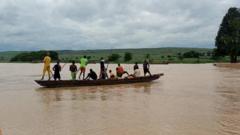
A significant maritime disaster has unfolded in north-western Nigeria, where authorities confirmed at least forty-six fatalities after a boat capsized in Sokoto state. The vessel was reportedly carrying more than seventy individuals, a figure that suggests severe overcrowding. Emergency responders have recovered sixteen survivors from the water, but fifteen people remain unaccounted for as search operations continue in difficult terrain. Police spokesperson Ahmad Rufai stated that bodies were found near Gorau in the Gorony area, emphasizing the logistical challenges faced by security agencies and emergency services attempting to reach the remote site.
Local witnesses provided details regarding the passengers on board, suggesting they were largely children traveling alongside farm owners and laborers. The group was reportedly en route to work on a rice harvest, a common activity in the region where agricultural workers rely heavily on water transport due to poor road infrastructure and a lack of bridges. One observer described seeing approximately fifty bodies wrapped in mats and traditional cloths at a community mosque, awaiting burial. This scene highlights the immediate human toll and the communal effort to manage the aftermath in an area with limited access.
The incident has drawn attention from Nigeria's emergency management agency, which acknowledged the remoteness of Gorau. Spokesperson Ezekiel Manzo confirmed that teams had been dispatched to the location, though the difficult geography likely delayed initial response efforts. The reliance on boats for daily transportation in rural communities is a structural reality for millions of Nigerians. Rivers serve as critical arteries for moving people and goods to markets and neighboring villages, often substituting for inadequate land-based infrastructure. Wooden vessels are frequently used for these journeys, despite their vulnerability to capsizing.
This tragedy is not an isolated event but part of a disturbing pattern of boat accidents in Nigeria. Overcrowding, poorly maintained vessels, and weak enforcement of safety regulations are consistently cited as primary causes of death in such incidents. Just last month, at least five people drowned when a boat overturned in Jigawa state. Earlier this year, in January, twenty-six people died after a vessel carrying farmers and fishermen capsized while traveling between Jigawa and Yobe states. These recent events follow a particularly devastating accident in December 2024, where fifty-four bodies were recovered from the River Niger after a boat potentially carrying over two hundred passengers sank.
Authorities have previously recommended a series of measures to mitigate these risks. Proposed solutions include providing safer boats, distributing life jackets, dredging waterways to improve navigability, and deploying water guards at jetties and terminals. Additionally, ensuring that boat operators are properly trained and licensed has been identified as a critical step. However, reports indicate that many of these recommendations have not been fully implemented or effectively enforced. The gap between policy proposals and on-the-ground reality remains wide, leaving passengers vulnerable to preventable dangers.
The recurring nature of these disasters points to systemic issues in maritime safety oversight. While the immediate focus is on the victims and their families in Sokoto state, the broader implications concern the failure to protect regular commuters who depend on water transport for their livelihoods. The use of wooden boats, which are often less stable and harder to maintain than modern alternatives, exacerbates the risk. Without significant investment in infrastructure and strict enforcement of existing safety rules, similar tragedies are likely to continue occurring across the country's extensive network of rivers and waterways.
As search operations persist, the exact number of casualties may rise if more bodies are recovered from the river or surrounding areas. The missing fifteen individuals represent a continuing uncertainty for their families and local communities. The incident serves as a stark reminder of the dangers faced by rural populations in Nigeria, where economic necessity often forces people to use unsafe transport methods. Until comprehensive safety measures are adopted and enforced, the risk of further loss of life remains high.
The response from officials has been focused on recovery and investigation, but long-term solutions require political will and resource allocation. The repeated failures to implement recommended safety protocols suggest a deeper institutional challenge. For now, the community in Gorau mourns its losses while emergency teams work to locate the remaining missing persons. The tragedy underscores the urgent need for reform in Nigeria's maritime transport sector to prevent future incidents that claim so many lives.
Sources behind this briefing
Go to the original reporting
- BBC World↗Dozens dead after boat capsizes in north-western Nigeria

