The short version
- Blue Origin is adding two launch pads and a major manufacturing facility in Florida to support up to 150 annual rocket launches.
- The expansion coincides with reported difficulties for commercial customers securing Falcon 9 missions, creating a market opening for heavy-lift providers.
- Infrastructure upgrades aim to recover from a recent catastrophic test failure and support future lunar lander requirements for NASA's Artemis program.
Blue Origin has announced a significant expansion of its operational footprint in Florida, signaling an aggressive push to dominate the heavy-lift launch market. The company plans to add two new launch pads for its New Glenn rocket at Cape Canaveral, supplementing the two sites already under construction. This infrastructure investment is part of a broader strategy to achieve a cadence of multiple flights per week by the end of the decade, with an ultimate goal of launching 150 rockets annually from the region.
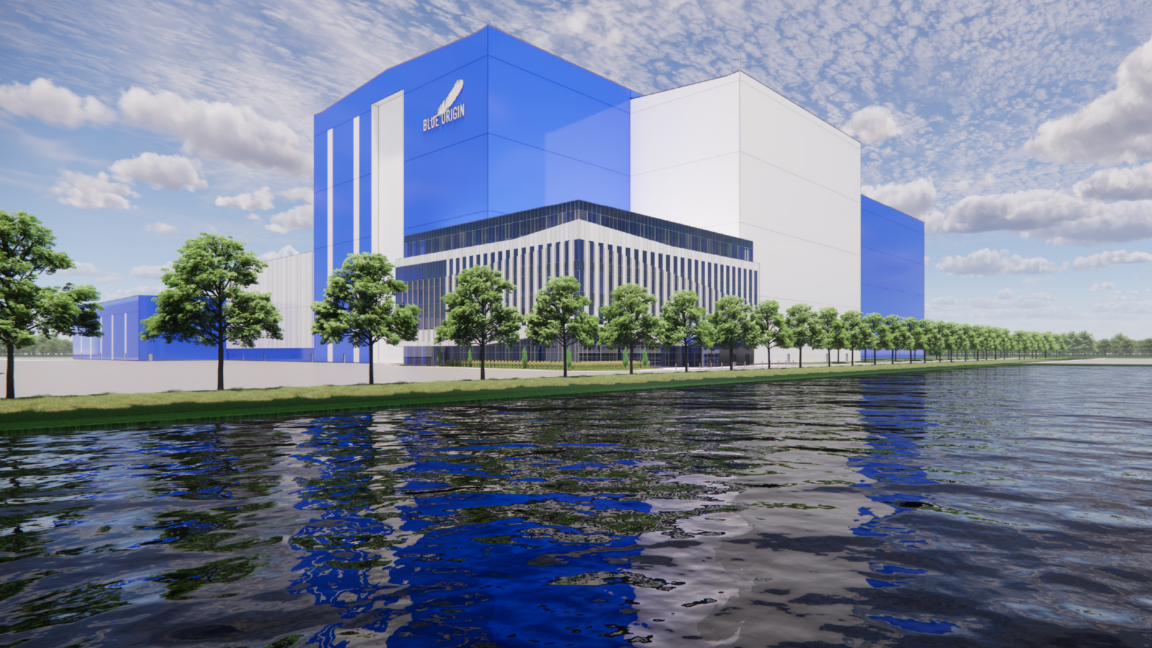
The expansion includes substantial upgrades to manufacturing and recovery capabilities. Blue Origin is investing in a new facility designed to produce up to 150 upper stages for a larger variant of the New Glenn vehicle. Additionally, the company will acquire two more landing ships to retrieve first-stage boosters, doubling its current recovery fleet which currently consists of a single vessel named Jacklyn. A new customer integration facility, developed in partnership with the US Space Force, will feature four payload bays to allow for simultaneous mission processing.
Ian Richardson, senior vice president of operations at Blue Origin, stated that these investments are focused on building capacity for more reliable and efficient missions. The company has already invested approximately $3 billion in Florida facilities and infrastructure. This financial commitment supports a workforce of more than 5,000 employees and 500 suppliers across the state. The operational footprint has more than doubled in recent years, spanning over 20 sites in Brevard and Orange Counties.
Blue Origin positions itself as the only company on the Space Coast that manufactures, launches, and refurbishes rockets entirely within the region. This vertical integration distinguishes it from competitors and underscores its ambition to supersede other major players in Florida’s aerospace sector. The scale of this operation suggests a long-term commitment to establishing a dominant presence in the commercial launch industry, leveraging local supply chains and workforce development.
The timing of this expansion appears strategic amid shifting dynamics in the commercial launch market. Reports indicate that SpaceX is reducing its availability for commercial satellite customers on Falcon 9 and Falcon Heavy vehicles beyond 2028. This contraction has created a vacuum for medium- and heavy-lift launch services, presenting an opportunity for Blue Origin to capture market share if it can demonstrate consistent reliability with the New Glenn vehicle.
The push for capacity follows a period of significant setbacks for the New Glenn program. In late May, a failure in one of the rocket’s BE-4 engines resulted in the catastrophic loss of the vehicle and its primary launch site, Launch Complex 36A. The company has since been working urgently to rebuild the site to support a return-to-flight mission. While a launch before the end of 2026 is considered unlikely, the company aims to resume operations in early 2027.
The new infrastructure is likely intended to support the larger 9x4 variant of the New Glenn rocket, which features nine first-stage engines compared to seven in the smaller 7x2 version. This heavier configuration is designed to carry 70 metric tons to low-Earth orbit and more than 20 tons to trans-lunar injection. The rapid construction approach for the new pads will replicate the methods used for Launch Complex 36B, aiming to accelerate deployment timelines.
The development of the larger rocket variant aligns with Blue Origin’s broader objectives, including its role in NASA’s Artemis program. The company is expected to provide a human lander for lunar missions, a requirement that likely necessitates the heavy-lift capabilities of the 9x4 configuration. If development proceeds without further major delays, this variant could debut as early as 2028, solidifying Blue Origin’s position in both commercial and government spaceflight sectors.
The company’s strategy reflects a bet on high-frequency launch operations becoming the standard for future space access. By investing heavily in reusable infrastructure and rapid turnaround capabilities, Blue Origin aims to reduce costs and increase mission flexibility. The success of this approach will depend on overcoming technical challenges and maintaining a steady pace of development amidst intense competition and evolving customer demands.
As the aerospace industry navigates these transitions, Blue Origin’s expansion highlights the growing importance of domestic manufacturing and launch infrastructure. The company’s ability to execute its ambitious timeline will be closely watched by investors, competitors, and government partners alike. The coming years will likely determine whether this aggressive scaling translates into sustained market leadership or remains an unfulfilled promise.
Sources behind this briefing
Go to the original reporting
- Ars Technica↗Blue Origin is going all in on the New Glenn rocket

