The short version
- Copper-based proteins give cephalopods and crustaceans blue blood that functions well in cold environments.
- Some lizards accumulate green pigments from broken-down hemoglobin, while icefish lack red blood cells entirely.
- High-altitude species have evolved specialized hemoglobin to bind oxygen more tightly in thin air.
Human blood is universally recognized by its red hue, a color derived from iron atoms within hemoglobin proteins that bind to oxygen. However, this visual characteristic is not a universal standard across the animal kingdom. Various species possess circulatory fluids that appear blue, green, violet, yellow, or even translucent white. These variations are not merely cosmetic; they reflect distinct evolutionary adaptations and chemical mechanisms for transporting oxygen and maintaining physiological health.
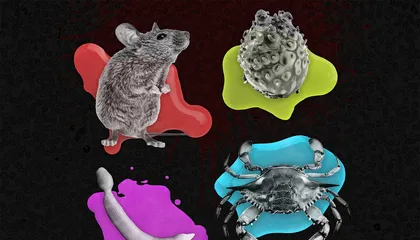
The red color in vertebrates stems from hemoglobin, which contains iron atoms that turn bright cherry when saturated with oxygen and a darker brown-red when oxygen levels drop. Many marine animals, including octopuses, squid, shrimp, and crabs, do not rely on this iron-based system. Instead, they utilize a protein called hemocyanin, which contains copper atoms. When these copper atoms bind to oxygen, the resulting fluid appears blue. Although hemocyanin is less efficient at oxygen transport than hemoglobin, it performs particularly well in cold temperatures, such as those found in deep ocean waters. Research also suggests that hemocyanin may play a role in immune function and wound healing.
Other seafloor dwellers, such as brachiopods and peanut worms, exhibit violet blood. This coloration is not caused by hemocyanin but by a different iron-rich protein pigment known as hemerythrin. In contrast, certain sea squirts display a greenish-yellow hue. The exact cause of this color remains a subject of scientific debate. One hypothesis points to the element vanadium, which these animals concentrate in their blood. Another theory suggests that the color results from carotenoids, pigments produced when sea squirts metabolize marine phytoplankton, their primary food source.
Some species achieve a full green blood color through entirely different metabolic pathways. Several lizard species native to New Guinea use standard vertebrate hemoglobin but break it down into biliverdin, a naturally green pigment. While most vertebrates further metabolize biliverdin into duller compounds, these lizards accumulate it in their bloodstream. The concentration becomes high enough that the green hue overwhelms the red of the remaining hemoglobin. In humans, high concentrations of this same molecule can contribute to the yellow-green appearance associated with jaundice.
Perhaps the most striking deviation from the norm is found in Antarctic blackfin icefish. These creatures are the only known vertebrates that do not produce hemoglobin or possess red blood cells. Their blood is a milky, translucent white, giving them a ghostly appearance. Without oxygen-binding proteins, icefish rely on oxygen dissolving directly into their bloodstream. To compensate for this less efficient transport method, they have evolved larger hearts and capillaries to circulate greater volumes of blood. As patient ambush predators that expend less energy than darting hunters, their lower oxygen requirements make this system viable.
Survival in the freezing waters of Antarctica requires additional adaptations beyond unique blood chemistry. Salt lowers the freezing point of water, allowing polar oceans to remain liquid below typical freezing temperatures. Icefish possess antifreeze proteins that protect their bodies from ice damage. Recent genomic studies by researchers at the University of Oregon have investigated why genes for hemoglobin production were deleted from these fish's DNA. It remains unclear whether they lost red blood cells first or hemoglobin genes first, and the evolutionary driver for this loss is still a mystery.
One prevailing theory suggests that the cold waters of the Southern Ocean are sufficiently oxygen-rich to render hemoglobin obsolete. The high solubility of oxygen in cold water may have allowed icefish to bypass the need for specialized oxygen-carrying proteins. This adaptation highlights how environmental conditions can shape fundamental biological traits over evolutionary time. The loss of hemoglobin represents a significant departure from vertebrate norms, demonstrating that even essential systems can be abandoned if alternative strategies prove effective.
In contrast to the low-oxygen adaptations of deep-sea or cold-water species, high-altitude animals face the challenge of thin air. Species living at elevations up to 14,000 feet, such as the deer mouse, have evolved hemoglobin that forms extra-tight bonds with oxygen. This adaptation allows them to thrive in environments where humans often experience altitude sickness. Similar modifications are found in Andean hummingbirds and high-altitude black-spotted frogs. These examples illustrate how diverse environmental pressures drive specific chemical changes in blood composition.
The study of animal blood reveals a complex palette of biological solutions to the universal problem of oxygen transport. From copper-based blue fluids in cephalopods to vanadium-rich yellow hues in sea squirts, each color represents a unique evolutionary path. Understanding these variations provides insight into how life adapts to extreme conditions, whether it is the crushing pressure of the deep ocean, the freezing temperatures of Antarctica, or the thin air of mountain peaks. The diversity of blood chemistry underscores the flexibility of biological systems in meeting survival challenges.
Future research continues to uncover new details about these physiological mechanisms. Scientists are still investigating the precise roles of various pigments and proteins beyond oxygen transport, including their potential functions in immunity and healing. As genomic tools improve, researchers may resolve lingering questions about the evolutionary history of blood composition, such as the sequence of gene loss in icefish. These findings not only expand knowledge of animal biology but also offer potential insights into human health and disease.
Sources behind this briefing
Go to the original reporting
- Smithsonian Magazine↗The Bloody Palette of the Animal Kingdom Goes Far Beyond Red. These Creatures Have Blood That Runs a Chilling Blue, Bright Green or Milky White

