The short version
- Bentley is set to unveil its first fully battery-electric vehicle, the Torcal, in late September as a new entry-level model priced below the Bentayga.
- The SUV shares core engineering with Porsche but features a distinct acoustic profile created by human percussionists mimicking the firing order of legacy V8 engines.
- Performance targets include over 850 horsepower and rapid charging capabilities, with a focus on seamless torque delivery rather than maximum peak power figures.
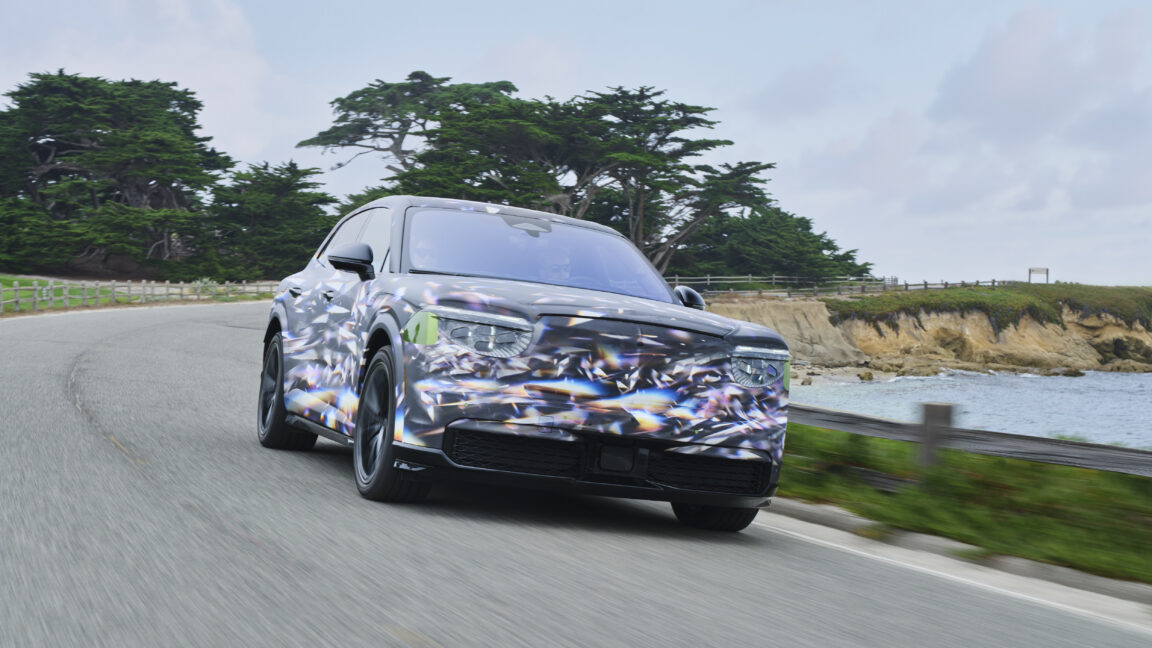
Bentley is preparing to launch its first fully battery-electric vehicle, marking a significant shift for the British luxury automaker. The new model, named Torcal, will serve as the brand’s entry-level offering and is expected to carry a price tag lower than that of the current Bentayga SUV. While Bentley has integrated plug-in hybrid technology across its existing lineup, including replacing the W12 engine in the Continental GT with a hybrid V8, the Torcal represents the company’s first departure from internal combustion entirely. The production version is scheduled for a global reveal on September 23.
Underneath its camouflaged exterior, the Torcal shares substantial engineering DNA with Porsche’s electric Cayenne. Despite these shared foundations, Bentley has reworked the platform to meet its specific design and performance criteria. The vehicle is shorter in length and height compared to the Bentayga, yet it maintains a voluminous interior space due to the packaging efficiencies inherent in electric vehicle architecture. Engineers are targeting an EPA range of approximately 300 miles, or roughly 600 kilometers under WLTP testing standards. The powertrain will support high-speed direct current fast charging at rates up to 400 kilowatts.
Performance specifications for the Torcal prioritize smoothness over raw peak numbers. Martin Page, the product line director for the vehicle, indicated that the car will deliver more than 850 metric horsepower and well over 1,000 newton-meters of torque. However, the engineering team is not pursuing four-figure power outputs. Instead, the calibration focuses on linear performance progression, aiming to make acceleration feel effortless and confidence-inspiring. The goal is to allow customers to access the vehicle’s full potential regularly without compromising comfort.
A defining feature of the Torcal is its approach to acoustic identity. Recognizing that luxury purchases are often emotional, Bentley sought to maintain a sensory connection to its heritage despite the absence of an engine. Rather than using digital samples or external speakers like some competitors, the company employed human artists to recreate the sound of its historic 6.75-liter V8 engines. Percussionists played drums in the specific firing order of the V8, introducing natural human imperfections and variations that mimic the mechanical tolerances of a real engine.
This simulated audio is mapped to the load on the powertrain, ensuring the sound remains subtle and integrated with the driving experience. The noise is audible inside the cabin and faintly outside, but it is designed to be unobtrusive. It becomes more pronounced during high-load scenarios, such as climbing hills or engaging in dynamic driving, providing a visceral sense of engagement without becoming obnoxious. This approach contrasts sharply with strategies that rely on loud external amplification.
The driving dynamics aim to blend the ride comfort of the Flying Spur sedan with the handling characteristics of the Continental GT. The Torcal utilizes a 48-volt dual-valve damper active ride comfort system, similar to that found in the Porsche Panamera. Although the SUV sits higher than traditional sedans, its lower center of gravity helps compensate for this height. Primary controls, including throttle response, brake pedal feel, and steering rates, have been benchmarked against existing Bentley models to ensure a familiar character for drivers transitioning from combustion-powered vehicles.
Interior details remain largely concealed in preproduction units, but some technological shifts are evident. The traditional metal organ-stop air vent controls, a staple of Bentley interiors, will be replaced by digital vents controlled via the infotainment screen. This change aligns with the shared platform technology but marks a departure from classic design cues. Early glimpses suggest sophisticated ambient lighting that creates a shimmering effect, reminiscent of light passing through crystal prisms.
The Torcal’s development includes extensive localization testing in the United States, as evidenced by preproduction vehicles observed at events like Pebble Beach. As Bentley moves further into electrification, this model serves as a critical test case for how the brand can translate its luxury ethos to a zero-emission platform. The success of the Torcal will likely influence future design and engineering decisions across the entire lineup as the automaker navigates the transition away from internal combustion engines.
With the official unveiling less than a month away, industry observers are watching closely to see how Bentley balances its heritage with modern electric vehicle realities. The combination of shared Porsche engineering, human-crafted acoustics, and familiar driving dynamics suggests a strategy focused on continuity rather than radical reinvention. Whether this approach will resonate with traditional buyers and new electric vehicle adopters alike remains to be seen once the production model is fully revealed.
The launch of the Torcal signals Bentley’s commitment to expanding its market reach while maintaining premium positioning. By offering an entry-level electric SUV, the company aims to attract a broader demographic without diluting its brand equity. The focus on effortless torque and refined acoustics underscores a belief that luxury in the electric age is defined by sensory experience and seamless performance rather than just specifications. The coming weeks will provide more clarity on pricing, final design details, and initial market reception.
Sources behind this briefing
Go to the original reporting
- Ars Technica↗An EV that sounds like a 6.75 L V8: A ride in the Bentley Torcal
