The short version
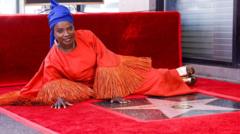
- Angélique Kidjo has become the first musician from Africa to be honored with a star on the Hollywood Walk of Fame.
- The ceremony in Los Angeles featured tributes from industry peers who praised her work ethic and ability to bridge cultural divides through music.
- Kidjo used the platform to emphasize global unity and acknowledged the foundational role African traditions play in worldwide musical expression.
Angélique Kidjo has secured a permanent place in entertainment history as the first African musician to receive a star on the Hollywood Walk of Fame. The ceremony took place in Los Angeles, where the Beninese artist was honored for more than four decades of musical output that has consistently merged West African rhythms with funk, jazz, and R&B. This distinction places her alongside Charlize Theron, who previously represented the continent as an actress, within the Walk of Fame’s collection of over 2,800 stars. The induction serves as a formal recognition of Kidjo’s influence on the global music landscape, acknowledging her role in bringing African sounds to international audiences since the early 1980s.
Kidjo’s journey to this milestone began after she left Benin for Paris in 1983. She has previously cited political oppression under the country’s then-communist government as a primary reason for her departure, noting that the experience heightened her awareness of how quickly freedom can be lost. Her career has since been defined by a relentless work ethic and a commitment to artistic fusion. Over the years, she has released 18 albums and earned five Grammy Awards from 17 nominations. Her latest project, titled HOPE!!, was released earlier this year and features production by Pharrell Williams along with collaborations from artists such as Ayra Starr, Quavo, Nile Rodgers, and Diane Warren.
At the unveiling ceremony, Kidjo reflected on the broader implications of her achievement. She emphasized that the star represents a tangible realization of her vision for a connected world, describing humanity as a single family regardless of language, skin color, or origin. In her remarks, she highlighted the often-overlooked contributions of African cultures to global music, asserting that without these foundational elements, modern music as it exists today would not be possible. Her comments underscored a long-standing advocacy for recognizing the roots of popular genres and the continued relevance of African artistic traditions.
Industry figures present at the event offered high praise for Kidjo’s professional dedication and personal character. Willem Dafoe, an actor who attended the ceremony, described her as the hardest-working woman in show business, comparing her stage energy to that of soul legend James Brown. He noted that her commitment extends beyond performance to include songwriting and activism. Djimon Hounsou, a fellow Beninese actor, was also among the attendees, joining other supporters such as Nigerian musician Adekunle Gold. The gathering included singing and dancing, reflecting the celebratory nature of Kidjo’s career and her ability to inspire joy through her art.
Beyond her musical accomplishments, Kidjo has maintained a significant presence in humanitarian efforts. She serves as a goodwill ambassador for both Unicef and Oxfam, leveraging her platform to support vulnerable populations. Additionally, she co-founded the Batonga Foundation, an organization dedicated to assisting young girls and women in Benin. Harvey Mason Jr., CEO of the Recording Academy, praised her ability to connect cultures and cross borders, noting that her music unites audiences in a manner few other mediums can achieve. This dual focus on artistic excellence and social responsibility has been a consistent thread throughout her career.
The recognition comes at a time when discussions about diversity and representation in the music industry remain prominent. Kidjo has previously spoken out about the need for greater inclusion within institutions like the Grammy Awards, questioning who is counted as African in such contexts. Her induction on the Walk of Fame adds another layer to these conversations, providing a visible marker of African achievement in one of Hollywood’s most iconic public spaces. While she joins Theron as an African representative on the walk, her status as the first musician from the continent highlights specific progress in recognizing artistic contributions rather than solely cinematic ones.
Kidjo’s career has included collaborations with a wide range of high-profile artists, including Burna Boy, John Legend, Bono, and Alicia Keys. These partnerships have helped solidify her reputation as a bridge between different musical communities. Her ability to adapt and evolve while maintaining her cultural roots has allowed her to sustain relevance across multiple generations of listeners. The recent release of HOPE!! demonstrates her continued engagement with contemporary sounds while honoring her heritage. Critics and fans alike have noted her commanding voice and dynamic stage presence, which have remained consistent throughout her four-decade tenure in the industry.
Looking ahead, Kidjo’s induction is likely to inspire further conversations about representation in global entertainment venues. As she continues to release music and advocate for social causes, her star on the Walk of Fame will serve as a reminder of the impact African artists have had on world culture. The event marked not just a personal victory for Kidjo but also a symbolic moment for the broader African diaspora. Her message of unity and shared humanity resonates with her artistic mission, reinforcing the idea that music can transcend borders and bring people together. The ceremony concluded with a celebration of her legacy, ensuring that her contributions are remembered by future generations.
Sources behind this briefing
Go to the original reporting
- BBC World↗Angélique Kidjo makes history for Africa with star on Hollywood Walk of Fame

