The short version
- A massive wildfire has engulfed a significant portion of the High Fens in Belgium, marking the most severe such event in the nation's recent history.
- International support includes water-bombing aircraft and helicopters from Sweden, the Czech Republic, and the Netherlands to assist overwhelmed local crews.
- The crisis is part of a broader pattern of extreme heat and fire activity across Europe, with significant evacuations also occurring in France and Croatia.
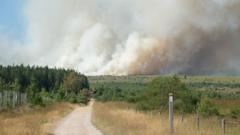
Firefighters are engaged in a critical battle against a massive wildfire that has torn through the High Fens, Belgium’s largest nature reserve. The blaze, which began on Friday, has consumed approximately one-third of the protected area by Saturday. Regional officials have characterized the incident as the most severe fire event in the country's recent history. The scale of the destruction has prompted urgent evacuations and a significant deployment of emergency resources.
Local authorities ordered residents from two nearby villages to leave their homes due to the immediate threat posed by the advancing flames. A local gymnasium was converted into a temporary shelter to accommodate those displaced by the crisis. Nicolas Yernaux, a spokesperson for the Wallonia regional government, confirmed that while all available resources are being deployed to protect residential areas, there remains a tangible risk that the fire could reach homes. The situation remained out of control as of Saturday afternoon.
The firefighting effort has been complicated by challenging environmental factors. The terrain within the High Fens consists of difficult-to-access bog-like territory, moorland, and dense forests. These geographical features, combined with adverse weather conditions, have hindered containment efforts. Officials noted that firefighters were forced to allow certain sections of heathland to burn because the areas were too dangerous or inaccessible for direct intervention.
To manage the spread of the fire, crews have focused on strategic defense lines. Gregory Melotte, a firefighter involved in the operation, reported that teams successfully prevented the blaze from spreading into a fir forest coming from the plain. However, he emphasized that the mission is not yet complete. Shifting winds have created volatile conditions, changing direction twice during the operation—once aiding the firefighters and once working against them.
Recognizing the severity of the situation, Belgium activated the European Union’s civil protection mechanism to request reinforcements from other member states. European Commissioner Hadja Lahbib confirmed that international aid is en route. This support includes two water-bombing aircraft from Sweden, as well as helicopters from the Czech Republic and the Netherlands. These assets are joining local crews working near the eastern border with Germany.
The crisis in Belgium is not isolated but part of a wider emergency affecting multiple European nations. In southwestern France, specifically in the Landes region, a separate wildfire has forced approximately 650 residents to evacuate their homes. That fire, which started on Thursday and reignited on Saturday, has required the deployment of more than 500 firefighters. Similar forest fires have been reported in Croatia, Spain, and Serbia since Friday.
These concurrent disasters are occurring against a backdrop of extreme weather conditions. The EU’s climate monitoring service, Copernicus, has verified that western Europe experienced its hottest June-to-July period on record. This prolonged heatwave has left vast swathes of land across the continent either actively burning or scorched brown, creating highly flammable conditions. The combination of dry vegetation and high temperatures has significantly increased the risk and intensity of wildfires.
The situation continues to evolve as emergency services work to contain the blazes and protect communities. While international aid is arriving to bolster local efforts, the unpredictable nature of the fires and the difficult terrain mean that the threat remains acute. Authorities are monitoring wind patterns and fire behavior closely to adjust strategies as needed. The coming days will be critical in determining whether the fires can be fully contained before they cause further damage to both natural reserves and residential areas.
Sources behind this briefing
Go to the original reporting
- BBC News↗Firefighters battle wildfire tearing through Belgian nature reserve

