The short version
- Organizers cancelled the Beijing Queer Film Festival following weeks of sustained harassment by police authorities.
- The event, founded in 2001, was the only public forum in mainland China dedicated to LGBTQ+ narratives and discussions.
- Experts describe the shutdown as part of a wider tightening of social control that targets feminist and independent cultural spaces.
The Beijing Queer Film Festival, widely recognized as the oldest independent cinema event of its kind in mainland China, has been abruptly cancelled. Organizers announced the decision late Thursday via an Instagram post, expressing regret for the disruption to participants who had planned to attend or were anticipating the program. The festival was scheduled to commence on Friday in the capital, marking another year of cultural exchange and community gathering. However, the event will not proceed after what is understood to be a coordinated campaign of pressure from state authorities.
According to reports, police officials intensified their scrutiny of the organizers through repeated telephone calls over several weeks leading up to the start date. This pattern of harassment appears designed to force the cancellation without issuing a formal administrative ban, a tactic that has become increasingly common in China’s cultural sector. The public security bureau in Beijing did not respond to requests for comment regarding the specific actions taken against the festival organizers or the rationale behind the interference.
Founded in 2001 by students from Peking University, the Love Queer Film Week grew into a significant platform for marginalized voices. For more than two decades, it served as the sole public forum in mainland China where films and discussions exploring LGBTQ+ issues could be presented openly. Its closure represents a substantial loss for local activists and artists who relied on this space to share narratives that often fall outside the official ideological framework promoted by the Communist Party.
The cancellation occurs against a backdrop of growing intolerance toward feminist and LGBTQ+ discourse within Chinese society. Experts note that film festivals are particularly vulnerable to state scrutiny because they provide opportunities to platform stories that challenge dominant political narratives. The current administration has demonstrated a consistent willingness to suppress activities that operate outside party-sanctioned channels, viewing such independent cultural expressions as potential threats to social stability and ideological conformity.
Maya Wang, deputy Asia director for Human Rights Watch, characterized the situation as part of a relentless tightening of social and ideological control under President Xi Jinping. She noted that any activity not explicitly approved by the party-state faces intensifying scrutiny and often official harassment. This pressure extends beyond film festivals to encompass broader civil society organizations, independent filmmakers, and LGBTQ+ communities, creating an environment where overlapping vulnerabilities make survival increasingly difficult for non-state actors.
Historical precedents suggest this is not an isolated incident but rather part of a sustained effort to eliminate independent cultural hubs. In 2014, the Beijing Independent Film Festival, once the most prominent of its kind in the country, was shut down after authorities detained its founders and cut power to the venue. More recently, an independent Chinese film festival scheduled for New York was cancelled last year following harassment from Chinese officials, raising concerns about transnational repression and the reach of state authority beyond domestic borders.
Despite these challenges, demand for such cultural events remains high. The Beijing Queer Film Festival continued to attract significant interest, with volunteer applications reaching 200 last year, a fourfold increase from 2024 figures. Several international filmmakers had already traveled to China to participate in this year’s program, underscoring the global significance of the event. The sudden cancellation leaves these participants and local attendees without a platform for engagement during what would have been a key cultural moment.
Hongwei Bao, a professor of Chinese studies at the University of St Andrews specializing in LGBT issues, described the festival as a beacon of resilience for the queer community in China. He warned that its shutdown carries a chilling effect, signaling to activists and artists that even long-standing, relatively low-profile events are not immune to state intervention. The loss of this forum diminishes the visibility of LGBTQ+ experiences in public discourse at a time when open discussion is becoming increasingly restricted.
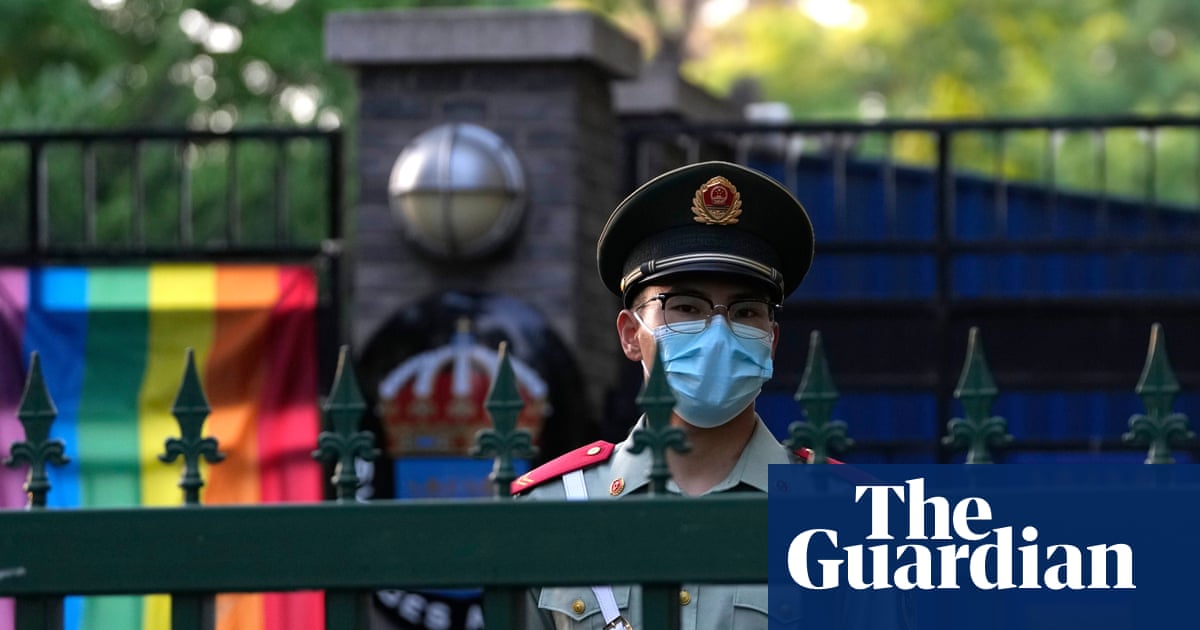
Recent months have seen similar disruptions to cultural programming with LGBTQ+ themes. In June, screenings scheduled for Pride month at the Institut Français, a French cultural center in Beijing, were cancelled due to police harassment. These incidents illustrate the pervasive nature of the crackdown, affecting both domestic and foreign-affiliated institutions. As state control tightens, the space for independent cultural expression continues to shrink, leaving civil society organizations with fewer avenues for advocacy and community building.
The future of independent film festivals in China remains uncertain. With the closure of the Beijing Queer Film Festival and previous shutdowns of other major events, organizers face an increasingly hostile environment. While some may attempt to operate underground or shift focus to digital platforms, the risks associated with such activities remain high. The international community continues to monitor these developments, concerned about the erosion of civil liberties and the suppression of diverse voices in Chinese society.
Sources behind this briefing
Go to the original reporting
- The Guardian World↗Beijing Queer film festival cancelled after harassment from authorities