The short version
- Caleb Williams completed 71 percent of his passes for 247 yards and one touchdown without any turnovers in the victory.
- Jeffery Simmons recorded a sack, six tackles, and a pass defended on his debut after being acquired from Tennessee.
- Seattle lost its 30-game streak of games decided by four points or fewer, dropping to a 4-4 record.
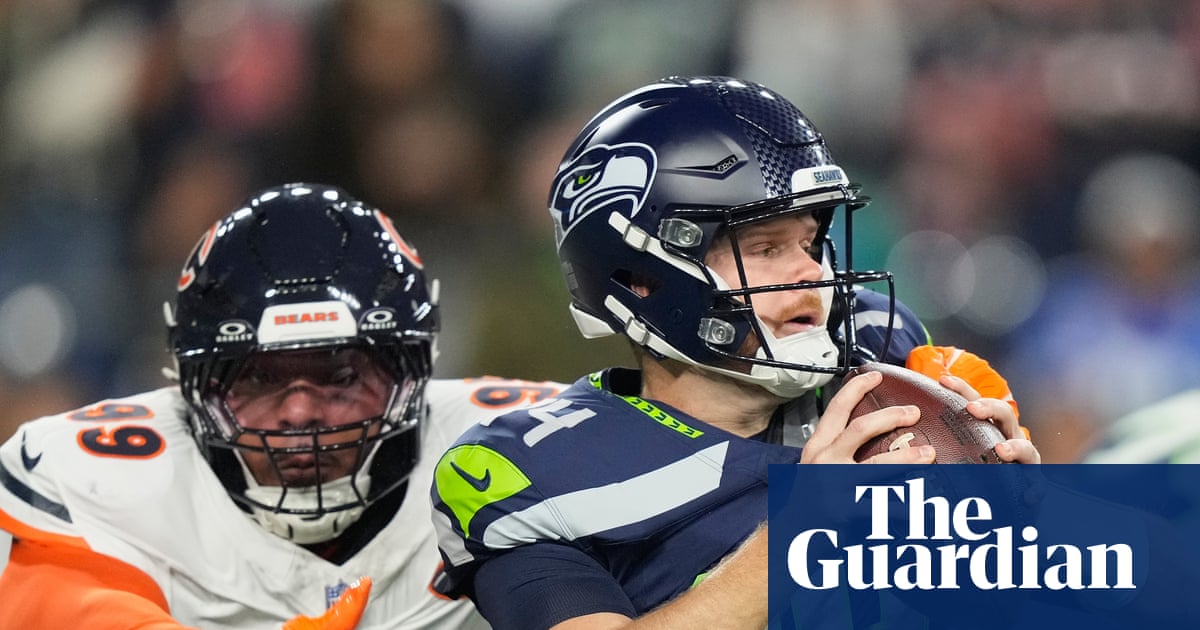
The Chicago Bears secured a decisive victory over the Seattle Seahawks on Monday night, winning 34-17 in a contest that highlighted both offensive efficiency and immediate defensive impact from a recent acquisition. The win improved Chicago’s record to 6-2, while the defending NFC champions fell to 4-4, marking their third defeat in four games. This result represents a significant shift for Seattle, which had previously maintained a strong winning percentage on Monday Night Football but now finds itself looking upward in the playoff standings.
Quarterback Caleb Williams delivered a highly efficient performance against one of the league’s most formidable defenses. He completed 71 percent of his attempts, accumulating 247 passing yards and throwing one touchdown pass. Crucially, Williams avoided any turnovers and was sacked only once throughout the game. His precision on the opening drive set the tone for the contest, leading to a short touchdown run by D’Andre Swift. This early success allowed Chicago to establish control before Seattle could mount a meaningful response.
The Bears’ defensive transformation was evident through the immediate contributions of Jeffery Simmons, who joined the team last week via a trade with Tennessee that involved two first-round draft picks. Simmons made an instant impact by recording a sack on the opening drive and finishing the game with six tackles, a tackle for loss, and a pass defended. His presence helped Chicago hold Seattle to just 252 total yards and limited them to a single third-down conversion in eleven attempts. The defense effectively neutralized Seattle’s offensive rhythm for much of the first half.
Seattle’s struggles were compounded by difficulties on the ground, despite recent roster moves aimed at strengthening their interior line. The Seahawks traded for three-time All-Pro guard Quenton Nelson and saw the return of running backs Zach Charbonnet and Jadarian Price from injury prior to this matchup. However, these additions did not translate into production, as Seattle managed only 81 rushing yards. The lack of a consistent ground game forced quarterback Sam Darnold into situations where he could be pressured or make errors, contributing to the team’s inability to sustain drives.
The Seahawks showed brief signs of life in the second quarter when Darnold connected with Jaxon Smith-Njigba on a 43-yard pass late in the period. This play kept Seattle within striking distance before halftime. However, the Bears maintained their lead through special teams and continued offensive execution, extending their advantage to 20-9 by the third quarter. Another efficient touchdown drive, capped by a one-yard run from Swift, further solidified Chicago’s control over the tempo of the game.
Seattle attempted to rally in the fourth quarter after a blocked field goal by Jason Myers opened up opportunities on the other side of the ball. DeMarcus Lawrence forced a fumble from Colston Loveland, setting up a seven-yard touchdown pass from Darnold to Cooper Kupp. Seattle successfully converted a two-point attempt to narrow the gap to 20-17. Despite this momentum shift, the Bears responded with another scoring drive, and Darnold’s subsequent interception in the fourth quarter sealed the outcome by setting up Swift’s final touchdown.
The loss ended a notable streak for Seattle, which had not lost by more than four points in its previous 30 regular-season or playoff games. This run was the fourth-longest such streak in the Super Bowl era. Breaking this pattern underscores the severity of Seattle’s recent struggles and raises questions about their ability to compete consistently in high-stakes environments. The margin of defeat suggests that issues extend beyond simple bad luck or minor execution errors.
For Chicago, the victory validates the aggressive move to acquire Simmons, who expressed enthusiasm about joining the franchise. His ability to disrupt opposing offenses immediately addresses a previous lack of difference-makers on defense. With Williams playing efficiently and the running game finding success through Swift, the Bears have demonstrated a balanced approach that can challenge top-tier opponents. The team now looks to build on this momentum as they continue their push for a strong playoff position.
Statistically, D’Andre Swift led all rushers with 69 yards on 27 carries, while receivers Colston Loveland and Luther Burden III each recorded seven receptions. These numbers reflect the Bears’ ability to distribute the ball effectively and keep Seattle’s defense guessing. In contrast, Darnold completed 17 of 34 passes for 188 yards and two touchdowns but also threw an interception that proved costly. The disparity in efficiency between the two quarterbacks was a defining factor in the final result.
Looking ahead, both teams face critical implications from this matchup. Seattle must address its offensive inconsistencies and defensive vulnerabilities if it hopes to remain competitive in the NFC. Chicago, meanwhile, has shown it can win against elite competition by leveraging both veteran experience and new talent. The outcome of this game serves as a clear indicator of where each franchise stands in the current season landscape.
Sources behind this briefing
Go to the original reporting
- The Guardian US↗Caleb Williams and new arrival Jeffery Simmons power Bears past sputtering Seahawks


