The short version
- Voters approved a regional sales tax and a San Francisco parcel tax to fund public transit agencies facing financial collapse.
- The measures prevent the closure of dozens of stations and the elimination of weekend service, evening routes, and iconic streetcars.
- Advocates hope the victory will spur broader state reforms, though legal challenges could delay fund distribution.
Voters in the San Francisco Bay Area have decisively approved two funding measures designed to rescue the region’s public transit systems from imminent financial failure. The approval comes after months of campaigning focused on averting a scenario where major agencies would be forced to drastically reduce service, close stations, and raise fares. The outcome represents a significant shift for a region that has struggled with declining ridership and expiring pandemic relief funds.
The Regional Transit Measure, which passed with 62.2% support across five counties, establishes a sales tax increase of 0.5% in four Bay Area counties and 1% in San Francisco. This levy is projected to generate approximately $1 billion annually for the region’s four largest transit operators. In San Francisco specifically, voters also approved a parcel tax dedicated to funding Muni, the city’s publicly owned transit agency. Support was particularly strong in San Francisco, where the regional measure received 78.6% of the vote and the local parcel tax secured 73.6% approval.
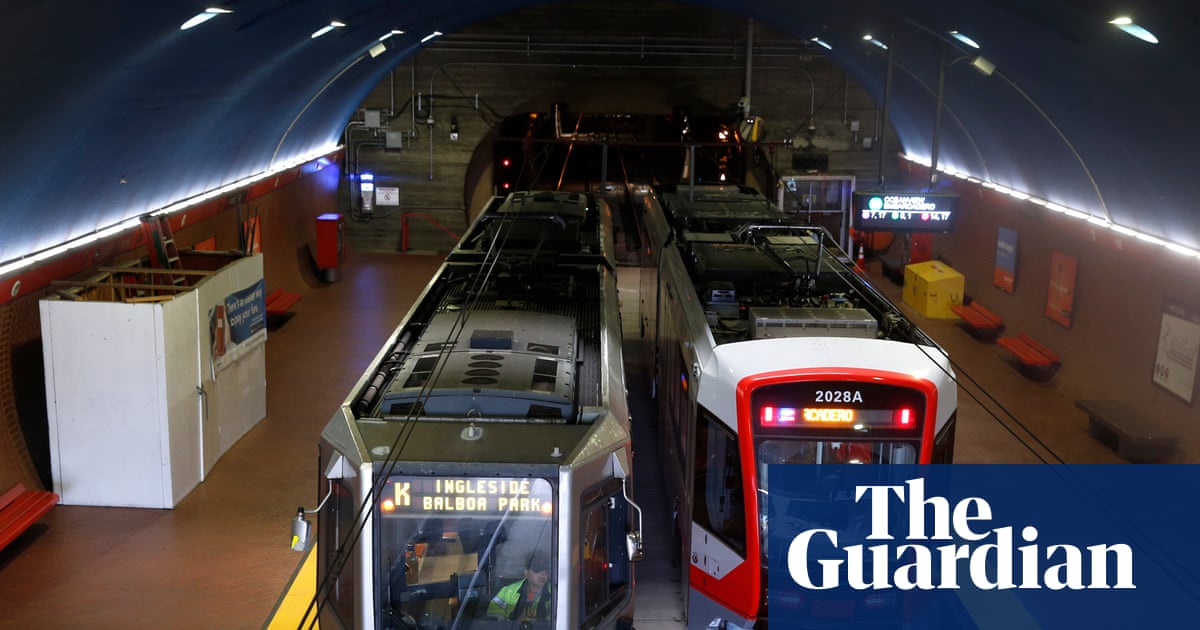
Without this new revenue stream, the consequences for daily commuters would have been severe. Bay Area Rapid Transit faced the prospect of closing up to 15 stations by early next year, alongside reduced service frequency and higher costs for riders and parking. Caltrain, which connects San Francisco to the South Bay, was set to shut down 10 stations and eliminate all weekend operations. Muni would have been forced to cut a third of its service, remove 20 bus lines, and suspend its historic streetcars and cable cars. All agencies were preparing to end evening services entirely.
The potential reduction in transit capacity threatened to trigger a downward spiral for the regional economy and infrastructure. With fewer stations and less frequent service, fare revenue would likely have dropped further, leading to additional austerity measures. Transportation experts warned that traffic congestion on major chokepoints, including the San Francisco-Oakland Bay Bridge, could have more than doubled during peak hours. The bridge alone sees roughly 3.5 million crossings per month, making it a critical artery for a region defined by its geography and notorious traffic jams.
The financial distress of these agencies stems largely from their heavy reliance on farebox revenue, which plummeted during the pandemic. The Bay Area experienced one of the nation’s most significant shifts toward remote and hybrid work models, leaving transit operators with fewer passengers just as federal relief funds began to expire. This fiscal cliff forced advocates to mobilize quickly to secure long-term funding solutions before service cuts became irreversible.
The campaign to pass these measures relied heavily on grassroots organizing and visual activism. Lian Chang, an organizer with Connect Bay Area, helped lead efforts that included creating cardboard replicas of trains and buses for mock funeral processions outside city hall. These props were used repeatedly at rallies and press conferences, helping to dramatize the stakes of the vote. Volunteers also painted banker boxes to resemble transit vehicles, using them to collect signatures needed to place the measures on the ballot.
A major challenge for organizers was mobilizing a constituency that often lacks political visibility. Transit riders in the Bay Area tend to be immigrants, seniors, children, and lower-income residents who may not traditionally engage in electoral politics. To foster pride and engagement, campaigners distributed buttons on specific bus lines threatened with cuts. This strategy helped recruit thousands of volunteers who collected 77,000 signatures, a figure that campaign officials describe as the highest mobilization effort in recent memory for the region.
Despite the clear voter mandate, the path to implementation may not be smooth. Anti-tax groups have historically challenged similar transit initiatives in California, potentially tying up funds in escrow accounts for years through litigation. Rebecca Long of the Metropolitan Transportation Commission stated that the agency administering the funds is prepared to defend the validity of the measure vigorously. Meanwhile, advocates are looking beyond the immediate crisis, hoping to use this momentum to push for broader state-level reforms in how public transit is funded across California.
The victory highlights a long-standing tension between California’s ambitious climate policies and its historical underinvestment in urban public transportation infrastructure. While the new taxes provide a temporary reprieve, the measures are set to expire in approximately 15 years. Jeff Cretan of Connect Bay Area emphasized the need to maintain political pressure to ensure that voters do not face another transit catastrophe when these funds run out. The coming months will test whether this financial stabilization can translate into sustainable service improvements for millions of residents.
Sources behind this briefing
Go to the original reporting
- The Guardian US Politics↗Did the Bay Area just save its transit system from the brink of certain death?