The short version
- Authorities have declared a disaster across all fifty districts of Bangkok after intense rains caused approximately forty deaths and forced thousands into shelters.
- The city's drainage infrastructure, compromised by urban development and land subsidence, failed to handle the volume of water, turning streets into stagnant bodies of water.
- Scientists note that while specific attribution requires further study, the event aligns with long-term trends of increasing extreme rainfall in Southeast Asia driven by warming oceans.
Bangkok has reached a critical threshold in its capacity to manage severe weather, prompting the government to declare a flood disaster across all fifty administrative districts of the capital. The crisis emerged after an intense period of precipitation dumped roughly three hundred millimeters of rain over just two days, a volume equivalent to half the annual average rainfall for London. This deluge transformed familiar urban landscapes into stagnant lakes, overwhelming residents and infrastructure alike. The government reports that approximately forty people have died in incidents related to the flooding, with causes including drowning and accidental electrocution. Thousands of displaced citizens have sought refuge in more than two hundred shelters established throughout the city.
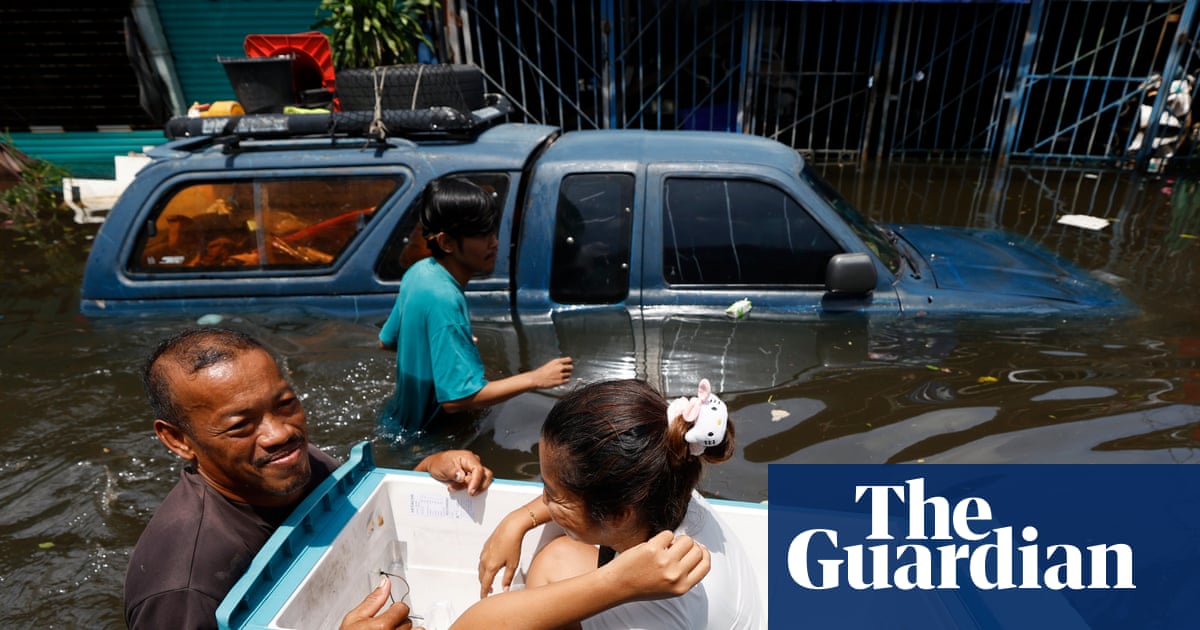
The physical impact on neighborhoods has been severe and visually striking. In areas like the Khlong Chan flat compound in northeast Bangkok, water levels rose rapidly, submerging ground floors and trapping vehicles. Residents described the rain as relentless, lasting continuously through day and night rather than following the typical pattern of brief afternoon storms. By the time mobile warnings reached many communities, street-level water had already reached waist height. Although some drainage efforts have reduced the worst of the standing water in certain zones, the receding waters have left behind significant debris and a worsening odor, signaling potential public health risks.
Infrastructure failures have compounded the humanitarian challenge. Bangkok relies on a complex network of canals, pumps, and dikes to manage water from the Chao Phraya River floodplain. However, decades of concrete construction have encroached upon and destroyed much of this natural drainage system, leaving the city ill-equipped to handle such extreme volumes. The disruption has extended beyond residential areas to critical transit hubs. Suvarnabhumi Airport faced significant operational hurdles, with a substantial portion of Thai Airways’ staff unable to report for duty. This labor shortage led to flight cancellations and massive accumulations of unclaimed luggage, while gridlock across the capital kept many residents stranded in their homes even if their immediate surroundings were not flooded.
The immediate response has involved emergency measures and public adaptation to surreal conditions. Some residents have resorted to using inflatable pools or other makeshift flotation devices to navigate submerged streets, highlighting the severity of the inundation. Authorities have established a war room to monitor the evolving situation, with Prime Minister Anutin Charnvirakul warning that floodwaters from northern regions continue to pose a threat to the metropolitan area. The weather agency has forecast additional heavy rain for the coming week, suggesting that the crisis is far from over. Schools have closed, and daily life remains suspended as the city grapples with the logistical nightmare of recovery.
This event occurs within a broader context of changing climate patterns in Southeast Asia. Scientists indicate that the region is experiencing a worsening trend of extreme flooding, which models predict will intensify as global temperatures rise. Warmer seas increase evaporation rates, allowing the atmosphere to hold more moisture and release it with greater force during storms. Nikolaos Skliris, an ocean scientist at the University of Southampton, noted that data already shows a significant trend toward extreme rainfall in central Thailand, a pattern expected to amplify over time. While it is too early to definitively attribute this specific storm to climate change without dedicated study, the conditions align with these long-term projections.
Meteorological factors contributing to the event include a low-pressure system that originated over an unusually warm South China Sea. This system moved across Cambodia and Vietnam before stalling above Bangkok, where cooler air temperatures facilitated heavy condensation and precipitation. The situation is further complicated by the presence of a strong El Niño pattern. Traditionally associated with drier summer conditions in Southeast Asia, recent research suggests that El Niño can still exacerbate the intensity of individual extreme rainfall events. This interplay of cyclical weather patterns and long-term warming creates a volatile environment for regional stability.
The disaster serves as a stark illustration of urban vulnerability in the face of intensifying weather extremes. For residents like Chaleerat Chamrasporn, the flooding represents a tangible reality of climate risks often discussed in abstract or apocalyptic terms. The combination of inadequate infrastructure, geographic susceptibility, and shifting atmospheric conditions has left Bangkok exposed. As recovery efforts begin, the focus will likely shift toward both immediate relief and long-term resilience planning. The coming weeks will test the city’s ability to manage ongoing rain threats while addressing the health and safety concerns arising from stagnant water and debris.
Looking ahead, the implications extend beyond Thailand’s borders. Southeast Asia is increasingly viewed as a hotspot for climate-related disruptions, with extreme weather events becoming more frequent and severe. The failure of Bangkok’s drainage systems underscores the urgent need for urban adaptation strategies that account for changing hydrological realities. Without significant investment in resilient infrastructure and sustainable land use, similar megacities may face escalating risks. The current crisis highlights the intersection of environmental change and human development, offering a cautionary tale for other densely populated regions vulnerable to flooding.
Sources behind this briefing
Go to the original reporting
- The Guardian US↗Bangkok at breaking point as floods turn streets into stagnant lakes


