The short version
- The Australian Securities and Investment Commission reported over 19,400 scam incidents last financial year, nearly three times the previous total.
- Prime Minister Anthony Albanese is the most commonly impersonated public figure in deepfake videos promoting fake investment platforms.
- Regulators emphasize that high production quality does not indicate legitimacy and urge consumers to verify licenses independently.
Australia’s corporate regulator has issued a stark warning regarding the rapid escalation of sophisticated fraud schemes utilizing artificial intelligence. The Australian Securities and Investment Commission, known as ASIC, reported handling more than 19,400 scam complaints during the last financial year. This figure represents an almost threefold increase compared to the preceding twelve months, signaling a dramatic shift in how criminals target consumers seeking financial opportunities.
At the center of this surge is the use of deepfake technology to impersonate trusted public figures. According to data from the National Anti-Scam Centre’s Scamwatch platform, Australians lost approximately $7.4 million to scams involving the top ten most impersonated individuals. Prime Minister Anthony Albanese topped this list, making him the primary target for these deceptive campaigns. The fraudsters are leveraging his recognizable image and voice to lend false credibility to illegitimate investment schemes.
The nature of these scams has evolved beyond simple text messages or phone calls. Criminals are now producing polished video content that overlays real footage of politicians with fabricated audio tracks. In one prominent example, a deepfake version of the Prime Minister appears to endorse an unofficial platform, claiming it offers government guarantees. The fake audio promises investors can turn $4,000 into $40,000 monthly earnings, a claim that defies economic reality but is presented with convincing visual fidelity.
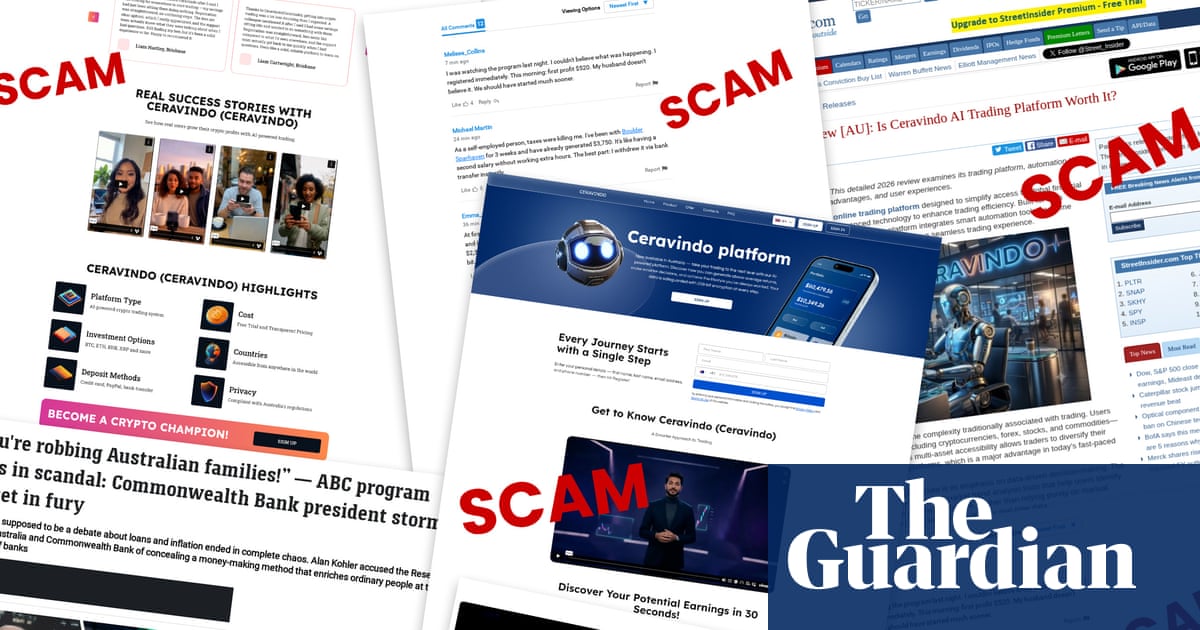
These fraudulent operations are highly organized and multi-layered. ASIC noted that scammers have constructed extensive networks comprising fake brands, counterfeit websites, fabricated reviews, and misleading news articles. These elements work in concert to build trust before soliciting funds. The money extracted from victims is typically transferred to overseas criminal entities, making recovery difficult for those who fall prey to the deception. The sophistication of these setups means that standard online searches are no longer sufficient for verifying legitimacy.
The list of impersonated figures extends beyond the Prime Minister to include a diverse range of public personalities. Economists Tom Piotrowski and Stephen Koukoulas, along with financial journalist Alan Kohler, appear frequently in these scams. Politicians such as Jacqui Lambie and Angus Taylor are also targeted, often leveraging their media presence. Other notable figures on the list include entrepreneur Dick Smith, billionaire Gina Rinehart, economist Alan Oster, Pauline Hanson, and the late radio personality John Laws.
Regulators emphasize that scammers are agile and responsive to current events. ASIC warned that fraudsters opportunistically switch which celebrities they impersonate based on the news cycle. This adaptability allows them to capitalize on topical issues or heightened public interest in specific individuals. The use of an American accent in some deepfake videos, despite featuring Australian figures, highlights the global nature of these criminal operations and their reliance on automated voice synthesis tools.
The scale of digital enforcement efforts has increased in response to this threat. Last financial year, ASIC removed 5,476 phishing hyperlinks, a figure nearly four times higher than the previous year. They also dismantled 7,051 fake investment platforms and took down 3,106 cryptocurrency-related scams, marking a thirty percent increase in crypto fraud takedowns. These statistics underscore the relentless pace at which new fraudulent entities emerge online.
Despite growing awareness, public confidence in detecting AI-driven scams remains misplaced. Research from Commonwealth Bank indicated that while nine out of ten Australians believe they can spot an AI scam, their actual success rate is less than fifty percent. This gap between perception and reality poses a significant risk to consumer safety. ASIC Chair Sarah Court stressed that polished content and familiar branding are not indicators of legitimacy.
To mitigate these risks, authorities advise consumers to exercise extreme caution before sharing money or personal information. Individuals are urged to verify website addresses independently and check whether companies hold valid Australian financial services licenses through official ASIC registers. Scammers often misuse legitimate license numbers, so direct verification with regulatory bodies is essential. Reporting suspicious activity to banks or cyber.gov.au remains a critical step in protecting oneself and the broader community.
The issue also intersects with political discourse, as deepfakes are increasingly used to influence voter perceptions. Independent MP Zali Steggall has proposed legislation aimed at cracking down on deceptive political advertising. The bill would require clear labeling of AI-generated content that could mislead voters, reflecting a broader societal concern about the integrity of digital media. As technology advances, the line between authentic and fabricated content continues to blur, necessitating robust regulatory responses.
Sources behind this briefing
Go to the original reporting
- The Guardian World↗Deepfake Anthony Albanese used in celebrity scams duping Australians out of $7.4m, Asic warns

