The short version
- Researchers have developed 'paraborgs' using giant burrowing cockroaches fitted with lightweight electronics, cameras, and remote injection systems.
- Proof-of-concept trials showed a 95% success rate for close-range injections and a 72% success rate for the full navigation-and-injection task.
- The technology aims to assist human rescuers by accessing narrow debris-filled spaces where direct entry is too dangerous or impossible.
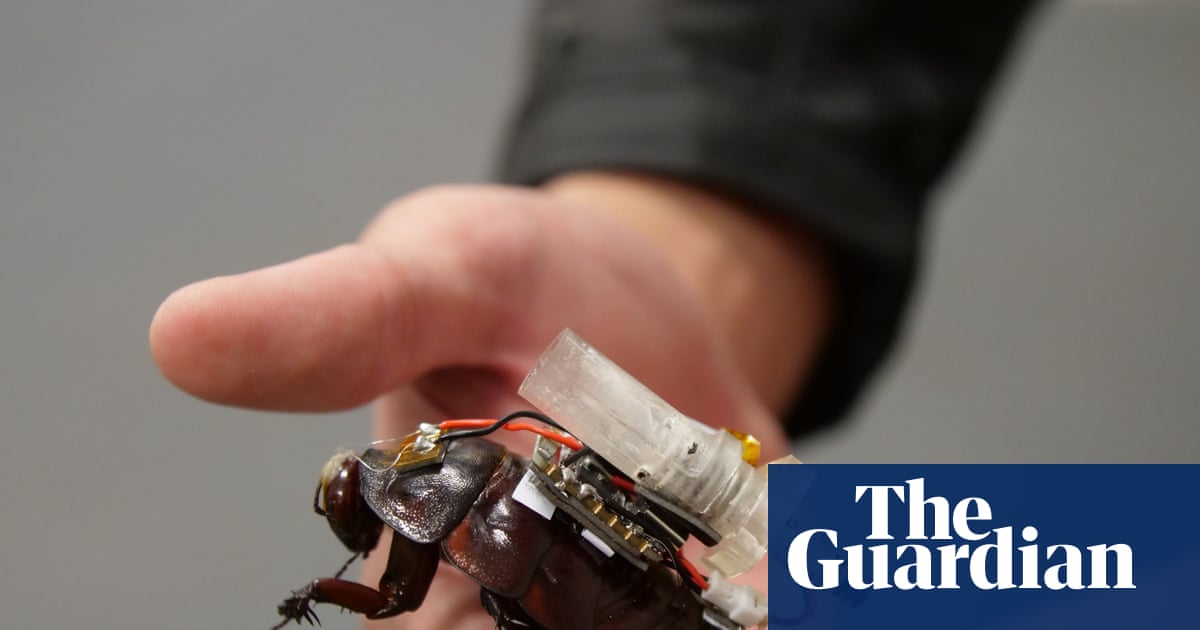
Biorobotics engineers in Australia are advancing the capabilities of insect-based robotics by integrating medical delivery systems into living organisms. Researchers from the University of Queensland and the University of New South Wales have created what they term 'paraborgs,' which are giant burrowing cockroaches augmented with cameras and miniature auto-injection devices. This development marks a shift from using cyborg insects primarily as mobile sensors to employing them as active participants in emergency response efforts, specifically designed to provide aid in environments that are inaccessible or hazardous for human rescuers.
The project focuses on the Macropanesthia rhinoceros, a species native to far north Queensland known for its size and burrowing habits. The engineering team fitted these insects with lightweight electronic harnesses that allow for remote control and data transmission. Crucially, the system includes custom-made auto-injection mechanisms activated by human operators. This design ensures that while the insect performs the physical navigation and positioning, all critical medical decisions remain under human supervision, addressing ethical concerns regarding autonomous medical intervention.
Initial testing has yielded promising results regarding the precision of these biological robots. In proof-of-concept experiments, the paraborgs achieved a 95% success rate when performing injections at close range, defined as being within 15 centimeters of the target. When evaluating the complete sequence of navigating to a casualty and administering aid, the system succeeded in 72% of trials. These figures suggest that while the technology is not yet perfect, it demonstrates a viable level of reliability for experimental applications in controlled disaster simulations.
A significant portion of the research effort has been dedicated to solving the mechanical challenges of positioning. PhD candidate Hai Nhan Le highlighted that the insect must not only find the target but also maintain stability during the injection process. The creature needs to navigate complex terrain, align itself accurately with the patient, and remain steady enough to deliver the payload without error. This requirement for precise biomechanical control represents one of the most difficult engineering hurdles in the development of such hybrid systems.
The ethical treatment of the animals involved has been addressed by the research team. The cockroaches are anesthetized during the fitting of electrodes and microchips to minimize distress. According to the researchers, once the harnesses are removed, the insects live for as long as their unmodified counterparts, indicating that the procedure does not significantly shorten their natural lifespan. This approach aims to balance technological innovation with responsible animal handling practices.
Emergency services officials have expressed cautious interest in the potential applications of this technology. Superintendent Tim Hassiotis from Fire and Rescue NSW noted that if these insects can safely enter spaces unreachable by humans, locate victims, and deliver emergency care, they could become a valuable addition to urban search and rescue toolkits. The ability to extend the reach of rescue teams into collapsed buildings or caves could provide critical support in scenarios where time is a limiting factor for survival.
The long-term vision for this technology involves deploying swarms of specialized cyborg insects, each performing complementary roles within a disaster zone. Rather than relying on single units, future iterations may include different types of augmented insects working together to map areas, locate survivors, and administer aid. The researchers anticipate that within the next five to ten years, these systems could be deployed in real-world emergencies, though significant development and testing remain before such widespread adoption occurs.
While the concept of using insects for medical delivery may seem unconventional or unsettling to some, proponents argue that the potential life-saving benefits outweigh aesthetic concerns. For individuals trapped under rubble or in confined spaces, the arrival of a small, agile responder could mean the difference between survival and fatality. As biorobotics continues to evolve, the integration of living organisms with electronic systems offers new possibilities for addressing complex challenges in disaster response and emergency medicine.
Sources behind this briefing
Go to the original reporting
- The Guardian US↗Cyborg cockroaches with tiny syringes could soon join search and rescue teams in major disasters

