The short version
- An Australian aviation team successfully evacuated a US expedition member from Antarctica during the height of winter, operating in total darkness and temperatures reaching -43C.
- The mission required significant logistical preparation, including modifying an Airbus A319 with medical equipment and waiting for a narrow weather window to clear snowstorms.
- This event represents the first recorded midwinter evacuation of its kind in July, highlighting the extreme complexity and risk associated with polar operations during this season.
An Australian aviation crew has completed a highly complex medical evacuation mission from Antarctica, transporting a US expedition member from McMurdo Station to Christchurch, New Zealand. The operation took place in late July, during the Antarctic winter, characterized by total darkness and severe cold. This event marks a significant logistical achievement, as it is the first time such a rescue has been executed in the month of July, according to flight crew members involved in the mission.
The request for assistance originated from the US Antarctic Program and was relayed through the Australian Antarctic Division on a Wednesday afternoon. Skytraders, the aviation company responsible for the flight, described the undertaking as extraordinary due to the timing and environmental conditions. The patient required urgent medical attention, necessitating a rapid response despite the formidable challenges posed by the polar winter environment.
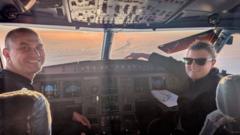
Preparation for the flight involved extensive technical work. Engineers and design teams spent approximately 24 hours configuring an Airbus A319, known as Snowbird 1, to accommodate a stretcher and necessary medical equipment. This modification was critical for ensuring the patient could be transported safely. The aircraft departed from Hobart, Tasmania, carrying four pilots, including Captains Rod and Louise Robertson, who have been married for 18 years and work together in aviation.
Initial attempts to launch the mission were thwarted by adverse weather conditions. A snowstorm prevented the operation from proceeding on the originally scheduled day, as it hindered ground crews from accessing the runway at McMurdo Station. The runway, constructed of compacted snow, required grading and grooming to ensure a smooth surface for landing. This maintenance process took six hours and could not be completed while the storm raged, forcing a delay in the flight schedule.
The crew waited an additional 12 hours for a suitable weather window to open. When conditions finally permitted takeoff, the aircraft departed Hobart in the early hours of Friday morning. The landing at Phoenix Airfield on Ross Island occurred in extremely challenging conditions, with temperatures recorded at -43C (-45.4F). Captain Louise Robertson noted that this was the most complex operation she had encountered during her seven years with Skytraders and her 25-year career as a pilot.
Captain Rod Robertson piloted the aircraft into the landing zone while his wife monitored from the right seat. The flight crew spent exactly one hour on the ground to transfer the patient onto the plane. Once the evacuation was complete, Snowbird 1 departed for Christchurch. The patient received treatment upon arrival in New Zealand and is reported to be recovering well. The precision required for such a maneuver underscores the high level of expertise needed for polar aviation.
Captain Al Wallach, another pilot on the mission, emphasized that every Antarctic operation demands absolute precision, but winter missions significantly increase complexity. He noted that the conditions encountered were at the very limit of what even specialized aircraft can handle. The success of the rescue was attributed to the coordinated efforts of flight crews, meteorologists, operational planners, runway teams, and medical personnel.
This mission follows a similar evacuation conducted by Skytraders in March 2020, when the US requested assistance for another McMurdo-based researcher. However, that earlier operation occurred in slightly warmer conditions, with temperatures around -30C. The July 2026 rescue stands out due to the total darkness and lower temperatures, which added layers of difficulty to navigation and ground operations. The event highlights the critical role of international cooperation and specialized aviation capabilities in supporting scientific research in extreme environments.
The successful completion of this midwinter evacuation demonstrates the resilience and adaptability of polar logistics teams. As climate conditions continue to shift, the ability to conduct safe and efficient operations in Antarctica remains vital for both scientific endeavors and emergency response. The Robertson couple and their team returned to Christchurch after the mission, having navigated one of the most demanding environments on Earth to save a life.
Future winter operations may look to this mission as a benchmark for what is achievable under extreme conditions. The integration of advanced aircraft configuration, precise weather forecasting, and skilled ground support proved essential. While such missions are rare due to their inherent risks, they underscore the importance of maintaining robust emergency protocols in remote research stations. The recovery of the patient serves as a testament to the effectiveness of these coordinated efforts.
Sources behind this briefing
Go to the original reporting
- BBC News↗Australian aviation crew carries out daring midwinter Antarctica rescue

