The short version
- Retired Admiral Peter Briggs estimates Australia needs a submarine force of 3,000 personnel to operate the larger nuclear-powered vessels planned under Aukus.
- The Royal Australian Navy currently has 230 personnel in training pipelines, aiming for 400 ready by 2030, but faces complex recruitment across dozens of specialized trades.
- The arrival of the USS Colorado in Perth highlights operational differences, including confined living conditions and the logistical complexity of maintaining two distinct submarine classes.
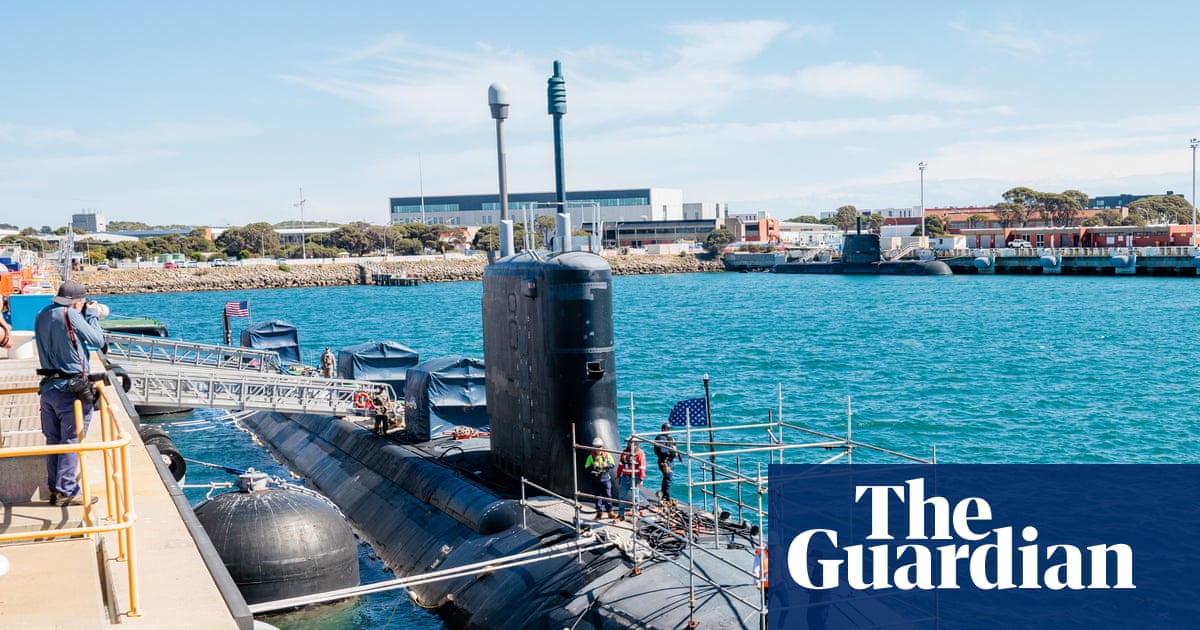
The Royal Australian Navy is confronting a significant personnel shortfall as it attempts to staff the nuclear-powered submarines central to the Aukus defense agreement. Retired Admiral Peter Briggs has issued a stark warning that the current recruitment trajectory is insufficient for the scale of the upcoming fleet expansion. He argues that Australia must effectively triple the size of its submarine arm, aiming for a workforce of approximately 3,000 individuals capable of operating nuclear vessels. This assessment comes as the USS Colorado, a Virginia-class submarine from the United States, arrived in Perth to assist with training and infrastructure development.
The transition represents a fundamental shift in Australia’s naval capabilities. The country plans to replace its existing fleet of five diesel-electric Collins-class submarines with three to five larger, nuclear-powered Virginia-class boats provided by the United States. These new vessels are substantially bigger than their predecessors and require up to 134 crew members each. This is nearly three times the number of personnel needed for the current Collins-class submarines. The disparity in crew requirements underscores the magnitude of the recruitment challenge facing defense officials.
Official figures from the Royal Australian Navy indicate that 230 personnel are currently engaged in various stages of the US nuclear-powered submarine training pipeline. Of these, roughly 145 have completed nuclear power training and are gaining experience on US Navy submarines. The navy has set a target to have 400 officers and sailors trained and ready for service by 2030. However, Admiral Briggs contends that this number is merely a starting point and that the ultimate goal must be much higher to sustain operations effectively.
The complexity of the transition is compounded by the need to maintain two different types of submarines simultaneously. The Virginia-class boats are intended as a bridge between the aging Collins-class fleet and the future SSN-AUKUS design, which is being developed jointly by Australia and the United Kingdom. Briggs noted that managing logistics, maintenance, spare parts, and training for two distinct submarine classes adds considerable operational friction. This dual-fleet strategy requires careful coordination to ensure readiness across both platforms.
Recruitment efforts are further complicated by the diverse skill sets required aboard modern submarines. The navy needs to fill more than a dozen different trades, ranging from technical roles like sonar and radio operation to support positions such as cooking and electrical maintenance. The specialized nature of nuclear propulsion training adds another layer of difficulty, as candidates must undergo rigorous certification processes in the United States before they can serve on Australian vessels.
The physical demands of submarine service also present a barrier to recruitment. Life aboard these vessels is characterized by extreme confinement and limited personal space. Sleeping arrangements often involve bunks stacked three high, with some crews utilizing 'hot racking,' where multiple sailors share two beds by rotating their sleep schedules around watch duties. In tight quarters, personnel may even sleep in torpedo rooms. Captain Justin Reeves of the USS Colorado described the vessel as built for combat rather than comfort, emphasizing that endurance is limited only by supplies like food and toilet paper.
The USS Colorado’s visit to Perth serves a dual purpose: routine maintenance and skill-building for Australian personnel. Fleet base officials stated that the month-long stay will allow crews to practice procedures in nuclear-related operational scenarios, though no radiological material will be transferred. Exercises involving nuclear aspects will be simulated. The submarine is scheduled to return in late 2027 as part of a rotational program designed to help Australia develop the infrastructure and expertise needed for its own nuclear fleet.
Questions regarding nuclear weapons remain a point of contention. While the USS Colorado arrived carrying conventional weapons, including torpedoes, US officials declined to confirm or deny the presence of nuclear arms on specific platforms. This ambiguity persists despite previous parliamentary inquiries into whether US submarines carrying nuclear weapons might rotate through Australian ports. The government has not responded to recent questions about whether workforce development programs are on track to meet the ambitious targets set by Aukus.
Sources behind this briefing
Go to the original reporting
- The Guardian World↗Australia must recruit hundreds more to crew Aukus submarines, retired admiral warns