The short version
- Adrian Newey’s design influence at Aston Martin will not fully materialize until the 2027 season due to late integration and wind tunnel delays.
- The team achieved a significant performance boost in Hungary, but Honda engine deficiencies remain a major hurdle for immediate competitiveness.
- Geopolitical instability involving Iran jeopardizes the final races in Qatar and Abu Dhabi, potentially shifting the season finale to Imola.
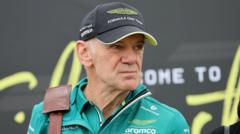
Aston Martin has recorded its first qualifying success of the season at the Hungarian Grand Prix, marking a tangible step forward for the team. However, observers expecting an immediate transformation driven by Adrian Newey’s arrival are facing a reality check. The anticipated surge in performance, often referred to as the 'Newey effect,' is not yet visible in race results because the technical overhaul is still in its early stages. The car that debuted in Hungary showed significant improvements in weight and downforce, shaving approximately two seconds off lap times, but this represents only the beginning of a longer development cycle.
The delay in seeing full competitive gains stems from a series of logistical and technical setbacks. Although new aerodynamic regulations were published in early January 2025, Newey did not officially begin his role as managing technical partner until March. Upon joining, he directed the team to abandon previous work in favor of his design outline, effectively resetting their progress. This decision placed Aston Martin two months behind schedule before further complications arose.
Compounding the timeline issues was the unavailability of wind tunnel facilities until mid-April. By that point, the team was nearly four months behind its rivals in testing and development. Additionally, it was revealed late last year that Honda, the team’s engine partner, was significantly behind on its power unit design. These cumulative delays resulted in a car and engine package that appeared uncompetitive and unreliable at the start of the current season.
Despite these early struggles, the team has reorganized its internal processes and systems under Newey’s guidance. The Hungarian upgrade demonstrated that these changes are yielding results, with the new chassis offering much-improved aerodynamic efficiency. Nevertheless, the full potential of Newey’s design philosophy will not be realized until 2027, when the first complete car built entirely under his direction is expected to race. Until then, performance will remain constrained by the current hybrid package.
The engine situation remains a critical variable. Honda’s first major upgrade for its power unit is scheduled for the Dutch Grand Prix, which follows the summer break. While this update is expected to close some of the performance gap with leading manufacturers, it is not anticipated to eliminate the deficit entirely. The ultimate competitiveness of Aston Martin in 2027 will depend heavily on how successfully Honda resolves its engine development challenges.
Beyond technical developments, the Formula One calendar faces significant uncertainty due to geopolitical tensions. Ongoing conflict involving Iran, the United States, and Israel has cast doubt on the feasibility of hosting races in Qatar and Abu Dhabi later this year. F1 President Stefano Domenicali has indicated that a decision regarding these events must be made by mid-September. If security conditions do not improve, these races will likely be cancelled.
Should the Middle Eastern rounds fall through, Imola in Italy has emerged as the most probable alternative venue for the season finale. While December weather in Italy can be cold, officials argue that track temperatures may still be manageable. Comparisons have been drawn to the Las Vegas Grand Prix, which takes place in late November under similarly chilly conditions. Although Las Vegas lacks solar heating due to its night schedule, Imola would benefit from daytime racing, potentially aiding tire performance.
The introduction of Malaysia back onto the calendar also presents logistical challenges for drivers and teams. The race is scheduled just one week before the Singapore Grand Prix, creating a demanding sequence in tropical conditions. While athletes are accustomed to high humidity and heat, the shift between time zones poses a specific difficulty. Drivers will need to adjust from European-aligned schedules for Singapore to local daytime hours for Malaysia, then readjust again for subsequent events.
Ultimately, the current state of Formula One reflects a period of transition both on and off the track. Teams like Aston Martin are navigating complex technical integrations that require patience, while the sport’s organizers must balance financial logistics with global security concerns. The coming months will reveal whether these structural changes can stabilize the competitive landscape before the next regulatory cycle begins.
Sources behind this briefing
Go to the original reporting
- BBC News↗Why we are still waiting for the 'Newey effect' - F1 Q&A

