The short version
- The U.S. Army report cites systemic safety failures involving air traffic control, training, and route design as contributors to the fatal crash near Washington National Airport.
- While the military acknowledges its own shortcomings, it places significant responsibility on the air traffic controller for failing to provide precise separation data between the aircraft.
- Victims' families are using the findings to pressure lawmakers to pass legislation requiring universal collision avoidance technology on all commercial and military aircraft.
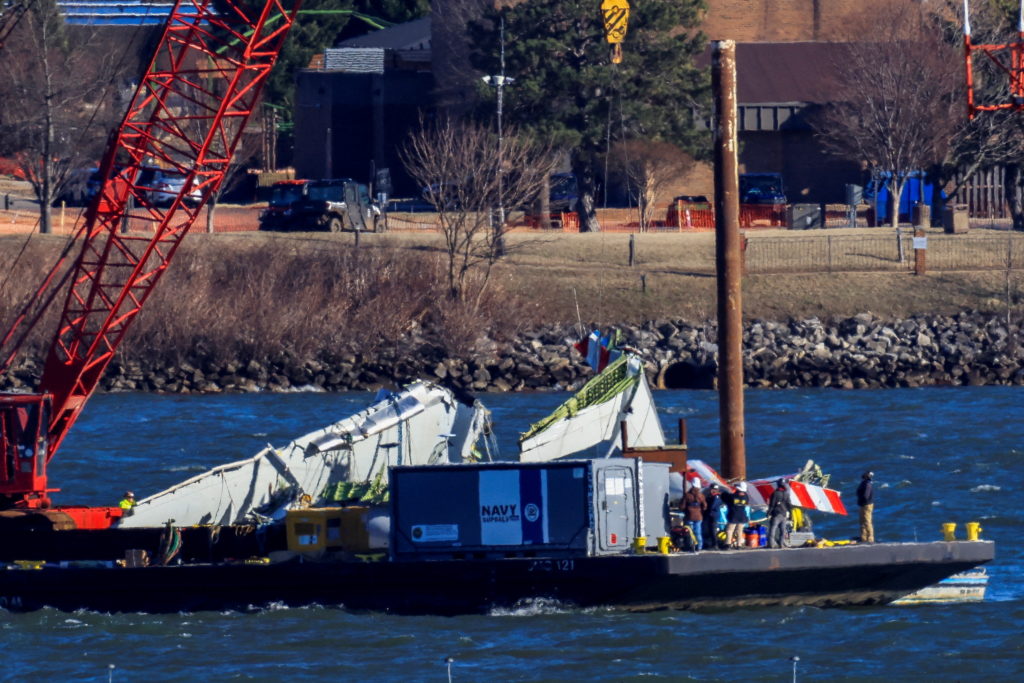
The U.S. Army has released a comprehensive investigation into the midair collision near Washington, D.C., that killed 67 people last year, identifying systemic safety breakdowns across multiple agencies. The report, completed in May but made public only after sustained pressure from victims' families, outlines failures in air traffic control protocols, helicopter flight paths, and military training standards. This disclosure marks a significant step in the ongoing effort to understand how an American Airlines jet and a Black Hawk helicopter collided while approaching Ronald Reagan Washington National Airport, sending both vessels into the Potomac River.
Central to the Army’s findings is the role of the air traffic controller on duty at the time of the crash. The investigation concluded that the controller failed to provide the helicopter crew with precise information regarding the descending airliner and did not adequately warn the jet pilots about the helicopter’s presence. This lack of communication contributed directly to the collision, as neither crew had sufficient situational awareness to avoid the other. In response to these findings, the Federal Aviation Administration has since prohibited controllers from relying on pilots to maintain visual separation in congested airspace, a practice that was previously permitted.
The military also acknowledged its own institutional failures, noting that the helicopter route design was fundamentally flawed. The planned path allowed for only 75 feet of vertical separation between the helicopter and planes landing on the airport’s secondary runway, assuming the aircraft remained near the riverbank—a condition not enforced by the route itself. This minimal buffer did not account for standard altimeter errors in Black Hawk helicopters. Investigators found that the crashed helicopter was flying nearly 100 feet higher than its instruments indicated, a discrepancy that proved fatal given the tight clearance margins.
Operational issues within the military compound were further exacerbated by equipment and training deficiencies. The report highlighted two failed radio transmissions that prevented the helicopter crew from identifying the approaching jet. Additionally, the use of night-vision goggles restricted the pilots’ peripheral vision, making it difficult to spot the airliner against the backdrop of city lights. The Army has since inspected and reconfigured thousands of helicopters after discovering that the crashed Black Hawk’s automatic dependent surveillance-broadcast system had been malfunctioning for an extended period, leaving its position unknown to air traffic control.
Despite these corrective measures, questions remain regarding accountability and transparency. Tim Lilley, a former Army pilot whose son served as first officer on the airliner, criticized the report for redacting key sections and assigning responsibility broadly rather than identifying specific individuals or decision-makers. He argued that the military owes the public a clearer explanation of how such risks were allowed to persist and who authorized the practices that led to the tragedy. The Army stated it remains committed to transparency but has not provided detailed answers to these specific concerns in the released document.
The investigation’s conclusions largely align with those of the National Transportation Safety Board, which emphasized years of ignored warnings by the FAA and a weak safety culture within the military. However, the NTSB noted that the Army has made progress on seven of its eight safety recommendations, contrasting sharply with the FAA’s failure to implement roughly a third of its own assigned directives. The Army has strengthened crew training and is working with civilian aviation authorities to improve information sharing regarding close calls and potential hazards in shared airspace.
Beyond Washington, the Army is examining helicopter operations in other major metropolitan areas, including Los Angeles and Seattle-Tacoma, to identify similar risks. An anonymous official confirmed that these reviews are ongoing, suggesting that the issues identified in D.C. may be part of a broader pattern in military aviation near civilian airports. The lieutenant general who authored the report described the incident as a result of breakdowns across all layers of conflict management, indicating that no single factor was solely responsible for the disaster.
In light of these findings, families of the victims are intensifying their push for legislative action. They argue that proven collision avoidance technology should be mandatory on all aircraft to prevent future tragedies. While separate aviation safety bills have passed in both the House and Senate, lawmakers have yet to agree on a final version. The families contend that with both major investigations now complete, there is no longer any justification for delaying the implementation of technologies that would allow aircraft to detect each other in the sky.
Sources behind this briefing
Go to the original reporting
- PBS NewsHour↗Army calls for safety fixes after finding systemic failures behind DC midair collision