The short version
- Anthropic has released a research preview of the Model Hardware Standard to standardize communication between AI agents and physical devices.
- The protocol allows models to control hardware using natural language, reducing setup times for complex experiments from months to minutes.
- Initial testing involves scientific labs and manufacturers, with plans to eventually open-source the standard for broader adoption.
Anthropic has introduced a new technical framework designed to expand the operational scope of artificial intelligence beyond digital environments into the physical world. The company calls this initiative the Model Hardware Standard, a set of standardized drivers intended to allow AI agents to interface with and control a wide variety of devices. While agentic AI systems have seen significant adoption in recent months, their capabilities have largely been confined to manipulating text, images, code, and other data within computer systems. This new standard seeks to change that dynamic by providing a common language for hardware interaction.
The primary immediate application for this technology is in scientific research, where setting up experiments often requires laborious custom software integration. Researchers frequently spend weeks or months creating bespoke translator programs to get disparate components of an experiment to work together. Anthropic states that the Model Hardware Standard can provide a unified interface and data format, allowing devices to communicate across a network without these intermediate translation layers. In early testing with scientific partners over the past year, the company reported that this approach reduced device integration time significantly, enabling faster iteration in various experimental settings.
The inspiration for this standard came from observing specific challenges in neuroscience research. Anthropic technical staff member Alek Kemeny noted that neuroscientist Arco Bast had developed a custom interface to coordinate rotating laser beams, microscopes, cameras, and other components during memory formation experiments at the HHMI Janelia Research Campus. Seeing how Bast managed these complex interactions through a common interface led to the realization that such a system could allow AI to run any science experiment globally. The goal is to condense what might take a century of progress into a decade by accelerating hypothesis testing.
Although the standard does not require the use of AI models, it is designed to integrate seamlessly with them through the Model Context Protocol. This integration allows scientists to interact with devices using natural language rather than writing complex code for every command. The system enables models to reason through each step of an experiment, update parameters in real time, and potentially recover from hardware errors without human intervention. For example, a model could adjust a laser, check results via a separate camera, and repeat the process to automatically calibrate the entire system.
The standard also addresses the gap between virtual training and physical reality by including a standardized tagging system. This system describes the real-world constraints of hardware for models that may have been trained primarily in digital environments. The tags encode information about physical characteristics, such as the weight and range of a robot arm, as well as adjustable parameters, measurement options, and enforced safety limits. These details are integrated into reference files that quickly provide AI models with crucial information about devices they have no previous training experience with.
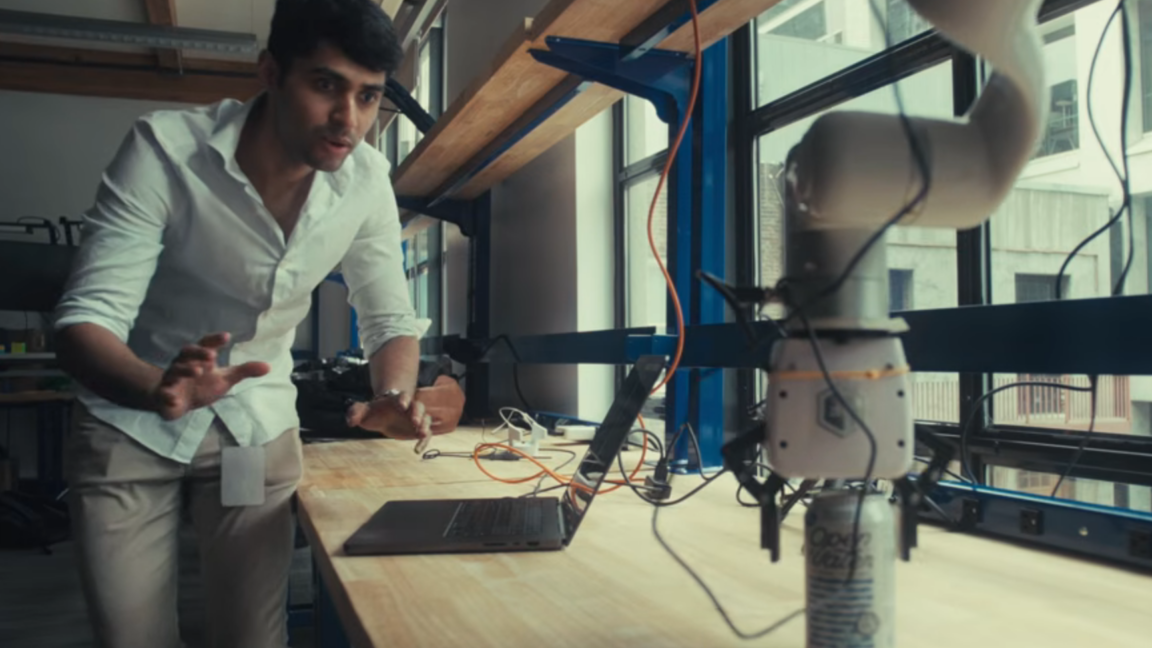
Demonstrations of the technology show Claude reasoning through tasks it was not specifically trained to perform, such as directing a robotic arm to pick up an aluminum can. Rather than reasoning through each step individually every time, MHS-enabled models can sequence steps across instruments by writing API scripts and adjusting them as conditions require. This capability suggests that AI could focus a microscope, analyze the results, decide which part needs more observation, and automatically move the microscope to continue the experiment autonomously.
Currently, Anthropic is working with a select group of scientific research labs and advanced manufacturers during a preview period. Partners include Amazon Web Services, Hugging Face, Raspberry Pi, Automata, and Universal Robots. These collaborations are focused on building safety evaluations and developing best practices for AI systems operating physical equipment. The company emphasizes that safety is a critical component of this rollout, given the potential risks associated with autonomous control of machinery.
Looking ahead, Anthropic plans for the Model Hardware Standard to eventually become an open-source and agent-agnostic standard. This would allow any AI model to integrate with physical systems using the same protocol, fostering broader adoption across industries beyond just scientific research. The shift from custom integrations to a standardized interface could fundamentally change how experiments are conducted and how industrial automation is managed, though widespread implementation remains in the future.
The introduction of this standard marks a significant step toward bridging the gap between digital intelligence and physical action. By reducing the friction involved in connecting AI systems to hardware, Anthropic aims to accelerate scientific discovery and industrial efficiency. However, the success of this initiative will depend on the robustness of safety protocols and the willingness of the broader tech community to adopt the standard as it moves toward open-source availability.
Sources behind this briefing
Go to the original reporting
- Ars Technica↗Anthropic's new hardware standard lets AI agents control the physical world

