The short version
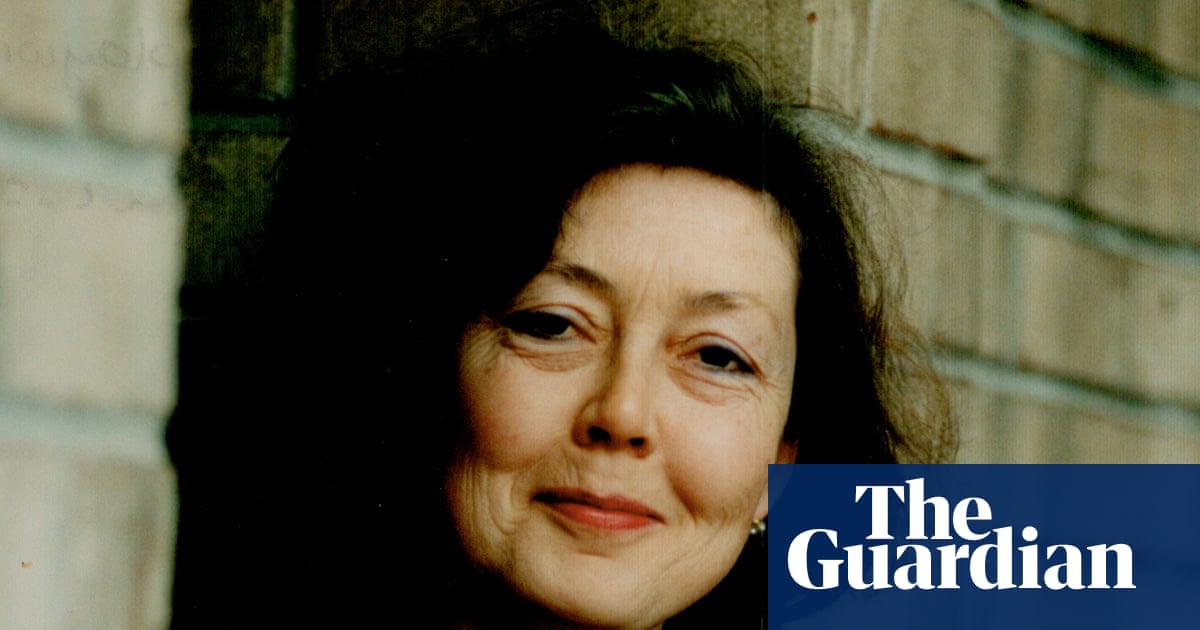
- Anne Carson has been awarded the 2026 Nobel Prize in Literature for her bold and inventive body of work that engages in playful dialogue with classical traditions.
- The committee highlighted her ability to create new literary forms by moving between poetry, prose, translation, and visual art, often exploring themes of desire, loss, and identity.
- Carson becomes the third Canadian-born writer to receive the honor, joining Saul Bellow and Alice Munro, while continuing to produce work that resists simple categorization or resolution.
The Swedish Academy announced on October 8 that Anne Carson, a Canadian poet, essayist, and translator, is the recipient of the 2026 Nobel Prize in Literature. The committee cited her bold and inventive oeuvre, noting how she has created new forms for contemporary literature through a playful dialogue with the classical tradition. This recognition underscores a growing appreciation for writers who defy strict genre boundaries, blending scholarship, poetry, and visual art into cohesive yet complex narratives.
Carson’s work is characterized by an extraordinary tone that combines intellectual rigor with emotional intensity. Her writing often exhibits a high austerity, dealing with painful material without sentimentality. This approach results in a compression of language that many readers find addictive. The Nobel Committee praised her boundary-defying methods, which allow her to move seamlessly between classical and modern poetry as well as different art forms. Chair Anders Olsson described her works as playful and ironic, highlighting their ability to engage with enduring questions about love, loss, desire, and identity.
A central theme in Carson’s catalog is the exploration of desire and lack, a concept she first examined in depth in her 1986 debut book-length essay, Eros the Bittersweet. Originally a reworking of her doctoral dissertation, this text offers an original take on the classical Greek notion of eros, showing how longing is inherently tied to absence. This push-and-pull dynamic runs through much of her subsequent work, providing a framework for understanding both personal relationships and the creative process itself. Her ability to make ancient concepts feel immediate and relevant has been a hallmark of her career.
Among her most celebrated works is The Beauty of the Husband: A Fictional Essay in 29 Tangos, published in 2001. This auto-fictional account of a breakup serves as a brilliant portrait of sexual jealousy. The chapters, structured as tangos, move between desire and fury, using verse that mimics the speed and emotional intensity of the dance. Similarly, her 1998 verse novel Autobiography of Red retells the fragmentary Greek story of Geryon, transforming it into a parable of otherness. The narrative explores themes of coming out, disability, and dysmorphia, drawing comparisons to Frankenstein’s creature while remaining deeply personal.
Carson’s collaborations with visual artist Robert Currie, who is now her husband, further demonstrate her interdisciplinary approach. Nox, a concertina-text-in-a-box, serves as an homage to her lost brother and reads as a serial collage of memories, visual images, and reflections. Another box set, Float, published in 2016, contains twelve assorted pamphlets featuring poems, playscripts, and meditations on flight. These works challenge conventional print production, inviting readers to engage with text and image in new ways. The Nobel Committee noted that her translations of ancient Greek literature, including fragments by Sappho and plays by Sophocles and Euripides, stand as independent works in their own right.
Born in Toronto in 1950, Carson discovered ancient Greek texts in high school and became fascinated with the language’s originality. She studied at the University of Toronto and later taught classics at several institutions, including McGill University, where she served as director of graduate studies before the department closed in the late 1990s. Her academic background informs her forensic subtlety, which she combines with the risky brilliance of her poetry. This union is particularly evident in If Not, Winter, her versions of Sappho’s fragments, which transcribe everything she understands to exist within the texts with scrupulous honesty.
Carson is the third Canadian-born writer to win the Nobel Prize in Literature, following Saul Bellow in 1976 and Alice Munro in 2013. Mark Carney, Canada’s prime minister, praised her unique style, noting that she has reimagined the classics with wit and imagination. He added that she has brought ancient stories to new audiences and transformed how people think about literature. Her recent work, including the 2024 poetry collection Wrong Norma, continues to range widely in subject matter, from compositions about her father to pieces on snow and Roget’s Thesaurus.
In addition to her literary achievements, Carson has been open about her personal challenges. In 2024, she revealed a diagnosis of Parkinson’s disease and described taking up boxing to help manage the condition. She wrote about feeling her neurons struggling during complex movements, illustrating her ongoing engagement with physicality and movement. Carson and Currie live part-time in Iceland, where they gained citizenship in 2022. Her presence there has contributed to the local artistic scene, further extending her influence beyond the traditional literary world.
The award highlights a shift in literary recognition toward works that embrace ambiguity and complexity. In an era often marked by polarized discourse, Carson’s refusal to force resolution into her writing offers multiple and ambiguous meanings. Her books are not exhausted by re-reading, inviting continuous exploration. As she continues to produce work, the Nobel Prize serves as a testament to her enduring impact on contemporary literature and her ability to make ancient wisdom resonate with modern audiences.
Sources behind this briefing
Go to the original reporting
- The Guardian US↗Where to start with: Anne Carson
- Smithsonian Magazine↗Canadian Poet Anne Carson Brings Ancient Wisdom to Modern Audiences. Now, She's a Nobel Laureate in Literature