The short version
- Andy Green achieved a new world speed record for hydrogen internal combustion engines at Utah's Bonneville Salt Flats.
- The run reached 406.320 mph, significantly surpassing the previous record of 185.5 mph in this specific vehicle category.
- JCB engineers view the achievement as evidence that hydrogen can meet the rigorous demands of heavy industrial machinery.
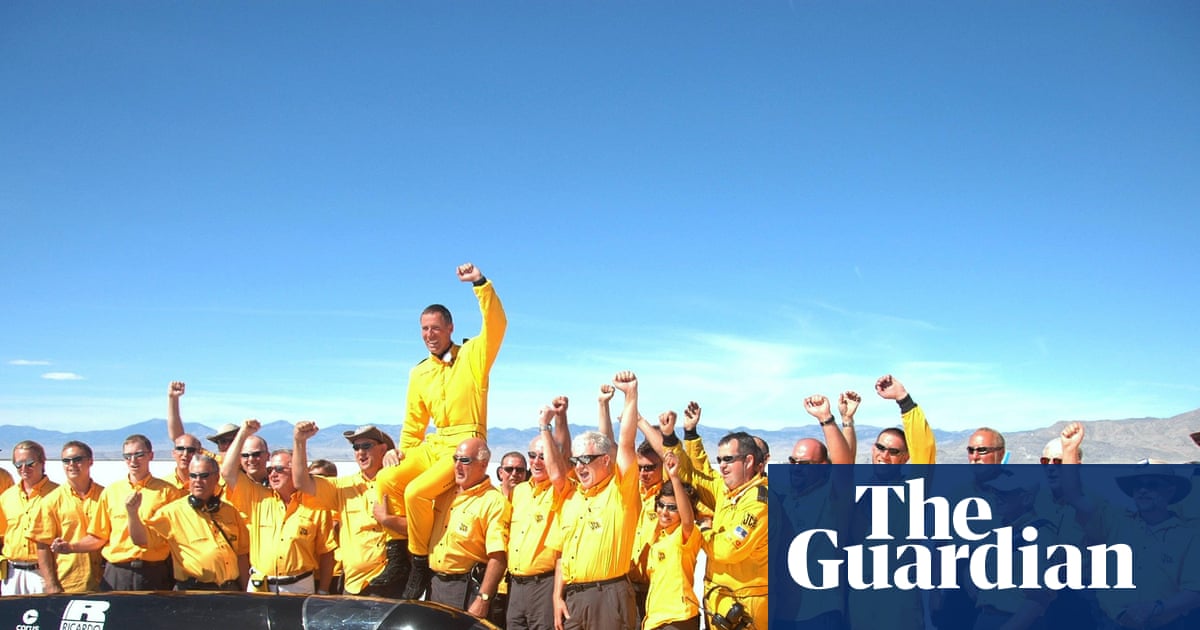
British driver Andy Green established a new world speed record for vehicles powered by hydrogen internal combustion engines on Tuesday, reaching a velocity of 406.320 miles per hour. The feat took place at Utah’s Bonneville Salt Flats, a location renowned for its low-friction surface and dry air conditions that favor high-speed attempts. Green piloted a 32-foot vehicle engineered by JCB, the British construction equipment manufacturer, which utilized two engines adapted from heavy machinery. These engines generated a combined 1,600 horsepower by mixing pressurized hydrogen gas with air and igniting the mixture to produce power bursts.
The Fédération Internationale de l’Automobile, the international governing body for motor sports, officially recognized the achievement as the record for this specific vehicle category. Green’s run easily surpassed the previous hydrogen combustion world record of 185.5 mph. The driver had a ten-mile straightaway available to build momentum before crossing the timing gates. A small group of JCB staff members and reporters observed the event from a safe distance, monitoring the run through cameras and binoculars rather than standing near the track.
This latest accomplishment adds to Green’s extensive history in land-speed racing. At 64 years old, the retired Royal Air Force pilot is best known for breaking the sound barrier in 1997. During that historic run, he drove the Thrust SSC, a jet-powered vehicle, to an outright record of 763.035 mph in Nevada’s Black Rock desert. That achievement produced sonic booms audible in the nearby town of Gerlach and remains unmatched by any other driver. Green also set the land-speed record for diesel-powered cars in 2006 at Bonneville, reaching 350.092 mph.
Green returned to the salt flats with the specific objective of beating his own diesel record using hydrogen power. He has publicly described hydrogen as the fuel of the future, positioning this run as a demonstration of its potential. While the Tuesday attempt did not approach supersonic speeds or challenge the overall land-speed record, it served as a targeted effort to validate hydrogen combustion in high-performance applications. The goal was to show that hydrogen could replicate and exceed performance metrics previously achieved with fossil fuels.
The Bonneville Salt Flats have hosted speed trials since 1914, leveraging their unique geological features. The site is a remnant of a prehistoric lake bed located approximately 100 miles west of Salt Lake City. It sits atop a shallow aquifer that helps cool tires during high-speed runs, preventing overheating and blowouts. The combination of a hard, flat surface and thin desert air reduces drag and friction, making it an ideal proving ground for engineering experiments and record attempts.
JCB engineers hope this success will influence the broader clean-energy sector, particularly regarding heavy industry applications. The company’s chairman has argued that hydrogen is better suited to handle the intense demands of heavy machinery than electric power alone. By adapting engines used in construction equipment for high-speed racing, JCB aims to demonstrate the versatility and power density of hydrogen combustion systems. This approach seeks to address concerns about the capability of alternative fuels in sectors requiring substantial torque and endurance.
However, the environmental benefits of hydrogen depend heavily on how the fuel is produced. Currently, the vast majority of global hydrogen is derived from fossil fuels, which undermines its clean-energy credentials. To mitigate this, JCB has signed an agreement to purchase green hydrogen, a variant created using renewable energy sources. Despite these efforts, green hydrogen represents only a tiny fraction of total global production. The scalability and cost-effectiveness of green hydrogen remain significant hurdles for widespread industrial adoption.
Green’s career began when he was flying supersonic military jets and saw a newspaper advertisement seeking a driver to break the sound barrier. His transition from aviation to land-speed racing has been marked by a series of groundbreaking achievements. This latest record underscores his continued involvement in pushing the boundaries of automotive engineering. As the industry explores alternative fuels, Green’s runs provide tangible data points on the performance capabilities of hydrogen-powered internal combustion engines.
The event highlights the ongoing tension between technological innovation and environmental sustainability in the automotive sector. While electric vehicles dominate much of the current discourse on clean transport, hydrogen combustion offers a different pathway for heavy-duty applications. JCB’s strategy focuses on leveraging existing engine technology while switching fuel sources. The success at Bonneville suggests that hydrogen can deliver high performance, but questions about production methods and infrastructure remain central to its future viability.
Looking ahead, the racing community and industry observers will likely monitor how this record influences investment in hydrogen technologies. Green’s ability to surpass his diesel record by a wide margin provides a compelling case study for engineers and policymakers. The demonstration at Bonneville serves not just as a sporting achievement but as a practical test of hydrogen’s potential in demanding environments. As production methods evolve, the relevance of such records may shift from pure speed to efficiency and sustainability metrics.
Sources behind this briefing
Go to the original reporting
- The Guardian US↗Driver who broke sound barrier sets new speed record in hydrogen-powered car

