The short version
- Anduril Industries confirmed that its Anduril-216 satellite successfully demonstrated a new long-wave infrared sensor capable of tracking objects in orbital darkness.
- The technology addresses a critical blind spot for current space surveillance systems, which often lose track of satellites when they are not illuminated by sunlight.
- The company plans to sell the resulting tracking data to the US military rather than leasing the satellite hardware itself.
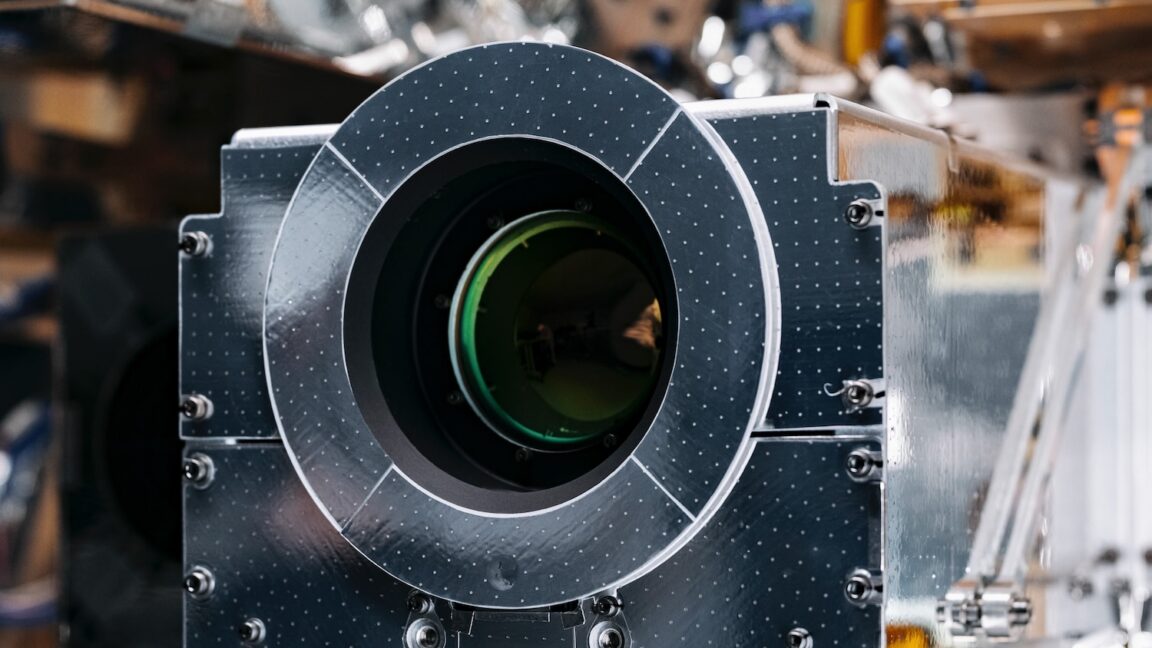
Anduril Industries has announced the successful demonstration of a specialized sensor system designed to monitor spacecraft maneuvers that occur while satellites are hidden in Earth's shadow. The defense technology firm reported on Tuesday that its Anduril-216 satellite, which orbits approximately 590 kilometers above the planet, effectively utilized a long-wave infrared imager to detect objects during periods of total darkness. This capability addresses a significant vulnerability in current space domain awareness networks, where optical sensors frequently lose contact with resident space objects when they pass through eclipse phases.
Current tracking infrastructure relies heavily on ground-based radars and optical sensors that require sunlight to illuminate targets. When satellites move into the dark side of their orbit, these visible-light systems often fail to maintain custody of the objects. This gap creates uncertainty for military commanders who need to verify whether adversary satellites are performing threatening maneuvers, as well as for operators who rely on collision alerts from the US Space Force. Anduril’s new sensor detects heat signatures rather than reflected light, allowing it to function independently of solar illumination.
The demonstration mission was funded entirely with internal capital and launched in July aboard a SpaceX rideshare vehicle. The oven-sized spacecraft carries a suite of experimental technologies, including an edge-compute processor and an adaptable power-management system. However, the primary focus of this initial test was the infrared sensor, which is derived from imaging technology Anduril previously developed for autonomous weapons systems. By adapting this hardware for space use, engineers aimed to create a tool that could provide continuous monitoring regardless of lighting conditions.
Gokul Subramanian, the company’s senior vice president of engineering, highlighted the sensor's extensive dynamic range and its ability to operate with minimal solar exclusion. This means the instrument is rarely blocked by direct sunlight interference, enabling clear imagery even in full darkness. Adam Thurn, vice president and general manager of orbital systems at Anduril, noted that the lack of ground sensors in adversary sovereign territories exacerbates the problem during eclipse periods. The new infrared capability aims to close this specific observational gap, providing a unique window into activities that were previously difficult to witness.
Anduril released a single image from the sensor showing an infrared view of the Moon rising above Earth's horizon. While this image serves primarily as proof of concept, it illustrates the instrument's potential for both unresolved and resolved imagery. Thurn indicated that if the satellite flies sufficiently close to other objects, the sensor could potentially inspect them in detail. For now, however, the company is concentrating on optimizing the tracking capabilities for low-Earth orbit, with future applications possibly extending to cislunar space near the Moon.
The spacecraft platform itself was manufactured by Apex Space, a startup specializing in satellite production. Subramanian clarified that Anduril does not intend to establish its own satellite manufacturing line. Instead, the company’s strategy involves purchasing third-party platforms and integrating them with proprietary sensor and compute modules. This modular approach allows for flexibility in mission design, enabling the company to tailor spacecraft for specific surveillance tasks without the overhead of vertical integration into hardware fabrication.
A key component of the Anduril-216 mission is its edge-compute processor, which is designed to fuse data from various sensor types and generate tracking solutions autonomously. This on-board processing reduces the need for immediate ground-based intervention or analysis, allowing for faster detection and response to potential threats or anomalies. The system can combine inputs from infrared and visible imagers to create a more comprehensive picture of space traffic, enhancing the reliability of the data provided to end users.
Anduril acquired ExoAnalytic Solutions earlier this year, expanding its presence in the commercial satellite-tracking market. While the company now possesses significant tracking capabilities, Subramanian stated that Anduril’s current business model focuses on selling space domain awareness data to the US military rather than providing the hardware itself. The firm is not currently offering the sensor system as a merchant supplier, though this stance could evolve in the future. For now, the emphasis remains on delivering actionable intelligence derived from the continuous monitoring of orbital activities.
The successful demonstration marks a step toward more resilient space surveillance architectures. By mitigating the blind spots associated with orbital night, technologies like Anduril’s infrared sensor could improve the safety and security of the increasingly crowded low-Earth orbit environment. As commercial and military entities continue to expand their presence in space, the ability to maintain continuous custody of all resident objects becomes critical for preventing collisions and detecting hostile actions.
Future developments will likely depend on how well the technology performs in extended operational tests and whether the US military adopts the data services offered by Anduril. The company’s focus on low-Earth orbit optimization suggests that immediate applications will center on the most congested regions of space. If successful, this approach could set a precedent for private sector contributions to national security infrastructure, blending commercial innovation with strategic defense needs.
Sources behind this briefing
Go to the original reporting
- Ars Technica↗Anduril says its first satellite can see adversaries maneuver in orbital night