The short version
- Social media accounts linked to Russian military and intelligence networks amplified far-right messaging about the Ceuta migration crisis, reaching hundreds of thousands of users within hours.
- Experts describe a highly organized 'information superhighway' that accelerates the spread of destabilizing content more rapidly than in previous similar incidents.
- While migrant coordination appeared organic, the subsequent political backlash was fueled by coordinated disinformation campaigns involving Islamophobic and antisemitic conspiracy theories.
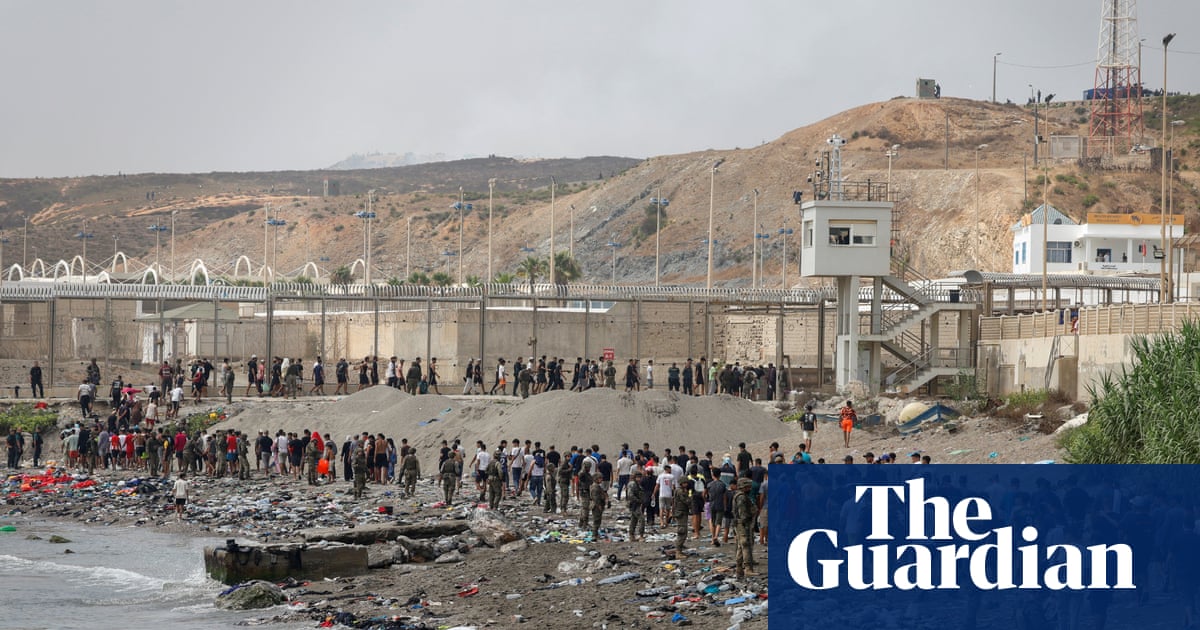
An analysis conducted by the counter-disinformation group 411 indicates that social media channels connected to Russian state interests played a significant role in shaping the online narrative surrounding the recent migration crisis in Ceuta. The investigation found that accounts with ties to the Russian military and intelligence apparatus helped amplify far-right messages, reaching more than 500,000 people during the initial days of the incident. This digital activity coincided with a period when approximately 72,000 migrants entered the Spanish enclave from Morocco over several days, marking one of the largest such movements in recent years.
The disinformation campaign began on August 1, shortly after reports emerged that nearly 49,000 individuals had attempted to cross the border overnight. According to the findings, these narratives framed the migration not as a humanitarian or economic movement but as a deliberately coordinated assault. The messaging suggested that authorities were complicit in the events and frequently incorporated Islamophobic or antisemitic conspiracy theories. Within six hours of the initial surge, these specific narratives had been reproduced in seven languages and accumulated more than 720,000 views, based on an examination of roughly 4.5 million social media posts.
Researchers note that the speed and scale of this amplification represent a significant evolution from previous incidents. Ned Mendez, lead researcher at 411, compared the current situation to events in May 2021, when approximately 8,000 migrants crossed the same border. While far-right groups also seized on that earlier crisis, the mobilization and spread of disinformation were considerably slower. In the recent case, calls for nationalist groups to gather in Ceuta resulted in physical presence within days, whereas similar appeals in 2021 took much longer to materialize into action.
The structural origin of this propaganda barrage appears to stem from Rybar, a Telegram channel with established links to Russian intelligence. The parent company of Rybar has faced sanctions in Europe due to its role in spreading disinformation. From this central node, a network of repeater accounts amplified the content. These amplifiers included channels linked to the Pravda network, an operation known for disseminating Kremlin-aligned propaganda globally. This coordinated effort suggests a systematic approach rather than isolated incidents of online harassment or commentary.
Saman Nazari, lead researcher at the Brussels-based nonprofit Alliance4Europe, described the phenomenon as indicative of a persistent machinery designed to exploit crises across Europe. He noted that such escalations occur with regularity during periods of tension, suggesting that these events are too coincidental to be mere bandwagoning effects by opportunistic actors. Instead, there appears to be an underlying structure or organization facilitating the rapid deployment of destabilizing narratives whenever a crisis emerges.
The analysis distinguishes between the organic coordination among migrants and the coordinated political backlash. Peer-to-peer logistics chatter regarding how to cross the border was observed extensively in comment sections beneath viral videos. This coordination appeared to come overwhelmingly from small, anonymous individual accounts rather than any single identifiable recruiter channel. Social media rumors contributed to the crisis by leading young Moroccans to believe the border was open and providing suggestions on how to reach the territory.
However, the political response was driven by a separate, right-wing backlash that utilized sophisticated amplification techniques. Mendez characterized this process as a highly specific and organized information superhighway. Content placed on this privileged network receives a degree of boost that other types of content do not have access to. The selection criteria for content entering this pipeline appear consistent, with certain characteristics making them more likely to be picked up by the relay networks.
The broader implication of these findings extends beyond the immediate events in Ceuta. The 411 analysis warns that the machinery itself is the primary concern, rather than any single crisis. These relay networks are already in place and ready to activate during future border incidents anywhere on the Mediterranean. Experts suggest that investigations should focus on determining whether closed forums or similar structures exist where far-right influencers discuss strategies for spreading these talking points.
The efficiency of this disinformation ecosystem highlights a growing challenge for European security and democratic stability. The ability to rapidly frame complex humanitarian issues as coordinated assaults allows bad actors to manipulate public opinion and incite physical mobilization with unprecedented speed. As these networks become more organized and powerful, the potential for similar crises to trigger widespread social unrest increases significantly.
Moving forward, monitoring these digital patterns will be crucial for understanding how online narratives translate into offline actions. The distinction between organic migrant coordination and state-linked disinformation is vital for accurate reporting and policy responses. Without addressing the underlying infrastructure of this information superhighway, future crises may continue to be exploited for political destabilization across the continent.
Sources behind this briefing
Go to the original reporting
- The Guardian World↗Russia-linked accounts spread far-right narrative online during Ceuta migration crisis, analysis finds

