The short version
- The eruption of Anak Krakatau triggered widespread flight cancellations affecting over 170,000 travelers across eight airports in western Indonesia.
- Authorities have closed airspace around major hubs including Jakarta and Lampung due to ash plumes reaching altitudes of up to 50,000 feet.
- While no casualties were reported, schools in affected areas shifted to remote learning and officials warned of potential cascading disruptions to air travel networks.
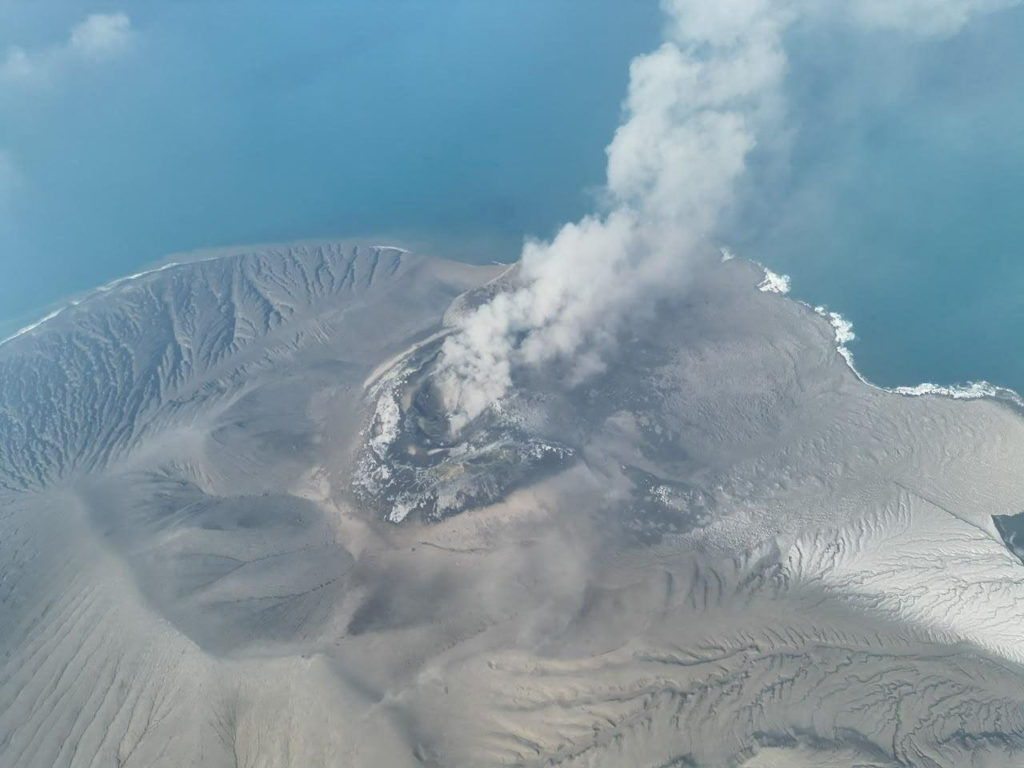
A significant volcanic eruption on the island of Anak Krakatau early Sunday morning triggered a major disruption to air travel across western Indonesia. The event forced the immediate closure of Soekarno-Hatta International Airport in Jakarta, along with seven other domestic airports, as ash clouds drifted over densely populated regions. By evening, the airspace restrictions had resulted in the cancellation of more than 1,500 flights, leaving approximately 170,000 passengers stranded or facing significant delays. The closures were ordered to ensure safety amid deteriorating visibility and potential engine damage from volcanic particulate matter.
Anak Krakatau, located in the Sunda Strait between the islands of Java and Sumatra, began showing signs of increased activity on Friday before erupting twice on Sunday morning. Indonesia’s Geological Agency reported that the first eruption lasted 30 seconds at 3:53 a.m., followed by a second burst lasting 16 seconds roughly three hours later. Closed-circuit surveillance footage captured lava flares emanating from the crater, confirming the intensity of the event. Although no casualties were reported and no evacuation orders were issued for nearby settlements, authorities urged residents and visitors to maintain a distance of at least three kilometers from the active crater zone.
The impact on aviation was immediate and extensive. AirNav Indonesia sealed off airspace around Soekarno-Hatta and Halim Perdanakusuma airports in Jakarta, as well as Radin Inten II Airport in Lampung province. Satellite imagery analyzed by the Darwin Volcanic Ash Advisory Centre identified two distinct ash plumes. One cloud rose to an altitude of 20,000 feet and drifted northeast over Jakarta, Banten, and West Java. A second, higher plume reached 50,000 feet, spreading across parts of Banten, Lampung, and Bengkulu provinces, as well as sections of the Indian Ocean west of Sumatra.
Lukman F. Laisa, the director general of civil aviation for Indonesia’s Ministry of Transportation, emphasized that safety remained the primary concern in all operational decisions. He warned that the initial closures could lead to cascading disruptions affecting aircraft rotations, fleet availability, and terminal capacity as airlines attempt to restore normal operations. Stranded travelers expressed frustration but accepted the situation as an unavoidable natural disaster. Diego Urdiales, a Spanish tourist awaiting a flight to Madrid, noted the lack of clear communication from airlines, while Indonesian passenger Michele Gouw stated that they had little choice but to wait for further instructions from airport authorities.
Beyond aviation, the eruption prompted adjustments in local education and public health measures. The government authorized schools in areas affected by ashfall to temporarily switch to online learning. This decision aimed to reduce students’ exposure to volcanic ash and allow local officials to adapt classroom activities based on ground conditions. Volcanic ash had spread across parts of Jakarta and Lampung province, raising concerns about air quality and respiratory health for residents in these regions.
Lana Saria, head of Indonesia’s Geological Agency, indicated that activity at Anak Krakatau has intensified since July, with Sunday’s eruption marking the strongest event during this period. She explained that the repeated eruptions suggest a continued supply of magma and volcanic gases beneath the volcano. However, officials cautioned that they cannot predict whether a larger eruption will occur. Saria stressed that evaluations of the volcano’s development rely on comprehensive monitoring data rather than solely on the frequency of eruptions or the height of ash columns.
The primary hazards identified by authorities include volcanic ashfall, high concentrations of toxic gases, and the ejection of hot rocks and other material around the crater area. The nearest settlement to the volcano is more than 16 kilometers away, which has helped mitigate immediate risks to human life. Nevertheless, the potential for further activity remains a concern for emergency planners and local communities in the Sunda Strait region.
Anak Krakatau, whose name translates to 'child of Krakatau,' is a new volcanic cone that emerged after the catastrophic 1883 eruption of the original Krakatoa volcano. That historical event triggered global cooling and widespread devastation. More recently, an eruption in 2018 caused a tsunami that killed at least 430 people in Sumatra and Java. Researchers believe that volcanic activity triggered an underwater landslide, causing a large section of the southwest slope to collapse and displace a significant volume of water. Current monitoring efforts aim to prevent similar disasters by tracking seismic activity and ground deformation.
As of Sunday evening, all eight affected airports remained closed until midnight. The Directorate General of Civil Aviation stated it was closely coordinating with airlines, airport operators, air navigation services, and the meteorology agency to assess the situation. Passengers were advised to check with their carriers for updates on rescheduled flights. The incident highlights the ongoing vulnerability of Indonesia’s transportation infrastructure to natural hazards in one of the world’s most seismically active regions.
Officials continue to monitor the volcano’s behavior, balancing the need for public safety with the economic impact of prolonged travel disruptions. While the immediate threat to life appears contained due to the distance of settlements from the crater, the uncertainty surrounding future eruptions means that airspace restrictions could remain in place if ash levels do not decrease. The coming days will be critical in determining whether normal operations can resume or if further precautions are necessary.
Sources behind this briefing
Go to the original reporting
- PBS NewsHour↗Volcanic island in Indonesia erupts, forcing the cancellation of hundreds of flights

