The short version
- Kevin Rideout, an American missionary abducted in Niamey last October, has been released and is currently under the care of US officials.
- The abduction occurred amidst a deteriorating security environment in Niger, where civilian fatalities have risen significantly since the 2023 military coup.
- Niger’s junta expelled Western partners and allied with Russia, while extremist groups increasingly target urban centers and strategic infrastructure like the capital’s airport.
Kevin Rideout, an American missionary who had worked in Niger for nearly two decades, has been released after nine months in captivity. His organization, Serving in Mission International, confirmed on Friday that the 50-year-old pilot is in good health and currently under the supervision of United States officials. The group stated that Rideout would soon be reunited with his extended family, marking the end of a high-profile kidnapping case that had drawn attention to the volatile security conditions in West Africa.
Rideout was abducted on October 21 in Niamey, the capital of Niger, by three armed individuals. At the time of the incident, security officials indicated that he was likely driven out of the city, though no armed group has claimed responsibility for the seizure. Details regarding the specific circumstances of his rescue remain undisclosed. The United States administration had prioritized his release as part of a broader strategy addressing instability in the Sahel region, an area where previous efforts to combat extremism have yielded limited results.
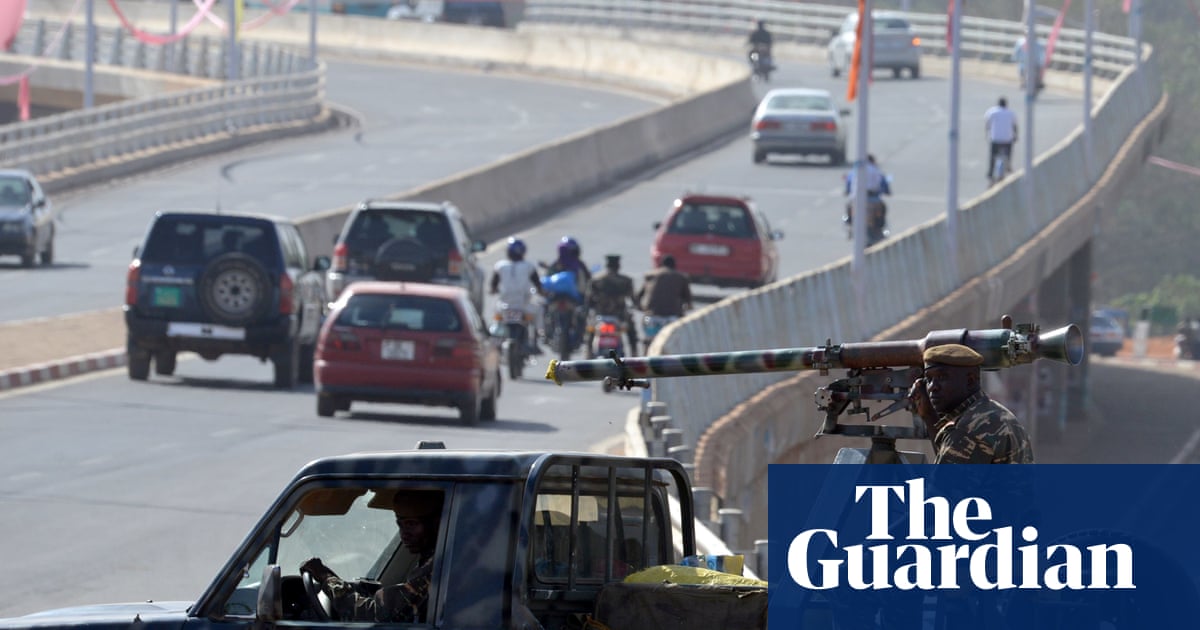
The abduction took place against a backdrop of escalating violence and political upheaval in Niger. A military junta seized power in 2023, deposing democratically elected President Mohamed Bazoum. The new authorities cited a continually deteriorating security situation as justification for the coup. Since taking control, the junta has fundamentally altered the country’s foreign policy orientation, expelling Western partners, including United States troops that had been stationed in the country. In their place, Niger has forged a new security and diplomatic alliance with Russia, with Russian soldiers now occupying at least one former US base.
This geopolitical shift has coincided with a sharp increase in violence across the region. Data from armed conflict monitoring groups indicates that civilian fatalities in Niger rose by nearly 50 percent in the year following Bazoum’s ouster. Extremist groups linked to al-Qaida and the Islamic State have long targeted the country, but the nature of these threats is evolving. Insurgents are increasingly targeting cities and urban centers, expanding their reach beyond rural strongholds. This trend poses significant challenges for regional stability and complicates efforts by neighboring countries to contain the spread of extremism.
The threat to urban areas was underscored by a deadly attack in June on Niamey’s main airport. Gunmen killed more than 30 people in what was the second assault on the facility this year. The airport serves as a critical strategic hub, housing the ruling military’s command center, its air force base, and most of its drones and aircraft. It also functions as the headquarters for the Alliance of Sahel States, a regional coalition that includes troops from Niger, Mali, and Burkina Faso. These attacks demonstrate the vulnerability of key infrastructure even in the capital city.
The United States has adjusted its approach to the region in response to these developments. With direct military presence no longer viable in Niger, Washington has shifted its focus to coastal West African states such as Benin, Côte d’Ivoire, and Ghana. American officials are now sharing intelligence with local security personnel in these countries to prevent extremist threats from spilling southward from the arid Sahel belt. This strategy aims to create a buffer zone against the northward expansion of insurgent activities.
Despite these efforts, the security outlook remains grim. The US embassy in Niamey issued a security alert just one day after Rideout’s abduction, warning that American citizens remain at heightened risk of kidnapping throughout Niger, including within the capital. The incident involving Rideout serves as a stark reminder of the dangers facing foreigners and locals alike in a region where state control is contested and extremist networks are growing more bold. The release of Rideout does not signal an end to the crisis, but rather highlights the ongoing complexity of operating in one of Africa’s most unstable regions.
As Niger continues to navigate its new alliances and internal security challenges, the fate of individuals like Rideout remains intertwined with broader geopolitical currents. The expulsion of Western forces and the influx of Russian influence have reshaped the battlefield, allowing extremist groups to exploit power vacuums and logistical gaps. While Rideout’s return offers a moment of relief for his family and supporters, the underlying drivers of violence in the Sahel persist, threatening to undermine regional stability for the foreseeable future.
Sources behind this briefing
Go to the original reporting
- The Guardian World↗American missionary kidnapped in Niger freed after nine months
- PBS NewsHour↗U.S. missionary kidnapped in Niger is released after 9 months in captivity, his organization says

