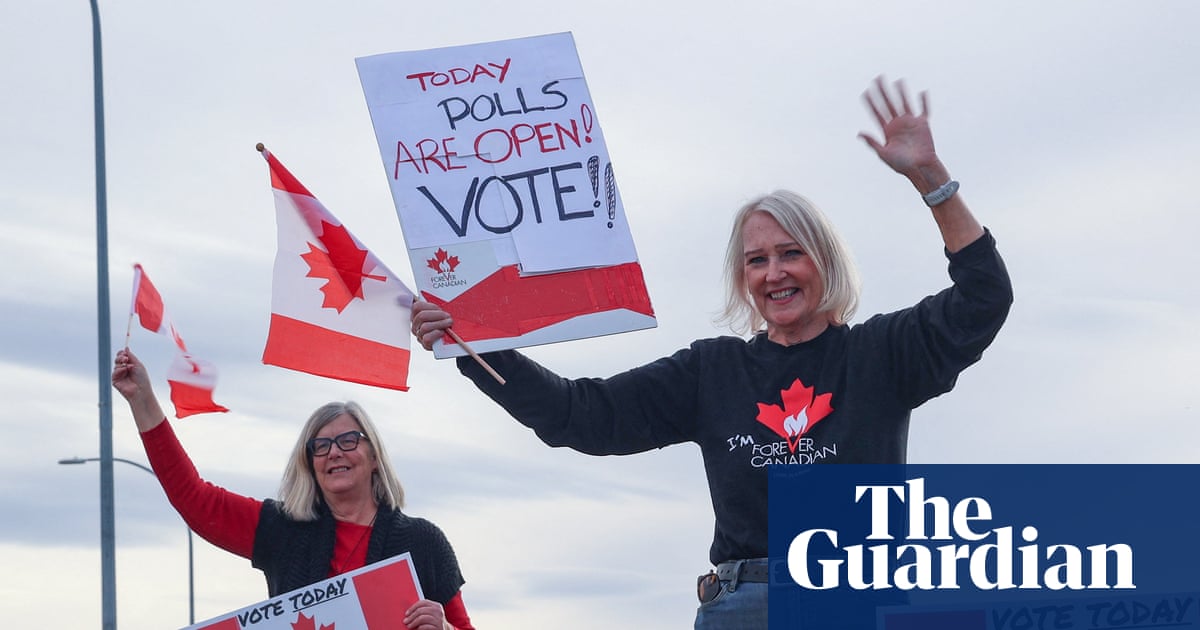
The short version
- Early vote counts indicate approximately 76 percent of Albertans support remaining in Canada, while only 23 percent back initiating a legal process toward separation.
- The result provides a political victory for Prime Minister Mark Carney and federal unity advocates, though separatist leaders vow to continue their long-term campaign.
- Provincial Premier Danielle Smith faces internal party pressure as her United Conservative Party struggles with declining support amid the divisive referendum debate.
Voters in Alberta have decisively rejected a proposal to initiate a legal process toward independence from Canada, according to early projections by the Canadian Broadcasting Corporation. With more than one million ballots counted on Tuesday morning, approximately 76 percent of participants supported maintaining the province’s status within the federation. In contrast, only 23 percent favored beginning steps that could eventually lead to separation. These figures emerged after a voting day marked by logistical delays at roughly 100 of the province’s 1,400 polling stations, which pushed final result timelines back by several hours.
The referendum question was one of ten issues presented to Albertans on Monday, covering a broad spectrum of policy concerns including immigration, healthcare, education, and provincial constitutional powers. While the ballot did not explicitly ask for immediate independence, it sought permission to start a legal pathway that might culminate in a second, binding vote. This distinction frustrated separatist advocates, who argued the question failed to capture the urgency of their cause. Nevertheless, the outcome has exposed deep political fractures within the province and raised fresh questions about the long-term durability of national unity.
Prime Minister Mark Carney hailed the early results as a victory for supporters of Canadian unity. Carney, who grew up in Edmonton, had campaigned vigorously against the separation movement in the days leading up to the vote. He warned residents that attempting to use the referendum as a tool to send a message to the federal government was a dangerous bluff. Carney argued that such a move would create years of deep uncertainty and result in lost economic opportunities for both Albertans and Canadians at large. His appeals resonated with many voters, contributing to the strong showing for unity.
Federal Conservative Leader Pierre Poilievre also joined the campaign to preserve the federation, drawing on his parliamentary seat in Alberta to connect with local constituents. Speaking to supporters, Poilievre emphasized that Albertans were not quitters and urged them not to take out frustrations with the current government by voting for separation. He framed Canada as more than just a government, describing it instead as a people, a flag, a land, a history, and a promise. This emotional appeal aimed to counter the transactional nature of some separatist arguments.
The political landscape in Alberta remains complex, particularly for Premier Danielle Smith. While Smith has publicly stated she will vote to remain in Canada, she has not required elected members of her United Conservative Party to do the same. Her leadership tenure owes much to separatist factions within the party who previously ousted her predecessor, Jason Kenney. In recent months, Smith has attempted to placate both separatists and federalists, navigating a province where a majority does not appear interested in secession. The referendum has become a political liability for her party, which has seen popular support tumble recently, including the loss of a traditional conservative stronghold during a byelection.
Turnout data from Elections Alberta suggests high engagement among eligible voters. Approximately 43 percent of Albertans, or 1.3 million people, had already cast ballots through advance voting and mail-in options before Monday’s election day. This figure points to a potentially higher turnout than the province’s last referendum in 2021. The high level of participation underscores the significance voters attach to the issue, even if the final count of all ballots may take several days to complete. The delays at certain polling stations added to the anticipation but did not appear to dampen overall enthusiasm for the democratic process.
Despite the early rejection of the independence process, separatist leaders have indicated they will not abandon their cause. Members of the movement told reporters that they view independence as a long-term project rather than a single electoral event. Calgary Mayor Jeromy Farkas, a staunch opponent of the independence movement, acknowledged this persistence. He argued that the city’s best future lies in remaining a Canadian city, citing fears that uncertainty could lead to capital flight. Farkas emphasized his identity as Canadian regardless of the political flavor of the prime minister.
The aftermath of the vote will likely involve continued debate over the role of Alberta within the Canadian federation. While the early results favor unity, the underlying tensions regarding provincial powers and federal relations remain unresolved. The separatist movement’s assertion that no single result will permanently settle the issue suggests that political friction may persist. For now, however, the overwhelming support for remaining in Canada provides a clear mandate for stability and continuity in national governance.
As Elections Alberta continues to count the remaining ballots, the focus will shift from the immediate outcome to the broader implications for Canadian politics. The referendum has highlighted the challenges of balancing regional grievances with national cohesion. Prime Minister Carney’s administration may use this victory to reinforce its stance on unity, while provincial leaders must address the concerns that fueled the separatist sentiment in the first place. The coming days will reveal whether this result marks a turning point or merely a pause in an ongoing political struggle.
The significance of this vote extends beyond Alberta, serving as a test case for how federal systems handle regional dissent. The clear preference for unity suggests that while dissatisfaction with federal policies exists, the desire for separation is not widespread among the general electorate. This dynamic may influence future policy decisions and political strategies across Canada. As the final results are tallied, the nation will watch to see if the early projections hold firm or if unexpected shifts emerge in the remaining counts.
Sources behind this briefing
Go to the original reporting
- The Guardian World↗Alberta voters reject plan for referendum to leave Canada, CBC projects