The short version
- The Albanian government has enacted immediate fines exceeding $6,000 for anyone present at protests that turn violent or involve looting.
- The penalty is roughly six times the average monthly salary and applies even if the individual did not personally commit violent acts.
- These measures follow months of demonstrations that began over a luxury hotel project and evolved into broader anti-government unrest.
The government of Albania has introduced severe financial penalties for individuals attending protests that devolve into violence, marking a sharp escalation in its strategy to manage ongoing civil unrest. Under the new legislative measures adopted by Prime Minister Edi Rama’s administration, fines of up to 500,000 leks, approximately $6,130, will be levied against anyone who remains in a crowd engaging in violent acts or looting in public spaces. This penalty applies regardless of whether the individual personally participated in the violence, effectively holding bystanders financially accountable for the actions of others within the demonstration.
The financial burden imposed by these fines is substantial relative to the local economy. The average monthly salary in Albania before tax stands at roughly $1,026, meaning the maximum fine represents more than six times a typical worker’s monthly earnings. In addition to monetary penalties, the new rules allow police to temporarily restrict gatherings in specific zones, particularly near government buildings, healthcare facilities, and educational institutions, if authorities determine there is a risk of violence. The legislation also introduces sanctions for online incitement to violence and establishes a framework for compensating small businesses that suffer damage during protests.
These measures take effect immediately but require parliamentary approval within 45 days to remain in force permanently. Prime Minister Rama stated that the approach was inspired by recent legislative developments in France, where the upper house passed a bill making protesters financially liable for damages caused during street demonstrations. The Albanian leader has consistently attributed the unrest to external influences, accusing foreign actors, including Russia and Iran, of fueling online misinformation and driving the violence. Despite these accusations, Rama has also called for dialogue with protest organizers.
The protests themselves have undergone a significant transformation since their inception. What began in May as a peaceful, leaderless movement opposing a luxury hotel project in a nature reserve, reportedly backed by Jared Kushner, son-in-law of former U.S. President Donald Trump, has morphed into a broader anti-government campaign. By mid-October, the demonstrations had shifted focus to issues of perceived corruption, deficiencies in the health system, and limited economic prospects for young people in the country of 2.3 million residents. The movement is now largely student-led, reflecting deepening dissatisfaction with the current administration.
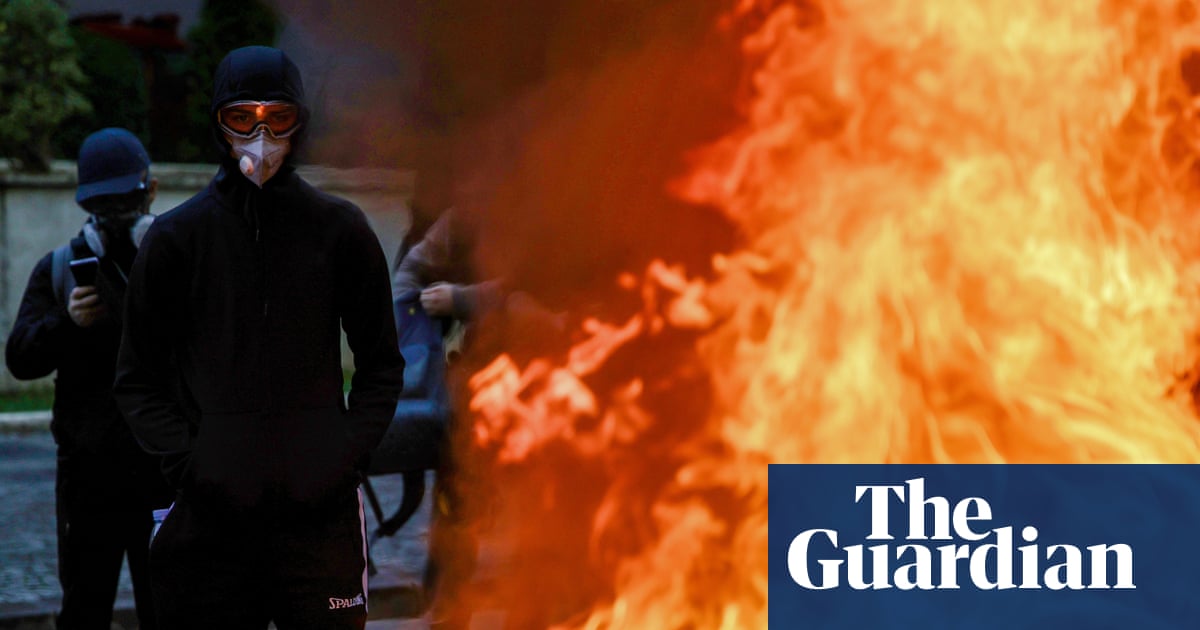
Tensions in the capital, Tirana, have intensified in recent days, deteriorating into pitched battles between security forces and demonstrators. The government’s decision to impose heavy fines on mere presence at violent scenes represents a significant shift in how public order is enforced. Critics may argue that penalizing individuals for being present at a protest, rather than for specific illegal acts, infringes on freedom of assembly. However, the administration views these measures as necessary to curb what it describes as orchestrated violence and looting that disrupts public life and damages private property.
The legal framework now in place gives police expanded powers to intervene before violence erupts by restricting access to sensitive areas. This proactive stance aims to prevent the escalation of peaceful rallies into chaotic confrontations. The inclusion of provisions for compensating small businesses indicates an attempt to address the economic fallout from the unrest, which has likely impacted local commerce and livelihoods. By linking financial liability to presence rather than action, the government seeks to deter participation in protests that have a history of turning violent.
The political implications of these measures are significant as the country navigates a period of heightened social tension. The requirement for parliamentary approval within 45 days introduces a potential point of contention, as lawmakers may debate the constitutionality and practicality of such broad penalties. If approved, the law could set a precedent for how future demonstrations are managed, potentially chilling public dissent by imposing high financial risks on participants. Conversely, if rejected or modified, it may signal a willingness to engage more directly with the grievances driving the protests.
As the situation evolves, the effectiveness of these fines in reducing violence remains uncertain. The underlying issues of corruption and economic opportunity that fuel the student-led protests have not been resolved by legislative penalties alone. The government’s reliance on external blame for the unrest may further polarize public opinion, especially among younger demographics who feel disconnected from political elites. The coming weeks will test whether these stringent measures can restore order or if they will exacerbate tensions between citizens and the state.
International observers are likely to scrutinize the implementation of these laws, particularly given the reference to French legislation and the accusations against foreign powers. The balance between maintaining public safety and protecting civil liberties is a delicate one, and Albania’s approach may influence how other nations handle similar challenges. The immediate enforcement of the fines suggests a determination to assert control quickly, but long-term stability will depend on addressing the root causes of the discontent that has gripped Tirana for months.
The next phase of this conflict will likely involve legal challenges to the new regulations and continued street demonstrations. Whether the threat of substantial fines deters participation or galvanizes further resistance remains to be seen. The government’s ability to secure parliamentary approval will also be a key indicator of its political strength and unity. As the deadline for legislative confirmation approaches, the stakes for both the administration and the protest movement continue to rise, with significant consequences for Albania’s democratic trajectory.
Sources behind this briefing
Go to the original reporting
- The Guardian US↗Albania imposes $6,000 fine for demonstrators present at a protest that turns violent