The short version
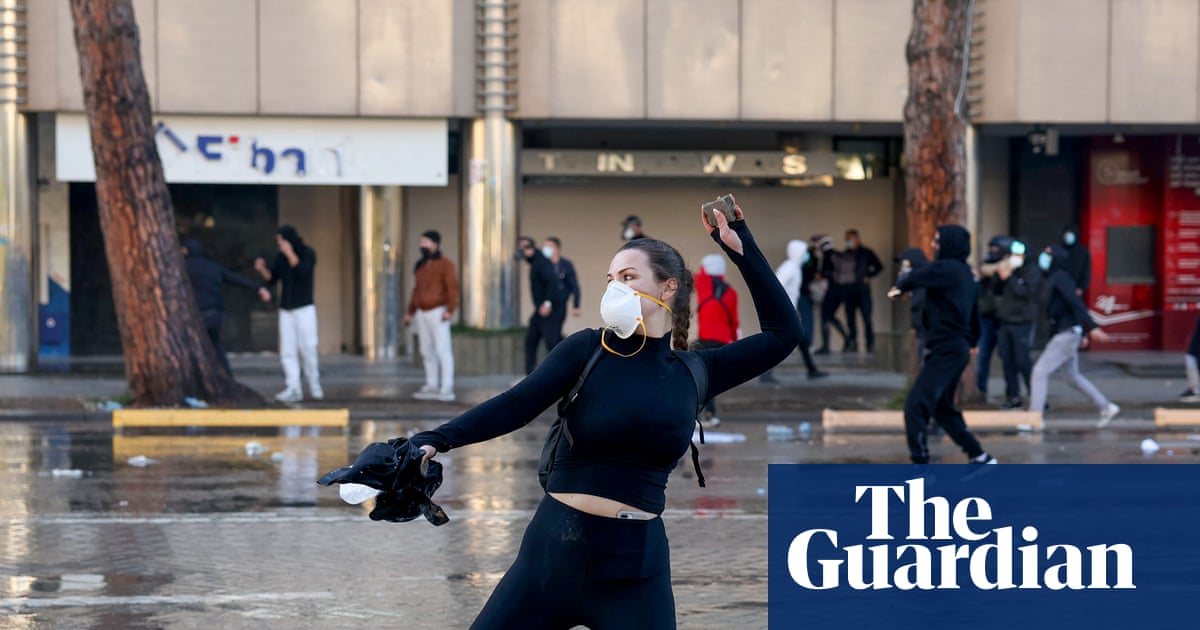
- Students and citizens have engaged in violent confrontations with police in Tirana for six consecutive days, demanding the cancellation of a massive coastal resort project.
- The Albanian government argues the development is essential for economic growth and EU accession, while critics claim it violates environmental protections and democratic norms.
- European officials warn that fast-tracking construction in protected areas undermines Albania's candidacy for European Union membership.
Violent demonstrations have erupted across Albania’s capital, marking a significant escalation in public dissent against a proposed luxury resort development. For six consecutive days, protesters, largely led by students, have clashed with riot police in Tirana. The unrest has involved the burning of ministerial buildings, banks, and businesses, as well as attacks on a police station. Municipal workers were observed removing paving stones while shopkeepers boarded up premises with metal sheeting, signaling a breakdown in public order not seen in decades.
The immediate catalyst for the violence is the government’s push to fast-track a massive tourism project in the Vjosa-Narta landscape. This area, which includes the last intact delta system in the Mediterranean, was previously protected under environmental laws. The controversial legislation allows “strategic investors” to build in these sensitive zones, paving the way for up to 10,000 villas. Construction crews broke ground in May, destroying ancient dunes and forests to create access roads, which ignited widespread outrage.
Prime Minister Edi Rama has defended the project as a critical step toward modernizing Albania’s economy. Re-elected for a historic fourth term last year, Rama aims to secure European Union membership by 2030. He argues that the development will transform the nation from its post-communist isolation into a high-end destination. In a recent address, he framed the choice as one between accepting the investment or remaining outside the EU bloc, suggesting that the resort would bring economic prosperity that Albanians deserve.
The project is closely linked to Jared Kushner, son-in-law of former US President Donald Trump. Kushner has described the venture as aiming to meet the highest design and environmental standards, claiming it will leave the area greener and more biodiverse. However, critics argue that the government is using these claims to justify bypassing rigorous environmental scrutiny. The European Parliament has called for the repeal of the legislation enabling construction in protected areas, stating that adherence to EU environmental standards is a non-negotiable condition for accession.
Tineke Strik, a Dutch Member of the European Parliament and Greens group representative, has accused the Albanian government of employing deceptive tactics. She led a fact-finding mission to Albania in June and contends that the administration is rushing to create facts on the ground before being bound by stricter EU regulations. Strik argues that the environmental impact assessment submitted to the EU Commission was fast-tracked and would not have approved such extensive construction if conducted comprehensively.
Protesters have chanted slogans such as “Albania is not for sale,” reflecting deep-seated frustration with what they perceive as the commodification of national heritage. While the resort was the initial spark, demonstrators say broader issues are now fueling the unrest. These include concerns about the state of democracy, living standards, and education. Students have vowed to continue demonstrating until Rama resigns, a demand he has firmly rejected.
The government’s strategy appears to be leveraging economic arguments to override environmental objections. Rama told a tourism forum in Brussels that nature cannot simply be left alone and that active development is necessary for progress. He dismissed the idea that preserving the landscape without intervention is viable, positioning the resort as a scientific and economic imperative rather than an ecological threat.
As tensions remain high, the international community watches closely. Albania is a frontrunner in the EU enlargement process, with hopes to conclude accession talks by the end of 2027. The conflict highlights the tension between rapid economic development and environmental preservation in candidate countries. Whether the government can quell the unrest without compromising its EU ambitions remains uncertain, as protesters show no signs of backing down.
The situation underscores broader challenges facing Balkan nations seeking integration into European institutions. Balancing investor interests with local concerns and international regulatory standards is proving difficult. The violent nature of the protests suggests that political rhetoric alone may not resolve the underlying grievances regarding governance and resource management.
Sources behind this briefing
Go to the original reporting
- The Guardian US↗Albania accused of rushing through Trump-linked resort in formerly protected landscape