The short version
- Alaska Governor Mike Dunleavy has ordered a probe into Democratic Senate candidate Mary Peltola's campaign after New York Times reporting revealed efforts to recruit a spoiler candidate.
- The controversy centers on Daniel J. Sullivan Jr., who shares the incumbent's name, raising concerns about voter confusion and ballot manipulation.
- President Trump has called for criminal prosecution of Peltola, while the Justice Department has issued new subpoenas related to the matter.
The race for the U.S. Senate in Alaska has become a focal point of national political controversy following reports that Democratic candidate Mary Peltola's campaign was involved in recruiting a spoiler candidate. A New York Times investigation revealed efforts by Democrats to stack the ballot with another individual named Dan Sullivan, aiming to confuse voters and split the Republican vote. This revelation has triggered immediate backlash from Republican officials and intensified scrutiny of election integrity in the state.
Alaska Governor Mike Dunleavy, a Republican, ordered an investigation into Peltola's campaign shortly after the report was published. In a statement posted on social media, Dunleavy cited 'disturbing new evidence' of an organized effort to manipulate elections by recruiting candidates with names similar to incumbents. He argued that deliberately tricking voters strikes at the core of electoral integrity and noted that the reporting substantiated earlier findings by the state's elections board.
The controversy centers on Daniel J. Sullivan Jr., a retired schoolteacher from Petersburg, who appeared on the ballot under a name nearly identical to incumbent Senator Dan Sullivan. Earlier this year, a top state elections official ruled Sullivan Jr. ineligible for the primary ballot, concluding that his candidacy was filed with the purpose of confusing voters and compromising fairness. However, the Alaska Supreme Court later ruled he was qualified to run, allowing him to remain on the ballot.
President Donald Trump has strongly condemned the actions attributed to Peltola's campaign, calling for her criminal prosecution. He previously directed the Department of Justice to sue to block the certification of any election win by Peltola if Daniel J. Sullivan Jr. remained on the ballot. The Justice Department has since issued new subpoenas related to the controversy, signaling a federal interest in the matter that extends beyond state-level concerns.
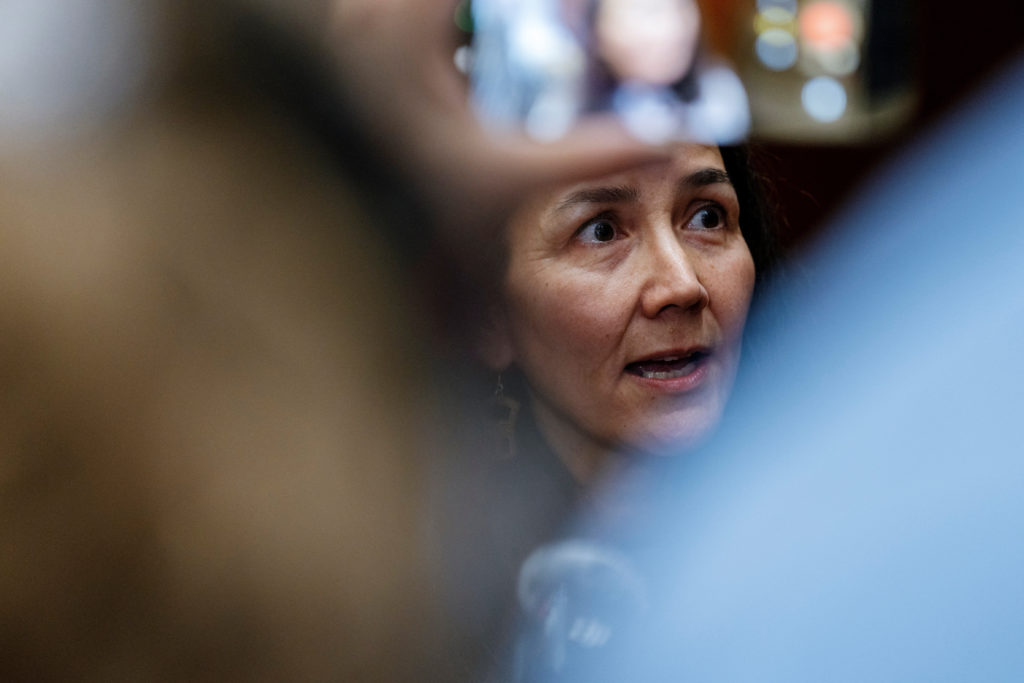
Mary Peltola, a former congresswoman, has dismissed the allegations as a distraction from substantive policy issues. During a campaign stop in Soldotna, she characterized the New York Times report as an attempt to sell newspapers and divert attention from Senator Sullivan's support for military actions abroad. Her campaign did not immediately respond to requests for comment regarding Governor Dunleavy's order, but her public statements suggest a strategy of downplaying the controversy.
Daniel J. Sullivan Jr. has consistently denied any connection to the Democratic campaign. He stated in June that he had 'zero, none, zilch' contact with Peltola's team and insisted he was running independently. Despite these denials, the timing and nature of his candidacy have fueled suspicions among Republicans that it was a coordinated effort to undermine the incumbent.
The New York Times report detailed how national Democrats and Peltola's campaign worked to recruit spoiler candidates, including Sullivan Jr. This revelation has sparked broader discussions about ethical boundaries in political campaigning and the extent to which parties can influence ballot composition. Critics argue that such tactics erode public trust in the electoral process.
The Alaska Senate race is among a handful of contests expected to determine control of the chamber, making it a high-stakes battleground. The involvement of federal authorities and the intensity of the political rhetoric underscore the significance of the outcome. Any findings from the ongoing investigations could have lasting implications for election laws and campaign practices nationwide.
As the probe continues, voters remain divided on the merits of the allegations. Some view the recruitment of a similarly named candidate as a legitimate strategic move in a competitive race, while others see it as an unacceptable breach of democratic norms. The resolution of this dispute will likely depend on legal rulings and the credibility of evidence presented by both sides.
The situation highlights the increasing polarization surrounding election integrity in the United States. With close races becoming more common, the temptation to employ unconventional tactics may grow. The Alaska case serves as a cautionary tale about the potential consequences of such strategies, both legally and politically.
Sources behind this briefing
Go to the original reporting
- PBS NewsHour↗Alaska's governor orders a probe into Peltola's Senate campaign over spoiler candidate controversy
- The New York Times↗Inside Democrats’ Secret Effort to Stack Alaska’s Midterm Ballot With Another Dan Sullivan
- AP News↗Justice Department issues new subpoenas over Alaska spoiler candidate controversy, AP source says
- KTOO↗Peltola campaign and national Dems recruited spoiler candidates, including Petersburg Sullivan, according to New York Times