The short version
- Judge Thomas Matthews determined that producing the requested voter data was not reasonable given the tight timeline for ballot tabulation.
- The Peltola campaign sought the information to help voters cure rejected ballots, while state officials cited privacy concerns and database limitations.
- Ballot counting continues in Alaska's ranked-choice election, with overseas mail-in votes accepted until November 18.
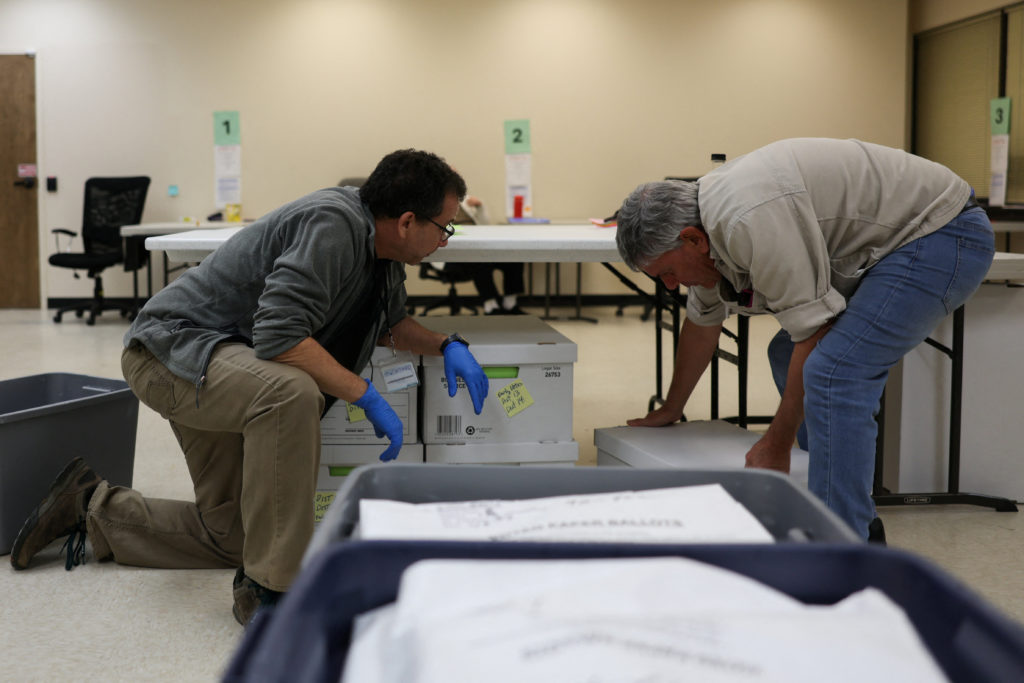
An Alaska Superior Court judge has denied a request from the campaign of Democratic Senate candidate Mary Peltola for access to data regarding rejected absentee ballots. The ruling comes as election officials in Juneau continue to process votes in a closely watched race between Peltola and two-term Republican Senator Dan Sullivan. Judge Thomas Matthews determined that fulfilling the campaign's demand was not reasonable, citing the intense pressure on state agencies to complete their duties within strict legal deadlines.
The dispute centers on a lawsuit filed by Peltola's legal team last week. Attorneys for the campaign sought a comprehensive list of voters whose absentee ballots had been rejected, along with the specific reasons for those rejections. Their stated goal was to assist qualified voters in correcting errors so their votes could be counted. The campaign argued that this information constitutes public record and should be accessible in a centralized format, similar to what observers see at local review boards.
State officials strongly opposed the request, arguing that releasing such data would infringe on voter privacy. They contended that reports generated during the absentee ballot review process are ephemeral working documents containing confidential information, such as home addresses, which many voters prefer to keep private. Furthermore, state attorneys claimed that producing a specialized list from the voter database would constitute an electronic service that cannot take precedence over the agency's primary responsibility of administering the election.
In his written decision, Judge Matthews acknowledged that it might be theoretically possible to redact confidential information and release the records. However, he concluded that the Division of Elections is not required to disclose them at this specific moment because they cannot reasonably be produced or properly redacted given the current circumstances. The judge emphasized that the timing of the request was particularly problematic, noting that election staff are working long hours to meet fundamental administrative obligations.
Michaela Thompson, who oversees the absentee ballot review boards for the state division, provided an affidavit detailing the technical challenges involved. She explained that the agency's database is old and inflexible, lacking the capability to generate reports that exclude confidential addresses without significant manual intervention. To create a tailored report that protects voter privacy, the agency would need to engage an external vendor, a process that Thompson indicated was not feasible within the narrow window remaining before final tabulations.
The ruling has immediate implications for how the final vote count proceeds. Alaska utilizes a ranked-choice voting system, which requires multiple rounds of tabulation if no candidate secures more than 50 percent of first-choice votes. The Division of Elections has set November 18 as the target date for completing these complex calculations. This date also marks the deadline for receiving ballots from overseas voters, who are allowed up to fifteen days after the general election to submit their mail-in votes.
Abha Khanna, an attorney representing Peltola's campaign, argued during court proceedings that the absentee ballot review process was proceeding smoothly and that the campaign did not intend to disrupt operations. She maintained that access to centralized data would simply provide a more efficient way for voters to cure their ballots. However, the judge's decision effectively blocks this avenue, leaving the campaign without the specific list of rejected voters they sought.
The state Department of Law expressed satisfaction with Judge Matthews' decision in a statement released after the ruling. The denial reinforces the state's position that protecting voter privacy and maintaining the integrity of the election timeline take precedence over providing detailed operational data to political campaigns. As ballots continue to be tallied, Alaska remains the only Senate race in the nation where the outcome is not yet determined.
With the legal avenue for obtaining the rejected ballot list closed, attention now shifts entirely to the mechanical process of counting and tabulating votes. The final results will depend on how many overseas ballots arrive before the November 18 deadline and how the ranked-choice preferences are distributed among the remaining candidates. The close margin in the race ensures that every vote will be scrutinized, but the scope of that scrutiny is now limited by the court's ruling.
This development highlights the ongoing tension between transparency in election administration and the protection of voter privacy. While campaigns often seek granular data to maximize voter participation, state agencies must balance these requests against legal mandates and technical constraints. The judge's emphasis on the 'unreasonable' timing of the request underscores the high-stakes environment surrounding final vote counts in competitive elections.
Sources behind this briefing
Go to the original reporting
- PBS NewsHour↗Alaska judge rules a request by Peltola campaign for ballot data in Senate race is 'not reasonable'