The short version
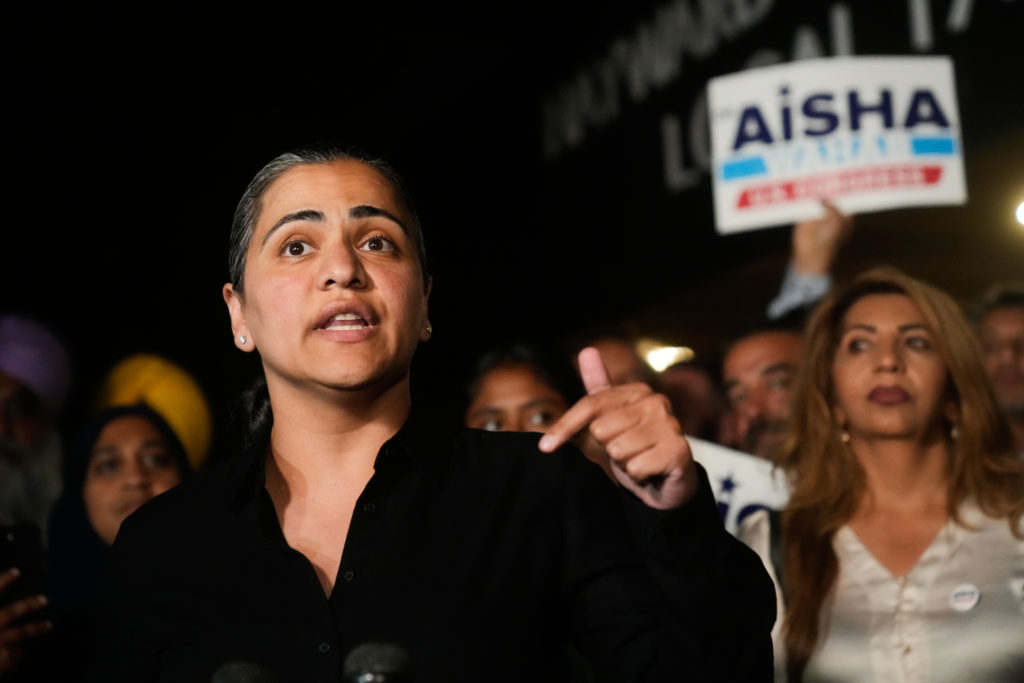
- State Senator Aisha Wahab has won the special election for California’s 14th Congressional District, securing the remainder of the term previously held by Eric Swalwell.
- The race concluded with Wahab leading by approximately six points after outside groups affiliated with AIPAC spent millions supporting her opponent, Melissa Hernandez.
- Wahab becomes the first Afghan American to serve in the U.S. Congress, while criminal investigations into the sexual misconduct allegations against Swalwell continue.
California State Senator Aisha Wahab has secured victory in the special election for the state’s 14th Congressional District, defeating Bay Area Rapid Transit Director Melissa Hernandez. The win allows Wahab to serve out the remainder of the term originally held by former Representative Eric Swalwell, who resigned from Congress in April following accusations of sexual assault and harassment. Swalwell, a Democrat who had launched a bid for governor, denied the allegations against him. His departure triggered this special contest to fill the vacancy through January.
Wahab’s election marks a significant historical milestone as she becomes the first Afghan American to serve in the United States Congress. Previously, she made history in 2018 by becoming the first Afghan American elected to public office in the nation when she won a seat on the Hayward City Council. Her political trajectory has been defined by her background in foster care and her advocacy for housing affordability and civil rights protections during her tenure in the state legislature.
The special election was characterized by intense financial competition, particularly in its final stages. Although Wahab held a substantial lead throughout much of the campaign cycle, outside spending groups affiliated with the American Israel Public Affairs Committee poured millions of dollars into supporting Hernandez. Reports indicate that these super PACs spent more than $5 million on advertisements favoring Hernandez and attacking Wahab within a matter of weeks. This influx of capital narrowed what was expected to be a decisive victory for the progressive Democrat.
With 95 percent of votes counted, Wahab maintained a lead of just over six percentage points. The closeness of the final result contrasted sharply with her performance in the June primary, where she defeated Hernandez by more than 20 points. Wahab attributed the shift to a sudden surge of critical advertising that she argued misrepresented her legislative record. She characterized the involvement of these outside groups as an attempt to purchase the seat and interfere with the democratic process.
The contest also highlighted internal divisions within the California Democratic Party. While Wahab enjoyed broad support from labor unions, local officials, and progressive organizations such as Our Revolution, she faced opposition from some establishment figures. Representative Zoe Lofgren, chair of California’s congressional delegation, endorsed Hernandez, citing concerns that Wahab had not supported efforts to elect a caretaker candidate quickly. This endorsement drew criticism from the party’s progressive wing, which viewed it as an unusual intervention in a special election.
Policy differences between the two candidates played a central role in the campaign narrative. During a candidate forum in April, Wahab affirmed that she considered the situation facing Palestinian people to be genocide. Hernandez offered a more nuanced response, acknowledging Israel’s right to self-defense following the October 2023 Hamas attacks while stating that the destruction in Gaza had gone too far. These positions likely influenced the strategy of outside groups seeking to sway moderate voters in the district.
Wahab’s legislative record includes authoring a bill in 2023 aimed at banning caste-based discrimination, which garnered national attention before being vetoed by Governor Gavin Newsom. The governor argued that existing civil rights protections already outlawed such discrimination. Wahab has consistently championed access to affordable housing and social justice issues throughout her career, framing her political journey as an embodiment of the American Dream.
The conclusion of this special election does not end the political contest between Wahab and Hernandez. The two candidates are scheduled to face each other again in a separate general election this November. That upcoming vote will determine who serves the next full two-year term for the district, which covers parts of Alameda County on the eastern side of the San Francisco Bay.
Meanwhile, legal proceedings related to the departure of the previous representative continue. Federal agents recently seized electronic devices from Swalwell at the San Francisco airport and searched his home in Washington, D.C., as part of ongoing criminal investigations into the sexual assault allegations. His attorney has not yet responded to requests for comment regarding these developments.
Wahab’s victory underscores the resilience of her campaign despite significant financial pressure from outside interests. She emphasized that her win demonstrates the district cannot be bought by external money. As she prepares to assume office, Wahab faces the challenge of representing a diverse constituency while navigating the complex political landscape left in the wake of Swalwell’s controversial exit.
Sources behind this briefing
Go to the original reporting
- PBS NewsHour↗State lawmaker Aisha Wahab wins California special election to replace former Rep. Swalwell
- The Guardian US↗Progressive Aisha Wahab wins California special election to fill Eric Swalwell seat

