The short version
- AI-assisted cameras are replacing traditional human lookouts in French forests to reduce false alarms and detect fires up to twenty kilometers away.
- Early detection systems can alert crews minutes before official calls, potentially limiting blaze size from catastrophic levels to manageable hectares.
- Despite advances in surveillance, heavy-lifting drones for extinguishing fires remain unproven, leaving ground crews essential for containment.
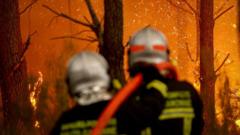
Devastating wildfires have swept through the Gironde region of France and other parts of Europe this summer, forcing hundreds of thousands to evacuate across France, Spain, and Portugal. While the visual spectacle of planes dropping water and firefighters battling flames remains familiar, the methods for identifying these blazes are undergoing a significant technological shift. Authorities and industry experts are increasingly relying on artificial intelligence to monitor forests, marking a departure from decades-old practices that depended heavily on human observation.
In Gironde, which has been severely impacted by the current fire season, traditional watchtowers staffed by students during summer months have largely been decommissioned. They have been replaced by camera systems assisted by AI algorithms capable of distinguishing between actual smoke and harmless dust clouds kicked up by agricultural machinery. This transition has notably reduced the number of false alarms that previously strained emergency resources. The new sensors possess a detection range of approximately twenty kilometers, allowing for broader coverage than individual human observers could provide.
The primary advantage of these systems lies in speed. Early intervention is critical in wildfire management, as small ignitions can escalate rapidly under dry conditions. Companies such as FireTracking and Midgard have deployed networks that send real-time alerts to firefighters' mobile devices. These notifications include live video feeds with high magnification capabilities and precise geographic coordinates. Additionally, the software generates predictive models based on current weather data and humidity levels, simulating how a fire might spread minute by minute.
Industry representatives emphasize that even minor time savings can drastically alter outcomes. Feedback from field operations suggests that AI detection has identified fires up to fifteen minutes before initial emergency calls were made. In the context of wildfire suppression, this window allows crews to address an ignition while it is still small enough to be contained with minimal resources. Without such early warning, a fire might grow large enough to require massive aerial support or result in widespread destruction.
The financial investment in these detection networks varies by region. For instance, covering a 6,000-square-kilometer area in the Indre-et-Loire department required an expenditure of roughly 1.2 million euros for eleven detection sites. This region faces frequent crop fires, making early detection economically significant. The technology is currently monitoring approximately one million hectares across France, with plans to expand coverage as the systems prove their reliability and cost-effectiveness over time.
Beyond camera networks, other technological initiatives are in development or testing phases. The French civil protection service is evaluating solar-powered drones equipped with electro-optical cameras for continuous aerial patrols under a program known as Condor. Meanwhile, projects in Spain are exploring sensor arrays placed within forests to detect specific gases released by vegetation before visible flames appear. These efforts aim to create a multi-layered detection grid that combines ground-based sensors with aerial surveillance.
However, experts caution that technology has not reached a stage where it can replace human firefighters in the actual suppression of blazes. Guillaume Millet, a veteran firefighter and union representative, notes that while detection capabilities have improved, the physical act of extinguishing fires still requires personnel on the ground. Drones are currently being tested for sea rescue operations, such as dropping lifebuoys, but no existing drone technology can effectively manage the heavy loads needed to fight forest fires.
Aerial assets like Canadair planes remain crucial for reducing fire intensity by dropping thousands of liters of water or spraying retardant chemicals. Yet these aircraft only suppress the heat and flame front; they do not eliminate the fuel source. Ground crews must still navigate difficult terrain to pull hoses, dig firebreaks, and ensure the blaze does not reignite. Start-ups like Daidelos are attempting to develop heavy-lifting drones capable of carrying over a ton of water, but such technology remains in the investment-seeking phase rather than operational deployment.
The integration of AI into wildfire management represents a pragmatic evolution rather than a complete replacement of traditional methods. As climate conditions continue to challenge emergency services, early detection offers a vital tool for protecting communities and infrastructure. Nevertheless, the physical demands of firefighting ensure that human expertise and labor will remain indispensable components of disaster response strategies for the foreseeable future.
Sources behind this briefing
Go to the original reporting
- BBC Business↗Could tech replace firefighters in the battle against wildfires?