The short version
- African heads of state are intensifying calls for permanent representation on the UN Security Council, citing a lack of equity in global decision-making.
- Leaders link the need for structural reform to ongoing conflicts in Ukraine, the Middle East, and tensions involving Iran, as well as the governance of artificial intelligence.
- While the Biden administration previously signaled support for two new African seats, current diplomatic efforts focus on restoring institutional credibility through inclusive representation.
African leaders attending the United Nations General Assembly are renewing urgent demands for permanent seats on the Security Council, arguing that the current structure fails to reflect global realities. The push for reform has gained momentum as heads of state highlight the continent's exclusion from high-level decisions regarding war and peace. Delegates emphasize that without a voice in these critical matters, African nations are forced to observe rather than shape outcomes that directly impact their populations.
The Security Council currently consists of fifteen members, with five holding permanent status and veto power: the United States, Russia, France, the United Kingdom, and China. The remaining ten seats rotate among elected nations every two years. Africa holds three of these nonpermanent positions but lacks any permanent representation. This disparity has drawn sharp criticism from African officials who view the arrangement as a historical injustice that undermines the organization's stated commitment to multilateralism and sovereign equality.
Kenyan President William Ruto addressed the assembly by pointing out the contradiction between the UN Charter’s principles and the Council’s power dynamics. He noted that while all nations are theoretically equal, only five possess permanent authority over matters of global security. This concentration of power, he argued, erodes trust in the institution. Other leaders echoed this sentiment, suggesting that the imbalance is not merely a diplomatic oversight but a fundamental flaw that requires immediate correction to restore legitimacy.
The urgency of these demands is amplified by several major geopolitical conflicts currently under the Council’s purview. African leaders have pointed to the war between Russia and Ukraine, the ongoing conflict between Israel and Hamas, and recent military engagements involving the United States and Iran as examples where African interests are affected despite the continent having no permanent say. These crises underscore the practical consequences of exclusion, as decisions made in New York reverberate across Africa through economic instability, refugee flows, and security threats.
Ethiopian President Taye Atske Selassie questioned how a global body can claim moral authority while denying representation to 1.6 billion people. This demographic argument is central to the African Union’s long-standing position, which has called for at least two permanent seats since 2005. Liberian President Joseph Nyuma Boakai described the current situation as untenable, stressing that reform is essential for rebuilding confidence in the UN. He framed the issue not as a special favor for Africa but as a necessary step to correct systemic inequities.
Beyond traditional security concerns, African leaders are also linking Council reform to emerging technological challenges. As global competitors navigate the rapid development of artificial intelligence, African officials argue that developing nations must have a meaningful voice in setting standards and safeguards. Botswana President Duma Boko highlighted the importance of including Africa in discussions about critical minerals and rare earths that power these technologies. He warned that without inclusive governance, AI could exacerbate inequalities rather than expand opportunities.
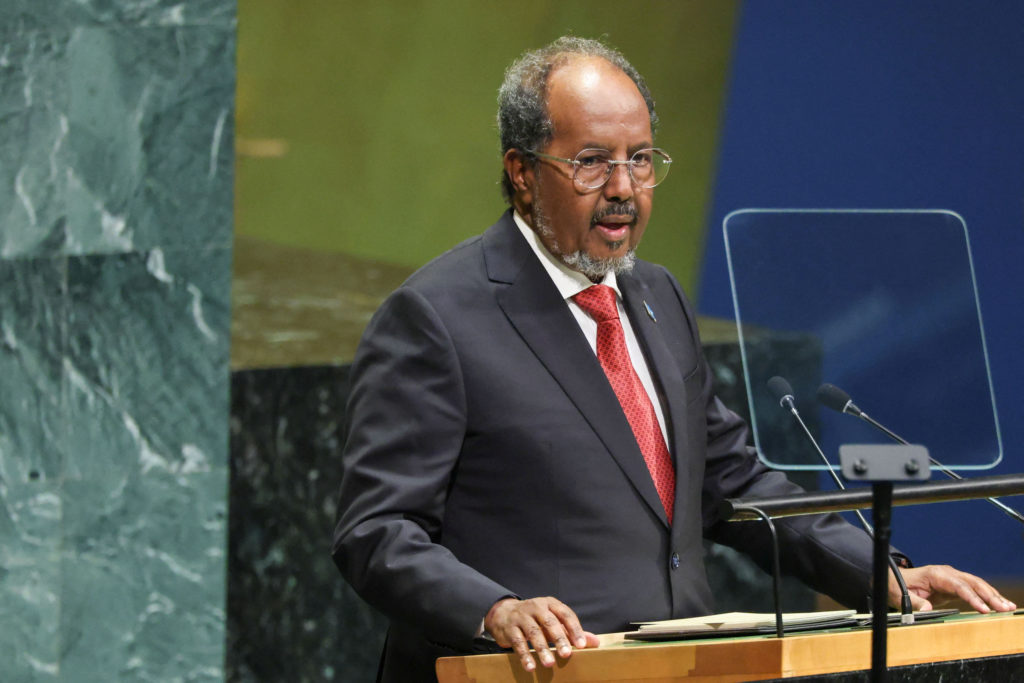
The diplomatic landscape for reform remains complex. In 2024, the United States under President Joe Biden indicated support for adding two new permanent seats for African countries. However, the current administration’s stance has not been explicitly detailed in recent statements, leaving uncertainty about whether this support continues. Meanwhile, African leaders insist that negotiations have dragged on too long and that further delay risks irrelevance. Somalia’s President Hassan Sheikh Mohamud emphasized that reform is vital to protect the UN’s ability to respond to modern realities.
As the General Assembly proceedings continue, the focus remains on bridging the gap between rhetorical commitments to equality and structural changes in power distribution. African leaders are united in their demand for a seat at the table, viewing it as essential for both regional stability and global governance. The outcome of these discussions will likely influence not only the composition of the Security Council but also the broader trajectory of international cooperation on issues ranging from conflict resolution to technological regulation.
Sources behind this briefing
Go to the original reporting
- PBS NewsHour↗African leaders press United Nations for permanent seats on Security Council

