The short version
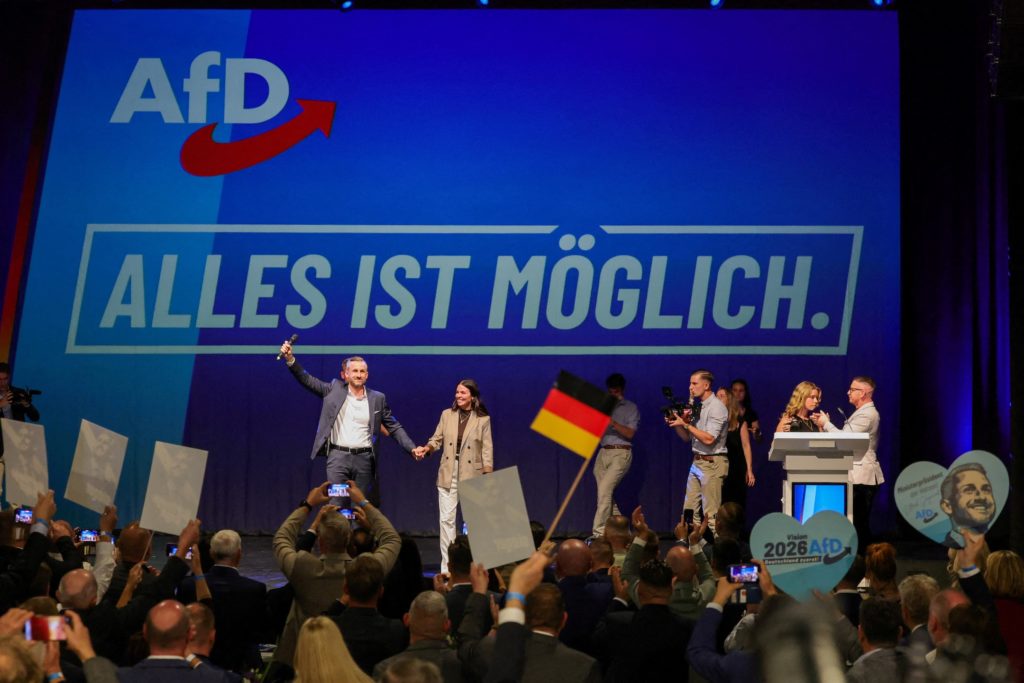
- The Alternative for Germany party secured 44 percent of seats in Saxony-Anhalt, falling just short of a majority but marking a significant shift from previous support for the Christian Democratic Union.
- Chancellor Friedrich Merz acknowledged the result as a severe defeat, reflecting his historically low approval ratings and growing public dissatisfaction with current governance.
- European leaders and analysts warn that the victory signals broader destabilization, driven by economic anxieties and cultural shifts in former East German regions.
A significant political realignment occurred in Germany following recent parliamentary elections in the eastern state of Saxony-Anhalt, where the far-right Alternative for Germany party achieved a decisive victory. The AfD captured 44 percent of the available seats, a result that placed it only three positions away from securing an outright majority. This outcome represents a stark departure from the region’s previous political loyalty to the ruling Christian Democratic Union, signaling a profound shift in voter sentiment within this former East German territory.
The election results have delivered a substantial blow to Chancellor Friedrich Merz, whose leadership is currently facing intense scrutiny. Merz acknowledged the severity of the loss, describing it as the most serious electoral defeat for his party in decades. His approval ratings have plummeted, with surveys indicating an 87 percent disapproval rate in Saxony-Anhalt and a nationwide approval figure of just 16 percent as of July. The chancellor expressed shock at the magnitude of the shift, noting that the event marks a turning point not only for the state but for the country as a whole.
The AfD’s platform centers on strict anti-immigration policies and a desire to expand its influence from regional to national governance. Party leaders have vowed to close borders if they assume federal responsibility, allowing entry only to those with legal residency rights. They also plan to deport individuals residing illegally or those who commit crimes within the country. If the party successfully forms a coalition in Saxony-Anhalt, it would gain extensive control over state-level policies regarding immigration, education, and other domestic affairs.
German intelligence agencies have previously labeled the AfD as extremist, citing xenophobic and antidemocratic tendencies among its leadership. Critics point to statements by party officials that have been accused of Islamophobia and antisemitism. These concerns have heightened tensions within Germany’s political landscape, where the traditional right has struggled to contain the rise of far-right movements. The party’s success in Saxony-Anhalt underscores a growing divide between established political forces and those advocating for more radical changes.
International reactions to the election outcome have been swift and critical. Spanish Prime Minister Pedro Sanchez characterized the result as a warning sign of Europe’s destabilization, attributing the far-right’s gains partly to the perceived surrender of traditional conservative parties. He emphasized that the threat posed by extremist groups is expanding across the continent and globally. This perspective reflects broader anxieties among European allies about the erosion of democratic norms and the potential for increased political volatility.
Analysts suggest that the AfD’s appeal in eastern Germany stems from complex socioeconomic factors rather than simple economic deprivation. While some argue that residents feel left behind economically, experts note that living standards in the region have largely caught up with those in western Germany. Instead, the driving force appears to be a sense of cultural displacement and anxiety over rapid changes, including shifts in immigration policy, technological advancements like artificial intelligence, and geopolitical pressures from Russia and China.
The political implications extend beyond Saxony-Anhalt, affecting national dynamics and international relations. In the United States, President Donald Trump highlighted the AfD’s victory on social media, while Vice President J.D. Vance previously criticized the German government for refusing to engage with parties labeled as extremist. These interactions illustrate the global attention focused on Germany’s internal struggles and their potential ripple effects across transatlantic partnerships.
As Germany grapples with this new political reality, the challenge for Chancellor Merz and other leaders will be addressing the underlying grievances fueling support for the AfD. The coming months may see intensified debates over immigration, national identity, and economic policy. The outcome in Saxony-Anhalt serves as a critical indicator of broader trends that could reshape German politics and influence European stability in the years ahead.
The autonomous nature of Germany’s state governments means that the AfD’s control in Saxony-Anhalt will have immediate practical consequences for local governance. Policies on education, social services, and immigration enforcement may shift significantly under new leadership. This decentralization allows regional experiments in policy-making, which could either mitigate or exacerbate national divisions depending on how other states respond to the changing political landscape.
Looking forward, the focus will remain on whether the AfD can replicate its success in other regions or consolidate power nationally. The party’s ability to form stable coalitions and implement its agenda will test the resilience of Germany’s democratic institutions. Meanwhile, international observers will closely monitor developments to assess the broader impact on European unity and security cooperation.
Sources behind this briefing
Go to the original reporting
- PBS NewsHour↗Far-right AfD win signals shift in Germany, raises alarm in Europe

