The short version
- The Trump administration filed court documents warning that the Kennedy Center could be demolished if it does not proceed with a $250 million renovation plan.
- This threat emerges amid an ongoing legal conflict regarding the president's attempt to append his name to the venue, which a federal judge previously ruled must honor only John F. Kennedy.
- Critics and preservationists view the demolition proposal as an extreme measure in a broader pattern of administrative changes that have impacted ticket sales and institutional stability.
A federal court filing from lawyers representing the Trump administration has introduced the possibility that the John F. Kennedy Center for the Performing Arts could be demolished. The document argues that the Washington, D.C., landmark must undergo a comprehensive $250 million renovation or risk being classified as an unsafe structure requiring removal. This assertion marks a significant escalation in the dispute between the executive branch and preservation advocates over the future of the national arts complex.
The filing suggests that without immediate repair efforts, the building will deteriorate into a decrepit state. Administrators propose that demolition would clear the way for new development on the site, potentially including a large outdoor amphitheater overlooking the Potomac River, a concept that has been discussed by various groups for years. The warning serves as leverage in a broader legal strategy aimed at securing control over the institution’s identity and physical maintenance.
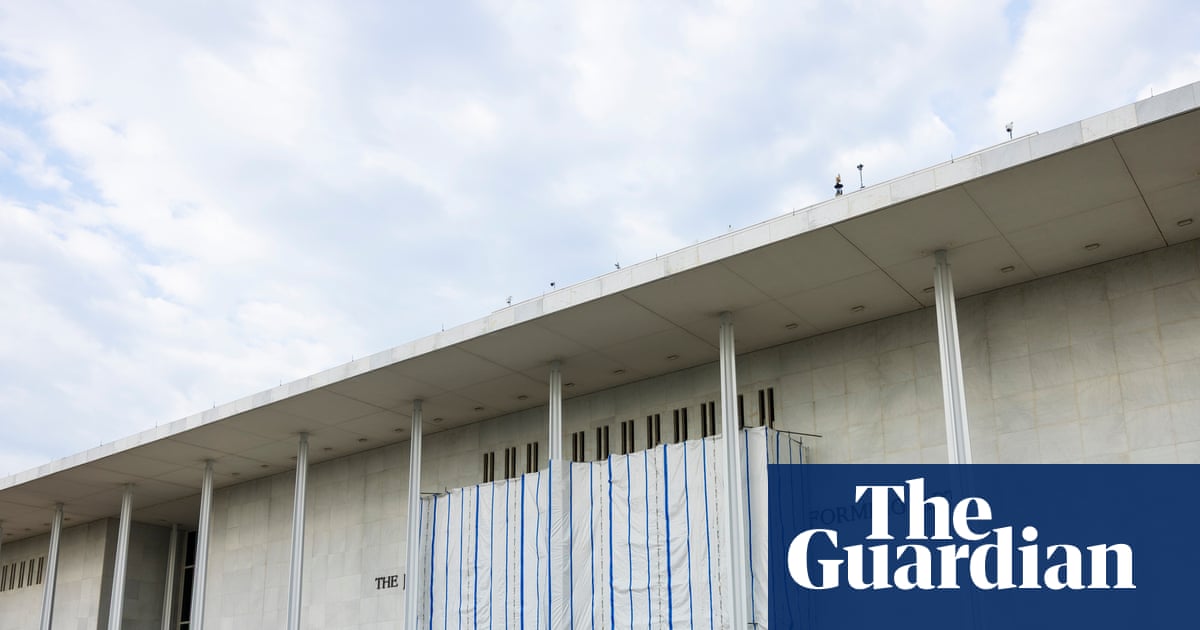
This development coincides with a federal judge’s rejection of an attempt to keep Donald Trump’s name on the Kennedy Center’s facade. In May, Judge Christopher Cooper ruled that only Congress has the authority to change the name of the memorial, which was established by law to honor President John F. Kennedy alone. The court ordered the removal of signage that had previously included Trump’s name, a directive that was enforced in June when the altered section was covered with a tarpaulin.
Despite the judicial ruling, the center’s board, now composed largely of Trump appointees, voted in August to modify the building’s signage. The new text reads “The John F Kennedy Center for the Performing Arts Restored and Renovated by President Donald J Trump,” while also designating the grounds as the “President Donald J Trump Plaza.” Administration lawyers argue this does not violate the injunction because the formal name remains unchanged, comparing the addition to donor acknowledgments found at other cultural institutions.
Joyce Beatty, a Democratic congresswoman from Ohio and a member of the Kennedy Center board by virtue of her congressional seat, has led legal challenges against these changes. She sued last year after the center initially altered its marble facade to include Trump’s name alongside Kennedy’s. Her legal team described the recent demolition threat as legally baseless and indicative of a personal approach rather than sound policy. A hearing on her request for an injunction is scheduled for Thursday in federal court.
The controversy is part of a wider pattern of administrative actions affecting historic sites in Washington. Reports indicate that the administration has also overseen the demolition of the White House East Wing to make room for a ballroom and initiated renovations at the Lincoln Memorial reflecting pool that resulted in environmental issues such as algae blooms. Critics argue these moves reflect a disregard for historical preservation in favor of personal branding and structural overhaul.
The Kennedy Center, which opened in 1971, has experienced significant operational challenges since Trump assumed control last year. Staff reductions and shifts in programming have contributed to a decline in artistic reputation and commercial performance. Ticket sales, which had already dropped following the initial renaming attempt, reportedly plummeted further after the board’s recent votes. The institution struggles to balance its role as a living memorial with the political pressures exerted by its current leadership.
Preservation groups and legal experts anticipate strong resistance to any demolition plans. The threat of tearing down a 100-foot-high complex housing a concert hall, opera house, and theater is likely to trigger protests and further litigation. Norm Eisen, a former White House ethics official, characterized the administration’s stance as destructive and noted that such actions would face substantial legal scrutiny. The outcome of the upcoming court hearing will determine whether the renovation proceeds or if the demolition threat becomes a central focus of the dispute.
The White House did not respond to requests for comment regarding the filing. As the legal battle continues, the Kennedy Center remains under a cloud of uncertainty. The conflict highlights the tension between congressional intent, judicial authority, and executive ambition in managing national monuments. Whether the building undergoes renovation, retains its current status, or faces more drastic measures remains unresolved as stakeholders await the court’s next decision.
Sources behind this briefing
Go to the original reporting
- The Guardian World↗Trump threatens to demolish Kennedy Center if $250m renovation not done