The short version
- The White House promoted data showing the sharpest annual drop in drug prices in six decades, asserting it validates current administration policies.
- Independent health experts and economic analysts attribute the cost reductions to price negotiation mandates established under the previous administration.
- Bureau of Labor Statistics figures confirm a 3.1 percent decrease in July, marking a significant shift in long-standing inflation trends for healthcare goods.
The White House engaged in a coordinated media campaign this weekend to highlight a recent decline in prescription drug costs, framing the data as evidence of successful current policy. Officials distributed images and statements emphasizing that prices have fallen at their most rapid pace in over six decades. The administration’s messaging focused heavily on the headline figures released by federal statistical agencies, seeking to associate the positive economic indicator with the current president’s leadership.
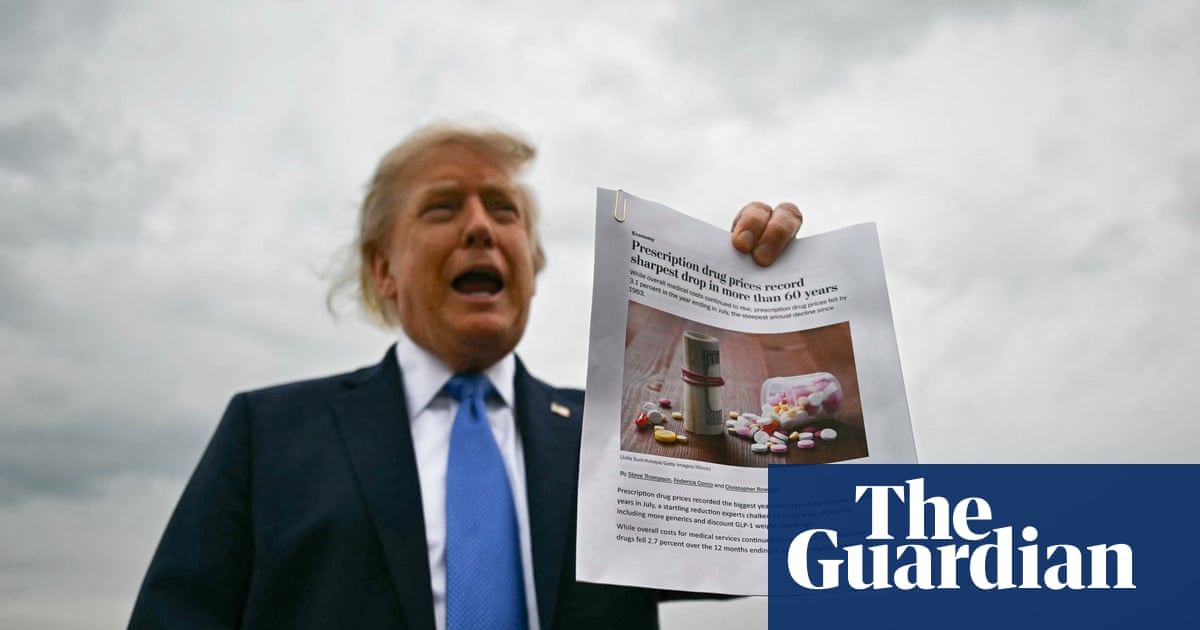
Central to this effort was a staged event where the president presented a printed copy of a Washington Post article to reporters. He held up the document, which featured the headline regarding the record sharp drop in prices, and encouraged the press pool to photograph the moment. The White House subsequently shared these images across its official social media channels, captioning them with phrases suggesting that the administration had provided concrete proof of its effectiveness. Communications staff also posted screenshots of the headline on personal accounts, explicitly linking the news to the president’s achievements.
However, the full text of the article cited by the White House offers a different explanation for the economic shift. The report noted that while the current administration took credit for the July figures, independent experts identified a policy enacted by the previous administration as the more likely cause. Specifically, analysts pointed to the Inflation Reduction Act, a legislative measure passed in 2022 that authorized Medicare to negotiate prices for certain high-cost prescription drugs. The first reductions resulting from these negotiations began taking effect earlier this year.
Data from the Bureau of Labor Statistics supports the magnitude of the decline, showing that prescription drug prices fell by 3.1 percent in July compared to the previous year. This represents a notable reversal from historical trends where drug costs have typically risen or remained stable. The statistical release provided the raw numbers that both sides are now interpreting through their respective political lenses. The significance of this drop lies not just in its size, but in its rarity within the context of modern healthcare inflation.
Health economists have expressed skepticism regarding the administration’s claim of authorship for this trend. Richard Frank, a professor emeritus of health economics at Harvard University, stated that if one were to assess what mattered most for the price reduction, the Inflation Reduction Act would be the primary factor. He indicated that current initiatives would not be where he would place his bet for explaining the data. His assessment aligns with the broader consensus among policy analysts who view structural legislative changes as having a more profound impact on market pricing than executive rhetoric or minor regulatory adjustments.
Stacie Dusetzina, a health policy professor at Vanderbilt University, echoed these sentiments in her analysis of the situation. She noted that although only ten drugs have had their prices negotiated under the new Medicare authority so far, these are commonly used medications. Because they are widely prescribed, their reduced costs are likely reflected prominently in the overall prescription drug index tracked by the Bureau of Labor Statistics. This suggests that even a limited number of negotiated deals can produce statistically significant results in aggregate data.
The disconnect between the administration’s narrative and expert analysis highlights a broader tension in how economic data is communicated to the public. The White House focused on the headline achievement without detailing the legislative origins of the price cuts. Meanwhile, experts emphasized the mechanism behind the change, pointing to specific statutory provisions that allow for direct price negotiations with pharmaceutical manufacturers. This divergence underscores the challenge of attributing complex economic trends to single actors or administrations.
The incident also draws attention to the role of media in shaping political narratives. By isolating a headline from its accompanying analysis, the White House attempted to control the interpretation of the news. The article itself contained the counter-narrative, citing experts who disputed the administration’s claim. This dynamic illustrates how selective sharing of information can create confusion about the causes of economic changes. As more drugs become subject to negotiation in coming months, the data may provide further clarity on the long-term impact of these policies.
Looking ahead, the debate over credit for lower drug prices is likely to continue as more negotiated prices take effect. The Inflation Reduction Act allows for a gradual expansion of the list of drugs eligible for Medicare negotiation. If the trend continues, it will offer a clearer picture of whether legislative mandates or other factors are driving costs down. For now, the 3.1 percent drop stands as a significant data point, but its attribution remains contested between political actors and policy experts.
The White House’s insistence on claiming credit despite contrary expert opinion may influence public perception of healthcare policy effectiveness. However, the underlying economic mechanisms remain unchanged. The price reductions are tied to specific legislative actions taken years ago, not recent executive decisions. As the administration continues to promote this narrative, the gap between political messaging and policy reality becomes increasingly apparent to those following the details of healthcare economics.
Sources behind this briefing
Go to the original reporting
- The Guardian US↗Trump shows off article on lower drug prices that says Biden deserves credit, not him

