The short version
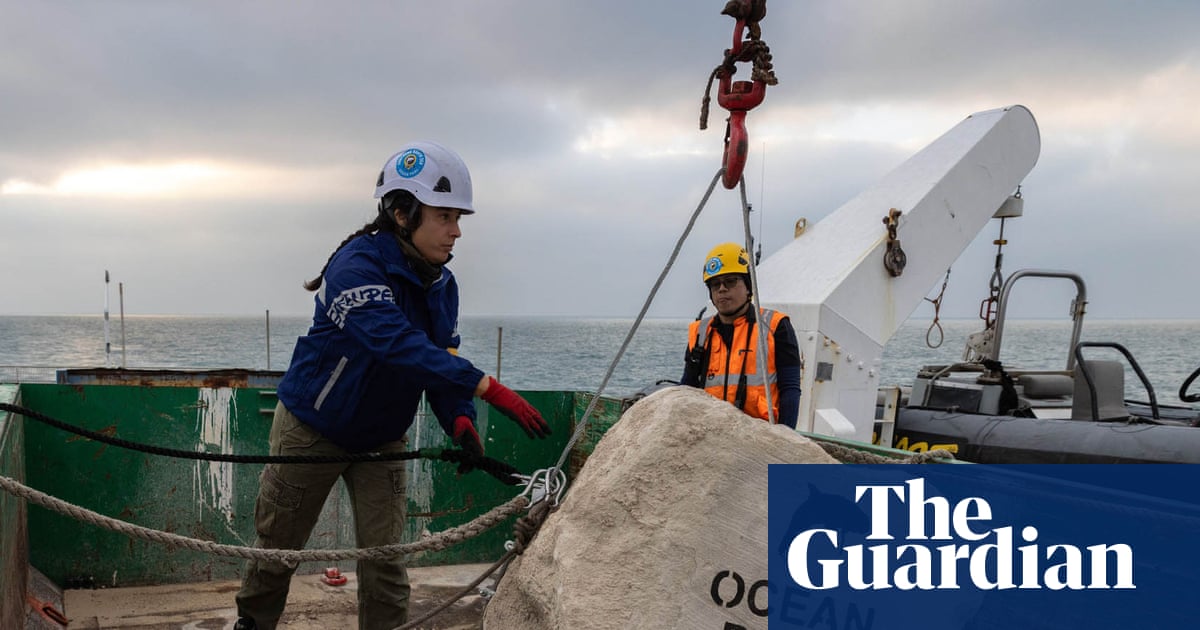
- Greenpeace activists dropped boulders in the Southern North Sea marine protected area to create a physical barrier against industrial bottom trawling vessels.
- The intervention targets a zone critical for harbour porpoises, where data indicates over 37,000 hours of destructive fishing activity occurred in 2025 despite protected status.
- Campaigners argue that current regulations allow significant ecological damage, prompting direct action to declare the area an ocean park and deter further industrial extraction.
Environmental activists have initiated a direct physical intervention in the Southern North Sea marine protected area, dropping large boulders from the vessel Arctic Sunrise to obstruct industrial fishing operations. The maneuver was designed to snag the dragnets of bottom trawlers, effectively closing approximately 116 square kilometers of the zone to such activities. This action represents an escalation in tactics by Greenpeace UK, which stated that the government has failed to adequately protect marine ecosystems despite the area’s designated status as a sanctuary for wildlife.
The Southern North Sea is recognized as a vital habitat for harbour porpoises, supporting nearly one-fifth of the UK North Sea population. The primary objective of the marine protected area is to maintain prey availability and safeguard these mammals from industrial disturbance. However, activists contend that the current regulatory framework allows heavy machinery to scour the seabed daily, undermining the conservation goals established for the region. The boulder barrier serves as a tangible deterrent against vessels seeking to exploit this resource-rich but ecologically sensitive zone.
Data collected in 2025 reveals the extent of industrial activity within the protected boundaries. Bottom trawlers logged more than 37,200 fishing hours in the Southern North Sea MPA during that year alone. Greenpeace analysts compared this level of intrusion to heavy construction equipment tearing through a national park, highlighting the disconnect between the area’s legal protection and its actual usage. The organization noted that dredgers and other industrial vessels continue to operate with minimal restriction, causing widespread damage to the seabed structure.
Will McCallum, co-executive director of Greenpeace UK, emphasized the urgency of the situation, describing the scene as hulking ships prowling the sea day after day. He argued that these operations strip the environment of fish and kill precious wildlife, including sharks and seabirds, in addition to porpoises. The campaign organization positioned its actions as a necessary response to governmental inaction, asserting that they are protecting the seas because official channels have not done so effectively. The activists declared the zone an ocean park, drawing parallels to Britain’s terrestrial national parks.
The timing of the intervention coincides with the nationwide premiere of Blue Planet III, a BBC wildlife documentary narrated by David Attenborough that focuses on oceanic threats caused by human activity. This cultural moment has amplified public awareness regarding marine conservation issues. Greenpeace analysis indicates that in 2025, bottom trawlers and dredgers impacted a cumulative area of 55,600 square kilometers of MPA seabeds across the UK. This affected area is roughly 58 times the size of Dartmoor National Park, illustrating the scale of industrial penetration into protected waters.
Political support for stricter marine protections has emerged from various quarters, including Labour MP Kerry McCarthy, a former climate minister. McCarthy added her name to one of the boulders dropped into the North Sea, signaling cross-party concern over the pace of environmental progress. She noted that less than one percent of UK seas are protected from industrial fishing, allowing boats to legally wreak havoc on seabeds and habitats. Her involvement underscores a growing sentiment among lawmakers that nature cannot wait for slower legislative processes to address ecological degradation.
The Southern North Sea MPA stretches along the east coast of England, extending from north of Dogger Bank to the Strait of Dover in the south. Despite its designation, most of the area remains open to fishing activities, creating a paradox where protected zones are heavily exploited. Activists argue that intensive fishing contradicts the fundamental purpose of maintaining prey availability for porpoises. The boulder barrier is intended to close this loophole physically, forcing a reevaluation of how marine protections are enforced and monitored.
In the days following the initial deployment, the Arctic Sunrise is scheduled to patrol the area to deter other forms of industrial fishing. Greenpeace UK had announced in June that direct action would be taken if the government did not act soon to curb destructive practices. The organization continues to call for a comprehensive ban on bottom trawling and the establishment of properly protected ocean sanctuaries across UK waters and the Atlantic Ocean. The government has been contacted for comment regarding these developments and the enforcement of existing marine conservation laws.
This incident highlights the ongoing tension between industrial fishing interests and environmental preservation efforts in European waters. While legal frameworks exist to protect certain species and habitats, enforcement mechanisms often appear insufficient to prevent significant ecological damage. The use of physical barriers like boulders marks a new frontier in direct action campaigns, aiming to create immediate, visible consequences for violations of marine protected area regulations. The long-term impact of this strategy on policy changes remains uncertain as authorities respond to the challenge.
Sources behind this briefing
Go to the original reporting
- The Guardian World↗Greenpeace activists create ‘boulder barrier’ in North Sea to deter industrial fishing


